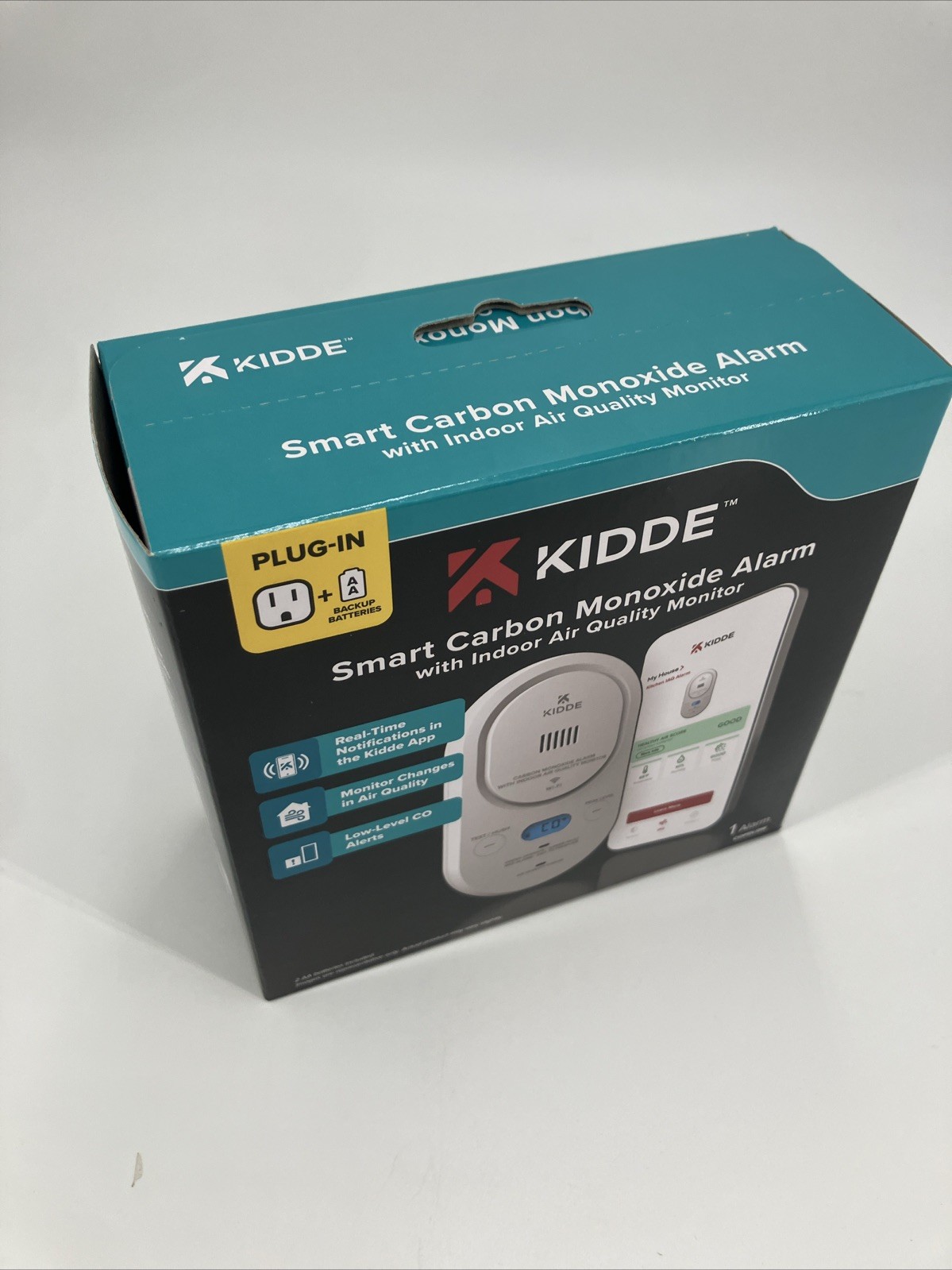

Photos from current listings. Actual item, color, and included accessories may vary.
Kidde Smart Carbon Monoxide Alarm Buying Guide
Smart carbon monoxide alarms combine electrochemical CO sensing with Wi-Fi/app alerts and often indoor air-quality monitoring, trading higher cost and dependency on a 2.4 GHz network for remote notification and event history. The core decision is sensor certification (UL 2034) plus interconnect strategy: choose a sealed 10-year electrochemical cell with hardwired or wireless interconnect, and skip battery-only units only if you need app alerts during outages.
At a glance
- Category
- Home Security
- Status
- Listings available
- Last updated
- Nov 22, 2026
Current offers
Highlights
- UL 2034 is the mandatory CO alarm standard; sensors are electrochemical cells that degrade and must be replaced at end-of-life, typically 7–10 years.
- Smart models add 2.4 GHz Wi-Fi and app push notifications; they still sound a local 85 dB alarm at 10 ft if the network is down.
- Interconnect matters: hardwired models link via a third traveler wire; wireless RF models link via proprietary 915 MHz or Zigbee mesh—never mix brands.
- Indoor air-quality monitoring (IAQ) uses additional VOC/PM sensors and is a convenience feature, not a certified safety function.
Best use cases
- Best fit: a primary sleeping-area hallway in a home with gas appliances or attached garage—pick a hardwired interconnect model if the home has existing alarm wiring; skip battery-only if you want app alerts during power outages.
- Best fit: a rental or finished basement without alarm wiring—pick a sealed 10-year battery wireless-interconnect model; skip hardwired units because code-compliant installation requires a licensed electrician and junction box.
- Wrong fit: a kitchen or furnace room where nuisance alarms from cooking or humidity are likely—skip IAQ and smart features here; install a standard CO alarm just outside the room per NFPA 720 placement guidance.
Buying tips
- Count CO sources first: any fuel-burning appliance, fireplace, or attached garage requires CO alarms on every level and outside each sleeping area per NFPA 720.
- Match interconnect: replace all alarms in a linked system at the same time; mixing old and new electrochemical cells or brands breaks the interconnect and end-of-life timing.
- Choose sealed 10-year lithium cells for low-maintenance coverage; replaceable AA/AAA models cost less upfront but need annual battery swaps and have shorter sensor life.
- Confirm 2.4 GHz Wi-Fi only (not 5 GHz) for app pairing; models with IAQ need continuous outlet or hardwired power because sensor sampling drains batteries.
Specs
| Sensor Type | Electrochemical CO, 10-yr sealed or replaceable |
|---|---|
| Power / Interconnect | 120V hardwired / sealed battery / RF mesh |
| Standards | UL 2034 (CO); UL 217 if combo |
| Smart Features | Wi-Fi app alerts, voice, 2.4 GHz band |
Alternatives to compare


Related searches
What to check before buying
- Measure ceiling or wall placement: CO alarms belong outside each sleeping area and on every level; confirm a 120V box or outlet exists within reach if choosing hardwired or plug-in.
- Check your existing alarm interconnect standard—Kidde hardwired units require a 3-wire connection and are not cross-compatible with BRK/First Alert wiring without an adapter.
- Verify Wi-Fi band and app requirements: Kidde smart models typically need 2.4 GHz Wi-Fi and a compatible iOS/Android app; confirm router placement reaches the alarm location.
- Confirm local code: many jurisdictions require CO alarms in new construction and on transfer; verify whether sealed 10-year battery or hardwired is mandated before ordering.
FAQ
Data sources: eBay / Amazon listings and product attribute feeds. Updated Nov 22, 2026.
Some links on this page are affiliate links. If you buy after clicking one, we may earn a commission at no extra cost to you. This does not change which products appear here or their order. Affiliate disclosure.