
Photos from current listings. Actual item, color, and included accessories may vary.
Portable Air Conditioner Without Window Buying Guide
A portable air conditioner without window refers to ventless evaporative coolers, compact compressor units with alternative exhaust routing, and split-style systems that avoid a traditional window kit. The core trade-off is cooling capacity versus venting: true compressor AC must reject heat somewhere, while evaporative and desiccant designs trade humidity control for installation freedom. The decision rule is simple: if you cannot route exhaust air or water, choose an evaporative or split system; if you need real refrigerant cooling, plan for a vent path through a wall, door, or drop-ceiling.
At a glance
- Category
- Fans, Heaters & Humidifiers
- Last updated
- Nov 22, 2026
Current offers
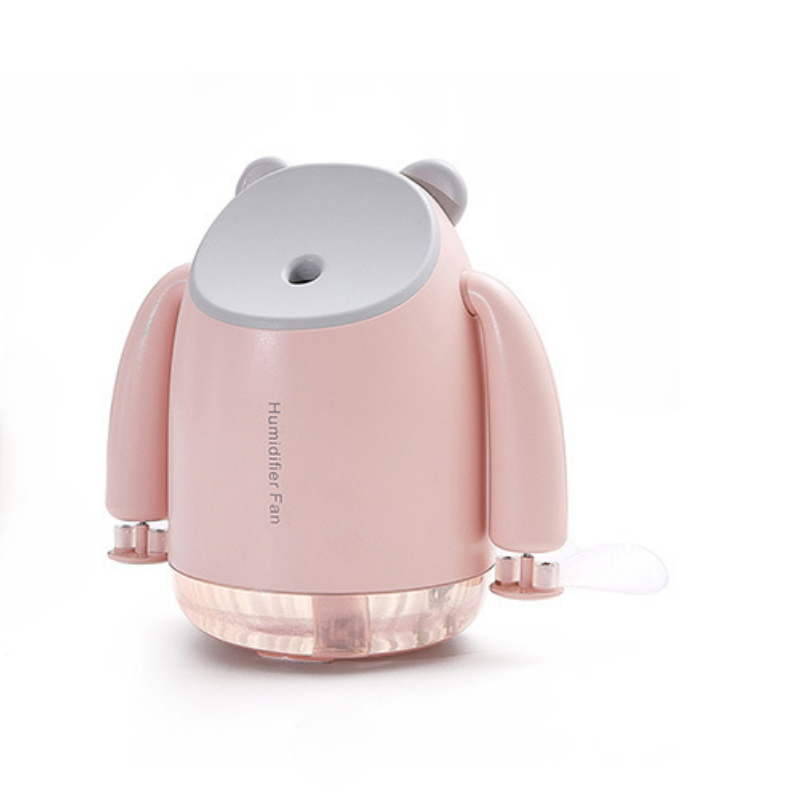 V12 Spray Cooling Fan Portable Water Humidifier USB Student Dormitory Fan Desktop Small Fan Mini Air Conditioner Kitten Double He$23.99View on Mallflare
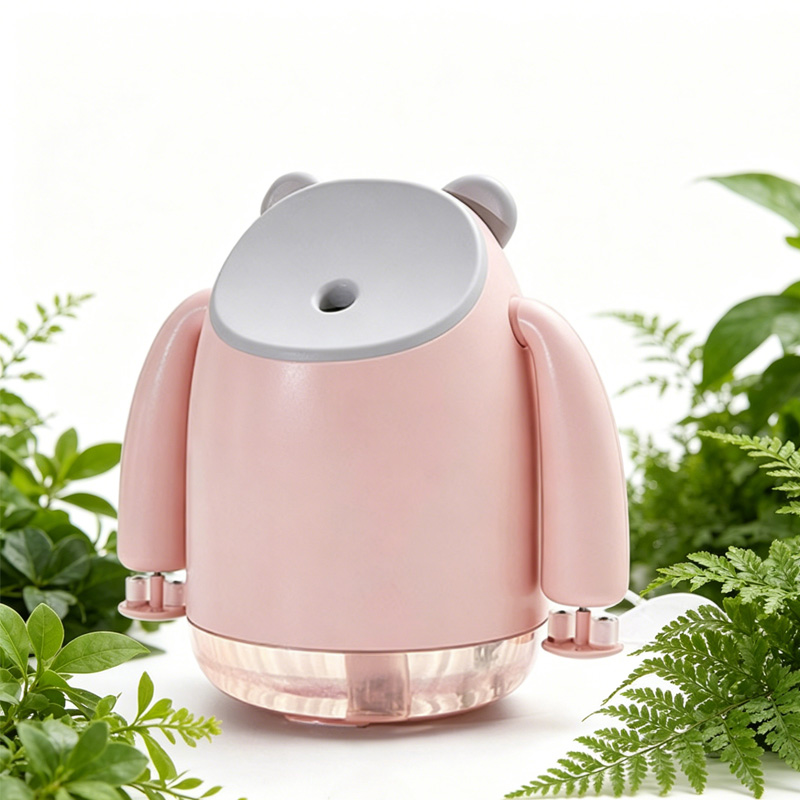 Spray Cooling Fan Portable Water Humidifier,USB Fan,desktop Small Fan,mini Air Conditioner Humidifier Double Head Fan$24.99View on Mallflare
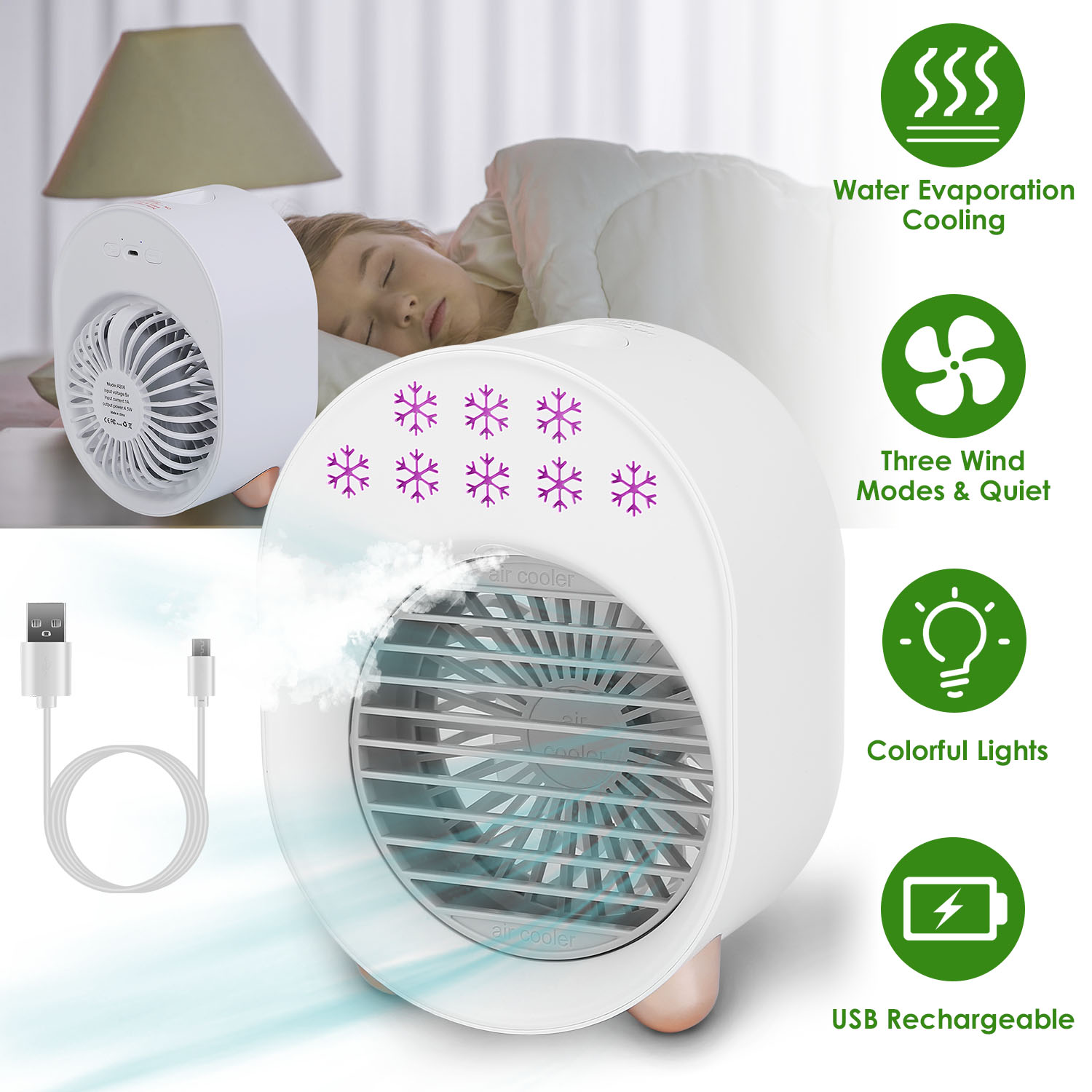 4 In 1 Portable Mini Desktop Air Conditioner Fan Water Mist Cooling Fan USB Rechargeable Humidifier Fan Evaporative Air Cooler 3 Wind Modes Colorful Lights$37.99View on Mallflare
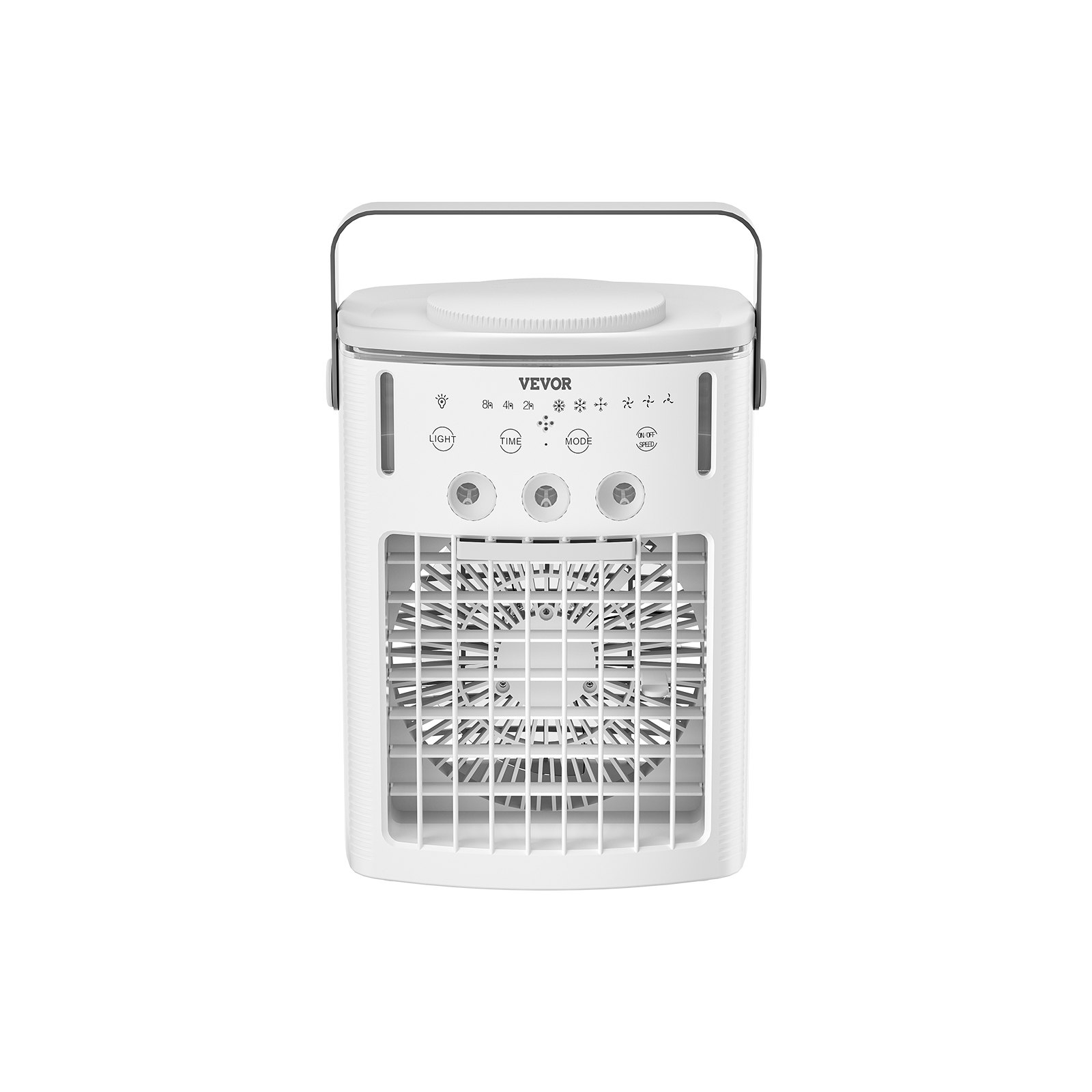 Portable Air Conditioner, 4-in-1 Evaporative Air Cooler With Remote Control, 3-Speed Mini Air Timer, 3 Mist Levels, 1L Water Tank, 120 Oscillating AC Fan For Desktop Home$39.99View on Mallflare
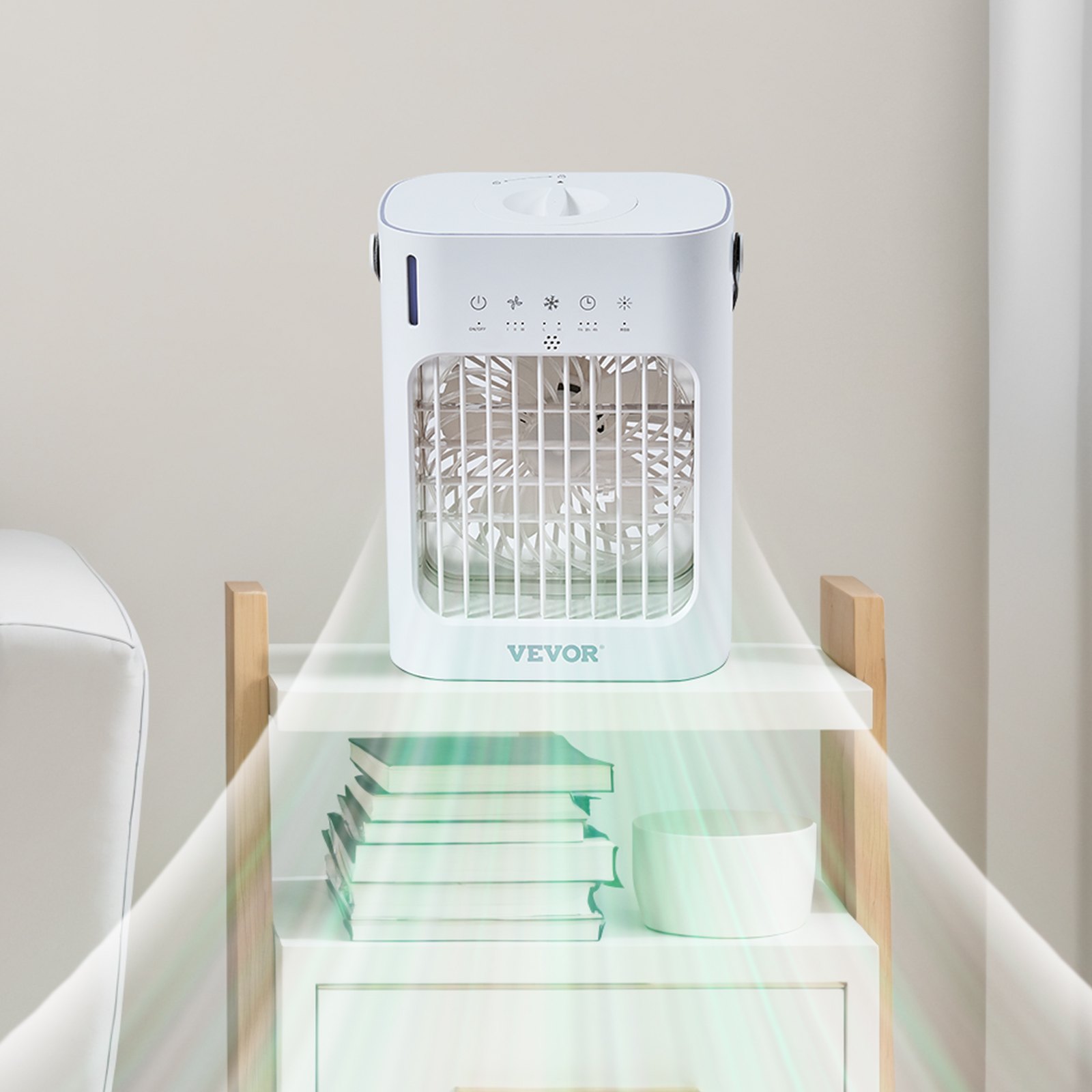 Portable Air Conditioner 4-in-1 Evaporative Air Cooler 700ml Water Tank$48.99View on Mallflare
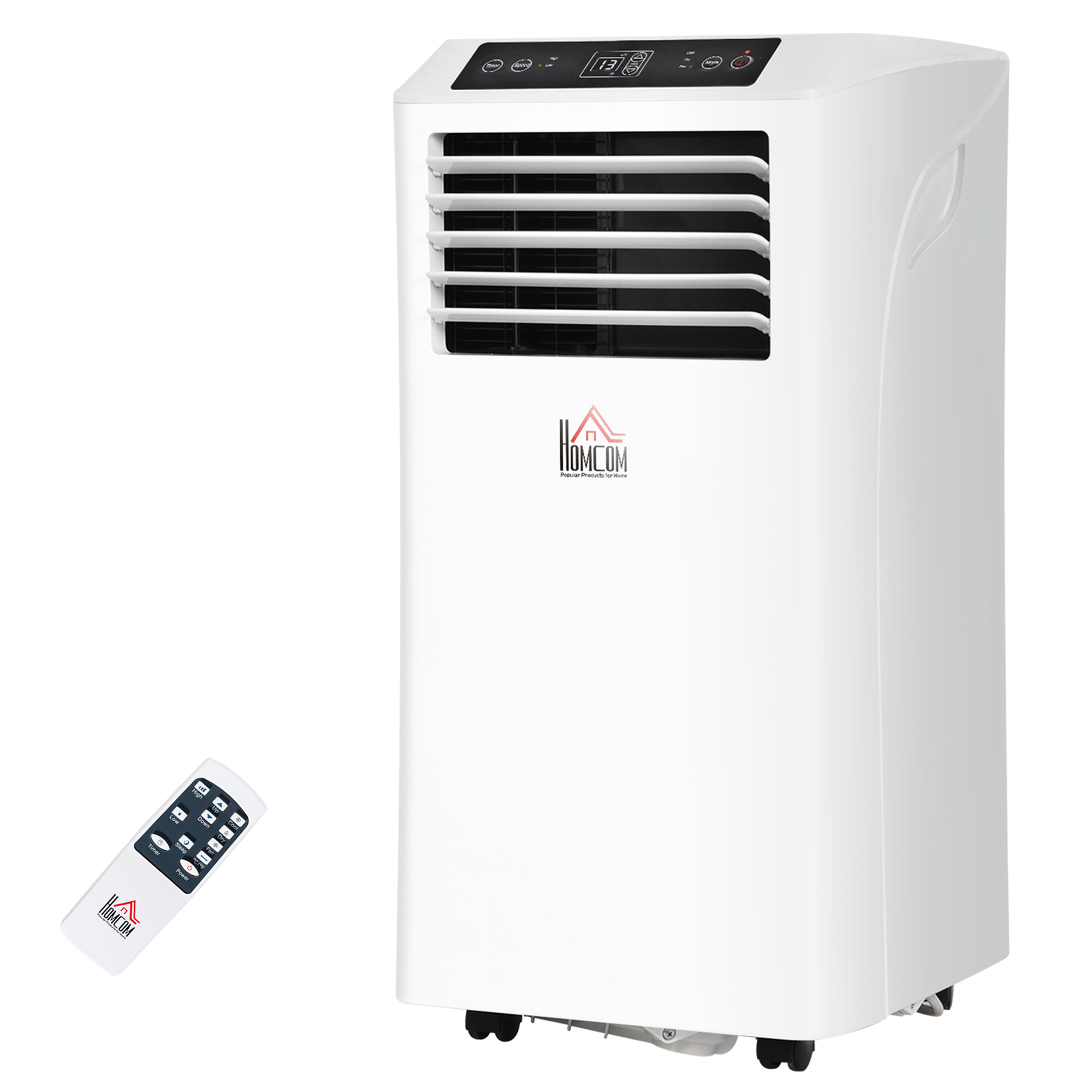 Plastic Portable Air Conditioner$394.99View on Mallflare
Highlights
- Ventless evaporative coolers use water evaporation and add humidity; compressor AC units remove heat and humidity but require exhaust ducting.
- Single-hose portable AC pulls conditioned room air out as exhaust, creating negative pressure; dual-hose models use outdoor air for rejection and cool more efficiently.
- Split portable AC systems separate the condenser outdoors and evaporator indoors, connecting via small refrigerant lines through a wall or door frame.
- Desiccant dehumidifier-coolers use a rotor to dry air before cooling; they work in humid climates but consume more energy than compressor units.
Best use cases
- Best fit: renters with sealed windows or casement windows should choose a dual-hose portable AC with a sliding-door kit or a split system with a small wall penetration.
- Best fit: dry, low-humidity climates suit evaporative coolers for spot cooling garages and workshops where ducting is impossible.
- Wrong fit: humid climates make evaporative coolers ineffective and uncomfortable; choose a compressor-based dehumidifier-cooler or split AC instead.
- Wrong fit: large open-plan rooms over 500 sq ft exceed the practical capacity of ventless coolers; use a mini-split or central system.
Buying tips
- Size compressor AC at 20 BTU per sq ft for sun-exposed rooms; add 4,000 BTU for kitchens and 2,000 BTU per occupant beyond two.
- Choose dual-hose over single-hose for efficiency; single-hose units lose 20-30% capacity to negative-pressure infiltration.
- For evaporative coolers, select CFM equal to room cubic feet divided by 2 for 2 air changes per hour in dry climates.
- Verify exhaust kit contents: window kits fit double-hung and sliding windows; casement and awning windows need a specialized insert or door kit.
Specs
| Cooling Type | Compressor / Evaporative / Desiccant |
|---|---|
| Exhaust Method | Single-hose / Dual-hose / Split / None |
| BTU Range | 5,000-14,000 BTU (compressor) |
| Window Kit Fit | 20-46 in sliding / double-hung |
Related searches
What to check before buying
- Measure window or door opening width and height; standard kits fit 20-46 inch wide sliding or double-hung windows.
- Confirm electrical circuit: most portable AC units draw 8-12 amps at 115V and require a dedicated 15A outlet.
- Check humidity: evaporative coolers need relative humidity below 40% to cool effectively.
- Plan condensate drainage: compressor units produce 1-2 gallons per day; choose self-evaporative or hose-drain models.
FAQ
Data sources: eBay / Amazon listings and product attribute feeds. Updated Nov 22, 2026.
Some links on this page are affiliate links. If you buy after clicking one, we may earn a commission at no extra cost to you. This does not change which products appear here or their order. Affiliate disclosure.