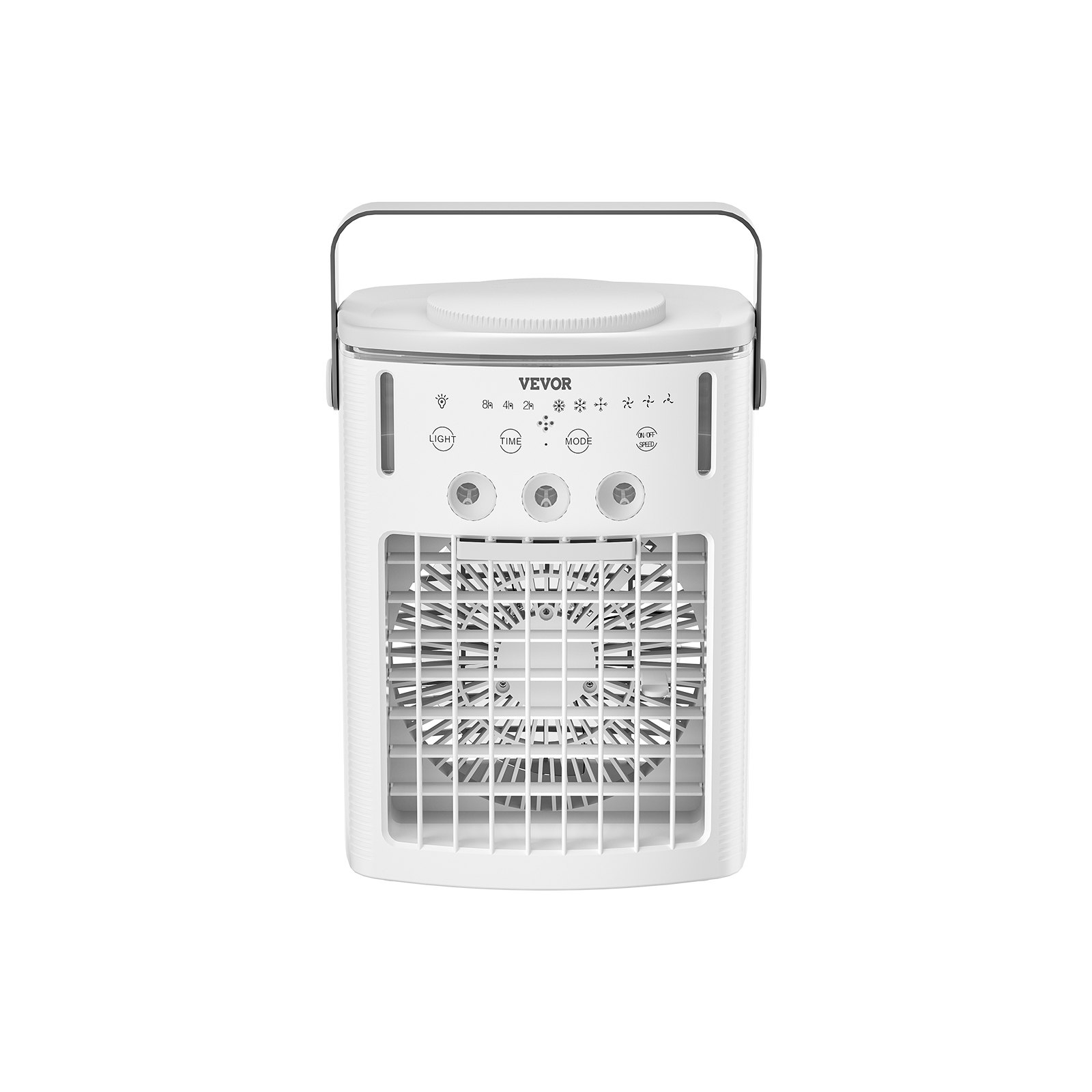

Photos from current listings. Actual item, color, and included accessories may vary.
Portable AC Unit Buying Guide
Portable AC units split into two distinct architectures: compressor-based units that genuinely cool a room and evaporative air coolers that only add humidity and fan-driven relief. The core trade-off is real BTU cooling capacity, exhaust-ducting requirements, and power draw versus lightweight, plug-anywhere evaporative devices with no refrigerant circuit. Buy a true compressor portable AC when you need measured temperature drop in an enclosed space; choose an evaporative cooler only for dry, ventilated climates where added moisture is welcome.
At a glance
- Category
- Fans, Heaters & Humidifiers
- Last updated
- Nov 22, 2026
Current offers
Highlights
- True portable AC uses a rotary compressor rated in ASHRAE BTU (SACC is typically 60-70% of ASHRAE), while evaporative coolers list only airflow CFM and tank liters with zero BTU rating.
- Single-hose compressor units pull conditioned room air out through the exhaust, creating negative pressure; dual-hose models draw outside air for the condenser and cool more efficiently.
- Evaporative coolers add moisture, so they work in dry climates under roughly 40% RH but become ineffective and clammy in humid rooms.
- Compressor portables require a window or wall vent kit and a dedicated circuit: 8,000-10,000 BTU draws about 7-9 A at 115 V, so a shared 15 A branch can trip.
Best use cases
- Garage or workshop: pick a compressor portable AC sized to the space and vent the hose through a wall or window; skip evaporative coolers in humid garages because they add moisture without lowering temperature.
- RV or camper: choose a low-amperage compressor unit that fits a 30 A shore-power budget, or a 12 V evaporative cooler for boondocking in dry air; skip high-BTU units that exceed the RV circuit.
- Bedroom: a 6,000-8,000 BTU compressor unit with a low-noise fan and dual-hose vent is the right fit; skip single-hose units if quiet, stable cooling matters, and skip evaporative coolers in humid bedrooms.
- Camping or tent: use a 12 V or USB evaporative/personal cooler only in dry heat; skip compressor portables because they need mains power and a vent path.
Buying tips
- Size by SACC, not ASHRAE: use roughly 20 BTU per square foot, so a 300 sq ft room needs about 6,000 BTU SACC; add 600 BTU per occupant and 4,000 BTU for a sunny kitchen.
- Prefer dual-hose compressor models over single-hose for better efficiency and less negative-pressure infiltration; single-hose remains acceptable for small, well-vented rooms.
- Match the plug and circuit: most 115 V portables use 5-15P plugs on 15 A circuits, while 12,000+ BTU units may need a 5-20P or 6-20P; confirm the receptacle before delivery.
- For evaporative coolers, check CFM and tank liters rather than BTU; higher CFM suits open garages, and larger tanks reduce refill frequency.
Specs
| Cooling Type | Compressor AC vs Evaporative |
|---|---|
| BTU Rating Basis | SACC (60-70% of ASHRAE) |
| Hose Configuration | Single-hose vs Dual-hose |
| Power Requirement | 115 V / 15-20 A circuit |
Related searches
What to check before buying
- Measure the window or wall opening and confirm the vent-kit panel fits; most kits span 20-40 in window widths.
- Verify the room's electrical circuit: a dedicated 15 A outlet for 8,000-10,000 BTU, or a 20 A circuit for larger units.
- Check ambient humidity: evaporative coolers need dry air, while compressor units work in any humidity but require drainage or a condensate pump.
- Confirm floor space and clearance around the unit for airflow and hose routing, plus the hose length needed to reach the vent.
FAQ
Data sources: eBay / Amazon listings and product attribute feeds. Updated Nov 22, 2026.
Some links on this page are affiliate links. If you buy after clicking one, we may earn a commission at no extra cost to you. This does not change which products appear here or their order. Affiliate disclosure.