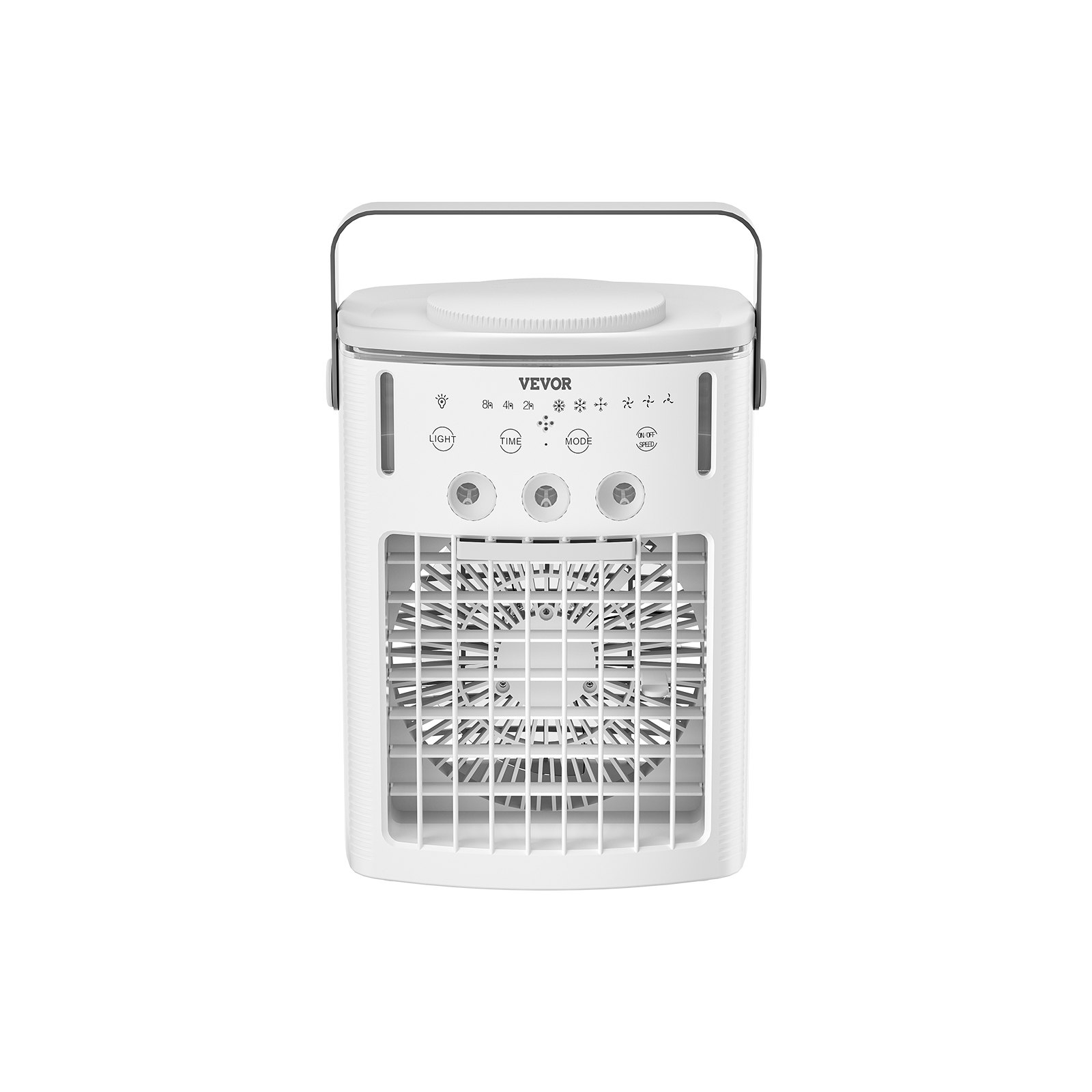

Photos from current listings. Actual item, color, and included accessories may vary.
Mini Portable AC Unit Buying Guide
Mini portable AC units are compact spot-cooling devices that fall into two distinct architectures: true compressor-based air conditioners that exhaust hot air and evaporative air coolers that add moisture to airstreams. The core trade-off is real BTU cooling capacity versus the portability, low power draw, and no-venting convenience of evaporative coolers. If you need actual room temperature reduction in a humid climate, buy a vented compressor unit; if you want personal airflow and dry-air relief in arid conditions, an evaporative cooler is the correct pick.
At a glance
- Category
- Fans, Heaters & Humidifiers
- Last updated
- Nov 22, 2026
Current offers
Highlights
- True mini ACs use rotary compressors rated in BTUs (typically 5,000–8,000 BTU) and require an exhaust hose kit; evaporative coolers use water-soaked media and a fan with no compressor.
- Evaporative cooling effectiveness drops sharply above 50% relative humidity—performance is governed by wet-bulb depression, not fan speed or tank size.
- Compressor mini ACs draw 400–800W and need a window or wall vent; evaporative models draw 30–80W and run on standard 120V household circuits.
- Oscillation (60–120°), timer programming, and remote control are convenience features; cooling output is set by BTU rating or CFM airflow and evaporative media surface area.
Best use cases
- Best fit for a dry-climate bedroom or desk: a 1L-tank evaporative cooler with 3–4 speeds and 120° oscillation delivers personal cooling at low wattage; skip it in coastal humid rooms.
- Best fit for a small sealed room under 200 sq ft in a humid region: choose a 5,000–8,000 BTU compressor mini AC with a window exhaust kit; skip evaporative coolers entirely.
- Best fit for a garage, workshop, or patio: pick a high-CFM evaporative cooler (800+ CFM) with a larger tank or hose inlet; skip low-CFM desktop units that only cool a few feet of air.
- Wrong fit for whole-room cooling: mini units under 8,000 BTU cannot cool open-plan spaces above 250 sq ft—choose a standard 10,000–12,000 BTU portable AC instead.
Buying tips
- Match BTU to room size: 5,000 BTU cools up to ~150 sq ft, 6,000 BTU ~200 sq ft, 8,000 BTU ~250 sq ft; subtract 10% for sunny or kitchen zones.
- For evaporative coolers, buy by CFM not tank size: 300–500 CFM suits desk/personal use, 700–1,000 CFM suits a small room, and tank capacity only sets refill frequency.
- Confirm the exhaust kit includes a window slider panel and hose diameter (typically 5–6 inch); compressor units without a vent kit cannot remove heat from the room.
- Check the plug standard and circuit: compressor mini ACs need a dedicated 15A 120V outlet; evaporative coolers run on any standard 120V outlet without tripping breakers.
Specs
| Cooling Type | Compressor AC vs Evaporative |
|---|---|
| Cooling Capacity | 5,000–8,000 BTU / 300–1,000 CFM |
| Power Draw | 400–800W AC / 30–80W Evap |
| Vent Requirement | Exhaust hose vs None |
Related searches
What to check before buying
- Measure the window or wall opening for the exhaust hose panel—compressor units need at least one sash window or a wall vent within hose reach.
- Check room humidity with a hygrometer: if relative humidity stays above 50%, evaporative cooling will underperform and a compressor unit is required.
- Verify the electrical circuit: a 5,000–8,000 BTU compressor AC draws 4–7A and should not share a circuit with high-draw appliances.
- Measure floor or desk footprint and clearance: mini compressor ACs need 12–18 inches of rear clearance for exhaust airflow; evaporative units need open air intake.
FAQ
Data sources: eBay / Amazon listings and product attribute feeds. Updated Nov 22, 2026.
Some links on this page are affiliate links. If you buy after clicking one, we may earn a commission at no extra cost to you. This does not change which products appear here or their order. Affiliate disclosure.