
Photos from current listings. Actual item, color, and included accessories may vary.
Hunter Ceiling Fan With Lights And Remote Buying Guide
Hunter ceiling fans with integrated light kits and handheld remotes are a premium air-comfort segment defined by cast-aluminum or steel motor housings, AC vs DC motor architecture, and proprietary 3-pin or wall-control signal compatibility. The core trade-off is motor efficiency and remote signal reliability against ceiling-height fit and canopy clearance, not bulb wattage. A durable Hunter pick means a DC motor or sealed AC motor with a matching remote receiver in the canopy, rated for your ceiling height and blade span-to-room ratio.
At a glance
- Category
- Fans, Heaters & Humidifiers
- Last updated
- Nov 22, 2026
Current offers
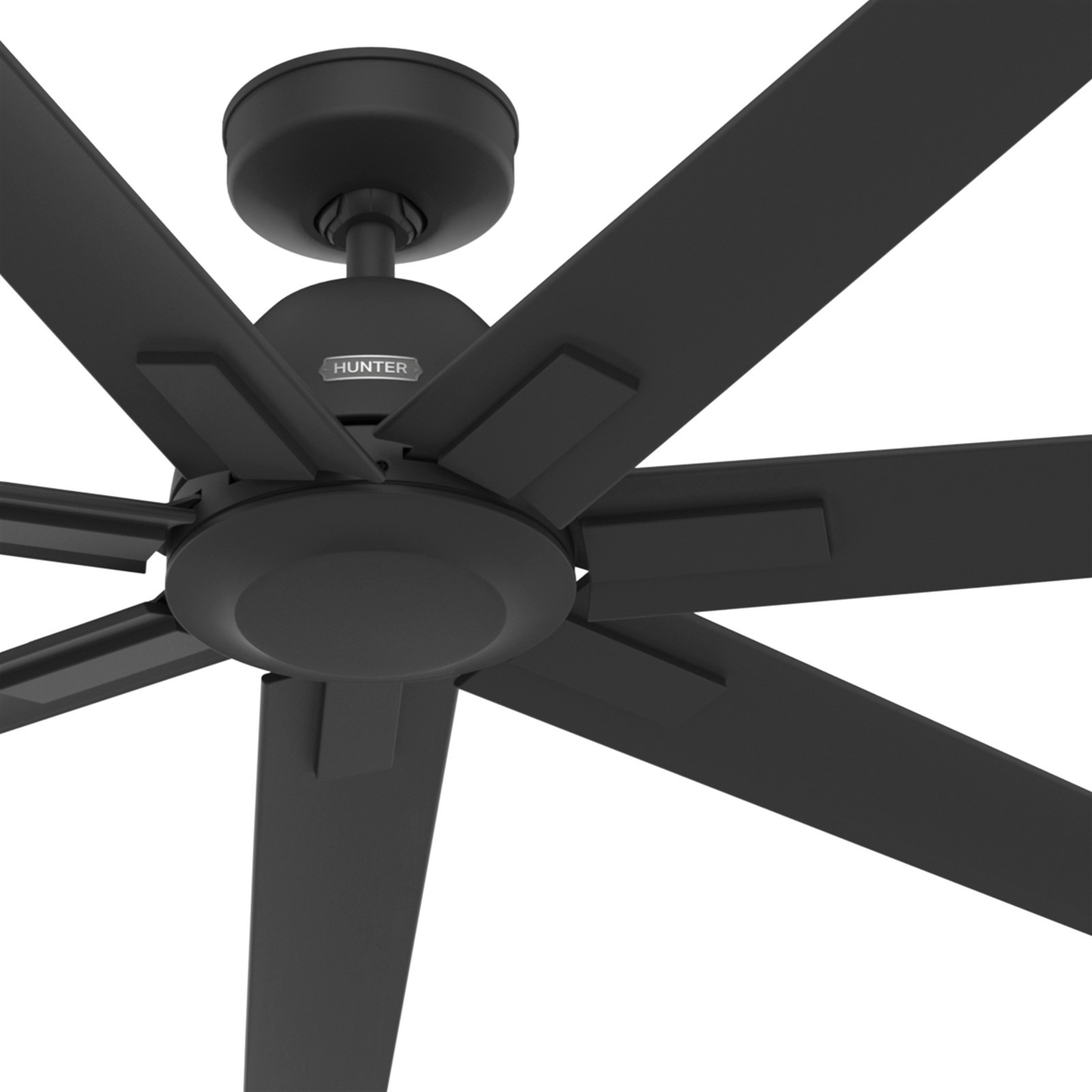 Hunter Fan 72 inch Matte Black Outdoor Ceiling Fan with 7 Blades and No Light$215.99Certified - Refurbished · Last checked Nov 20, 2026View on eBay
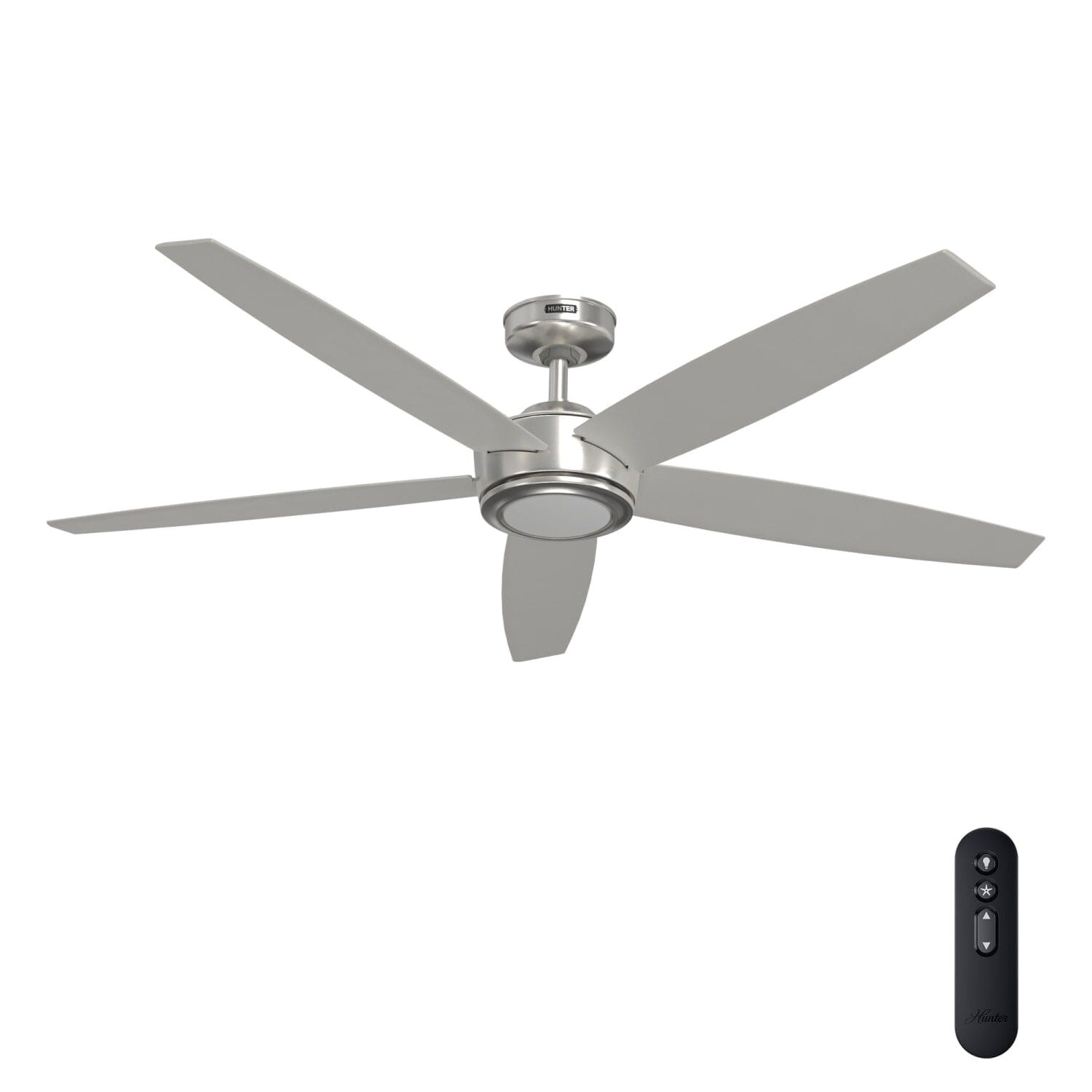 Hunter Fan 60 inch Indoor Brushed Nickel Ceiling Fan with LED Light and Remote$229.99Certified - Refurbished · Last checked Nov 20, 2026View on eBay
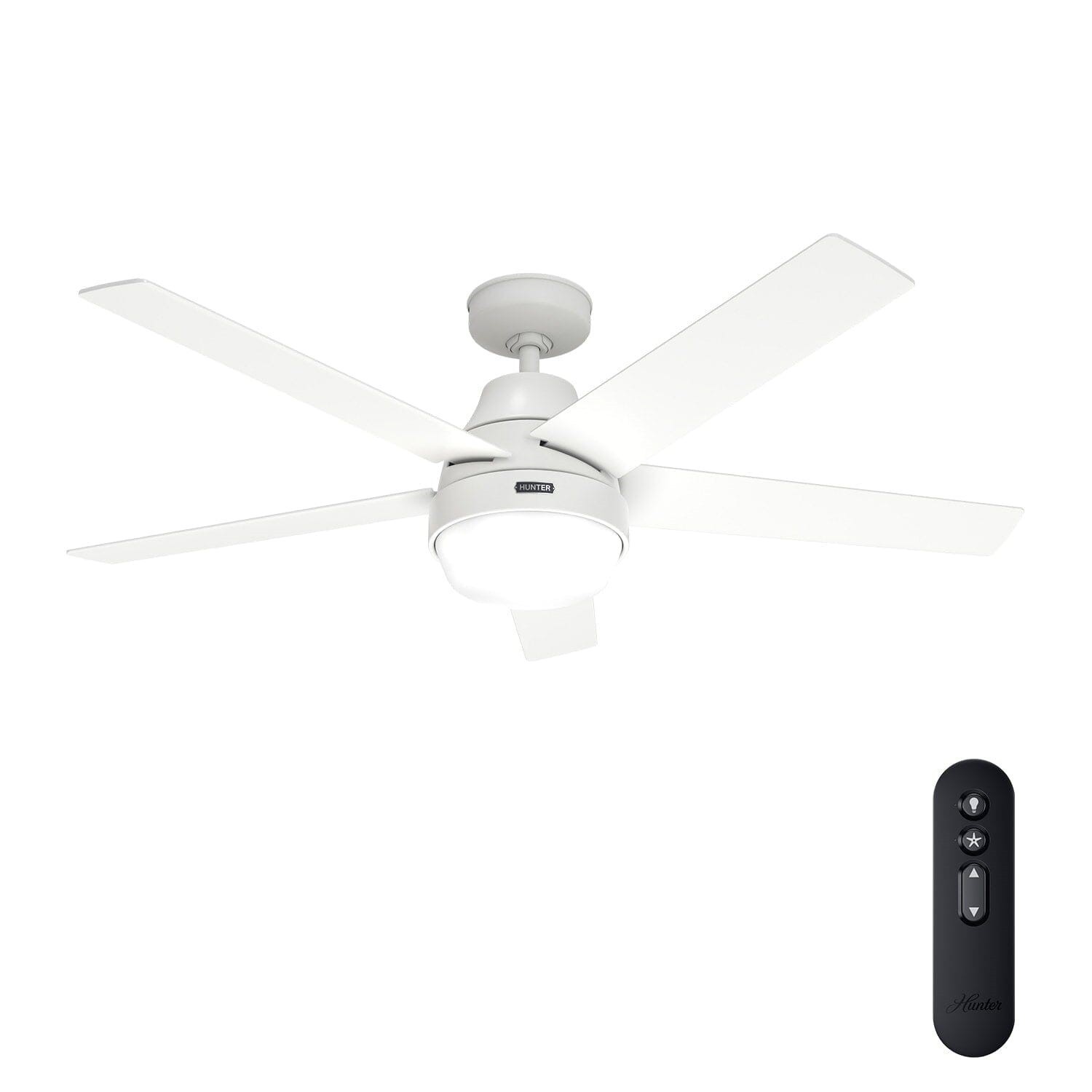 Hunter Fan 52 inch Indoor Matte White Ceiling Fan with LED Light and Remote$237.99Certified - Refurbished · Last checked Nov 20, 2026View on eBay
Highlights
- DC motors draw roughly 15-40W at high speed versus 60-80W for AC motors, and deliver 6-8 speeds instead of 3, which directly determines summer efficiency and winter reverse-cycle usefulness.
- Hunter remote systems use a canopy-mounted receiver and typically a 3-pin RF handset; older and newer generations are not cross-compatible, so the remote must match the fan's receiver band and control protocol.
- Blade span-to-room math: 42-48 in suits rooms under 175 sq ft, 52 in fits 175-350 sq ft, and 60 in+ is required for great rooms over 400 sq ft; undersizing a large room causes dead air and forces high-speed noise.
- Downrod and canopy clearance determine real-world fit: standard 3-4 in downrods work with 9 ft ceilings, while vaulted or high ceilings need longer downrods to keep blades at least 7 ft above the floor.
Best use cases
- Best fit: a 52 in DC-motor Hunter with light kit and remote in a 200-300 sq ft bedroom or living room with a standard 8-9 ft flat ceiling—choose DC for quiet nighttime airflow and 6-speed control.
- Best fit: a 60 in+ AC or DC Hunter with long downrod and remote in an open-plan great room with 10-12 ft ceilings—skip small 42-44 in models, which will not move enough air volume.
- Wrong fit: outdoor or damp-rated porches need a damp/wet-rated Hunter model with sealed motor and corrosion-resistant blades; standard indoor fans will corrode and void warranty coverage.
- Wrong fit: low 7.5 ft ceilings should skip integrated-light models with deep canopies and pick a flush-mount or hugger configuration to preserve 7 ft blade-to-floor clearance.
Buying tips
- Match blade span to square footage first: under 175 sq ft use 42-48 in, 175-350 sq ft use 52 in, and over 400 sq ft use 60 in or dual-fan placement—span drives airflow more than motor tier.
- Choose DC motor for bedrooms and living spaces where noise and speed granularity matter; choose AC motor when you want simple 3-speed wall-switch compatibility and lower upfront cost.
- Confirm the remote receiver is included in the canopy and that the handset pairs to that receiver generation—Hunter remotes are not universal across AC and DC motor families.
- For ceilings above 9 ft, add a downrod long enough to keep blades 7-9 ft above the floor; for sloped ceilings use a slope-compatible canopy or angled ceiling adapter.
Specs
| Motor Type | DC (6-8 speed) vs AC (3 speed) |
|---|---|
| Blade Span | 42-48 / 52 / 60 in by room size |
| Control | RF remote + canopy receiver, 3-pin |
| Light Kit | Integrated LED vs E26/E12 socket |
Related searches
What to check before buying
- Measure room square footage and ceiling height before selecting span and downrod; note whether the ceiling is flat, sloped, or vaulted.
- Check the electrical box is fan-rated and that the wall switch has a neutral wire if you plan to pair the remote with a wall control.
- Verify the light kit bulb type and wattage (integrated LED vs E26/E12 sockets) and whether dimming is supported by the remote receiver.
- Confirm indoor vs damp/wet rating for porches, sunrooms, and bathrooms, and check blade material for humidity resistance.
FAQ
Data sources: eBay / Amazon listings and product attribute feeds. Updated Nov 22, 2026.
Some links on this page are affiliate links. If you buy after clicking one, we may earn a commission at no extra cost to you. This does not change which products appear here or their order. Affiliate disclosure.