
Photos from current listings. Actual item, color, and included accessories may vary.
Gas Heater Buying Guide
Gas heaters convert bottled propane or natural gas into high-output radiant or convection heat, and the core trade-off is vented safety and efficiency versus unvented convenience and portability. Vented units exhaust combustion byproducts outdoors and suit permanent room heating, while unvented catalytic or blue-flame models release moisture and CO2 indoors and demand strict clearance and ventilation discipline. The decision rule: buy vented for whole-room or overnight use, and choose unvented only for well-ventilated, intermittent spot heating with a working CO alarm.
At a glance
- Category
- Fans, Heaters & Humidifiers
- Last updated
- Nov 22, 2026
Current offers
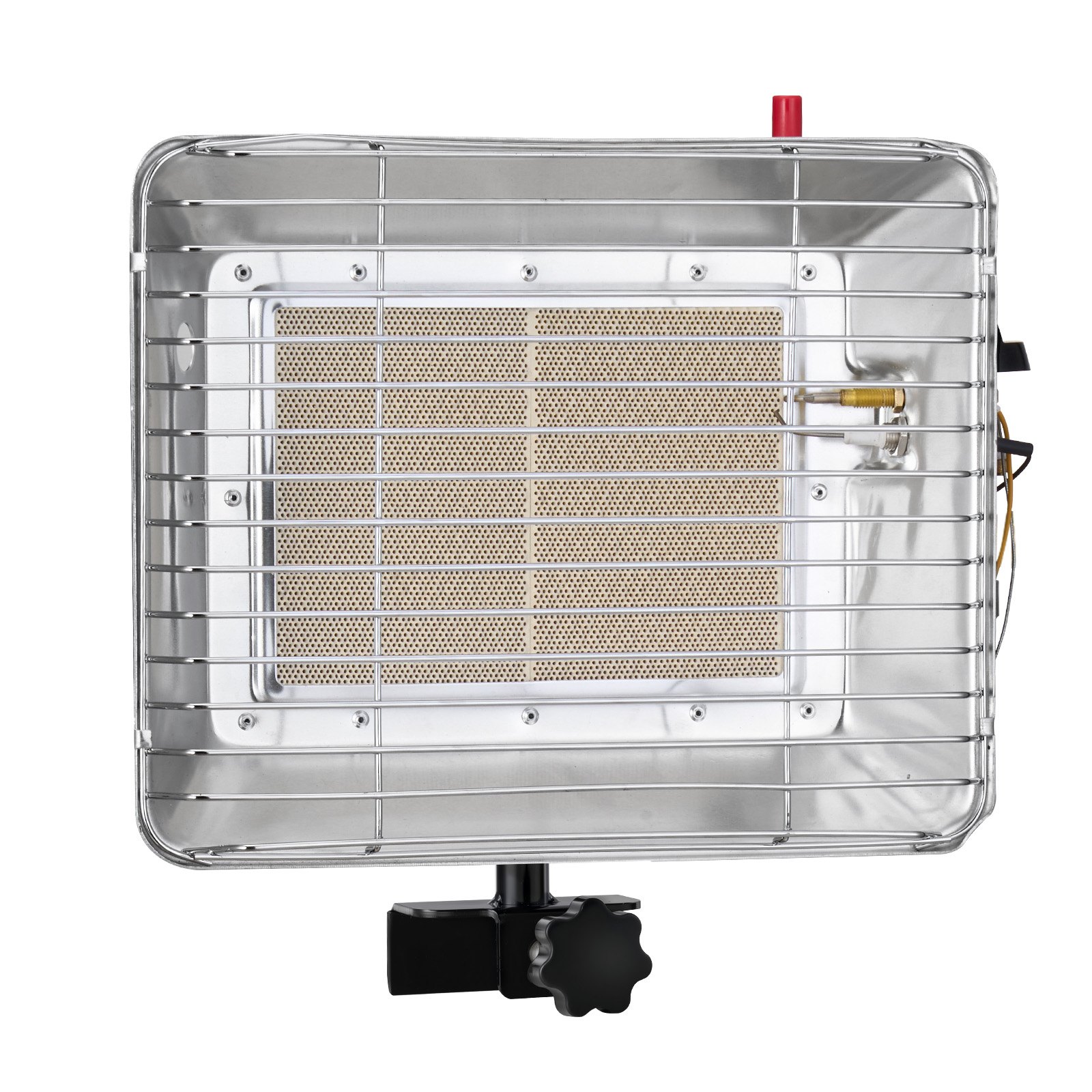 Propane Tank Top Heater, 13000 BTU Rapid Heating 180-Degree Infrared Radiant Top Gas Stepless Temperature Adjustment For Ice Fishing/ Hunting/Outdoor Work, Single Burner Square$82.99View on Mallflare
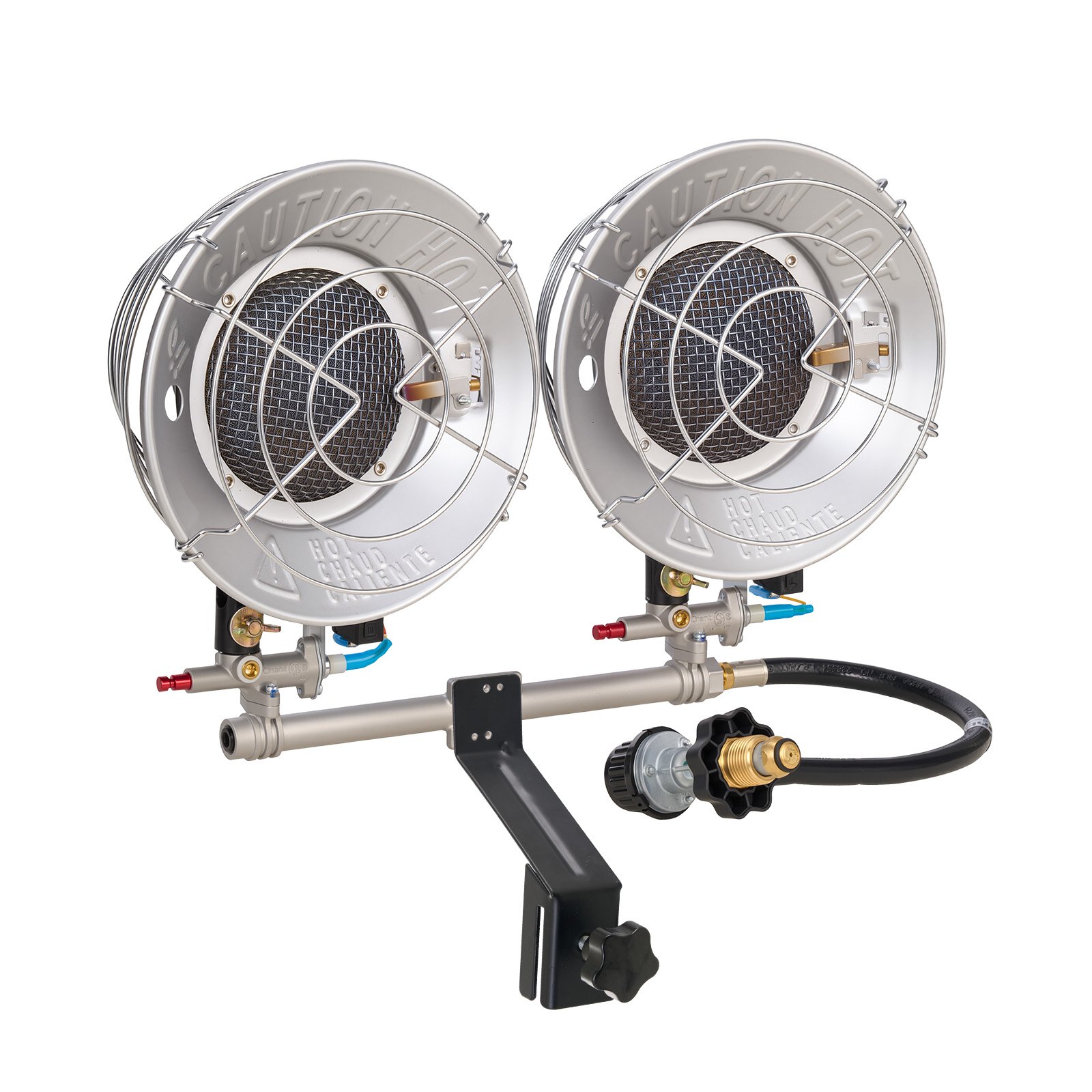 Propane Tank Top Heater, 30000 BTU Rapid Heating 180-Degree Infrared Radiant Top Gas 3 Heat Settings For Ice Fishing/ Hunting/Outdoor Work, Single Burner Square$102.99View on Mallflare
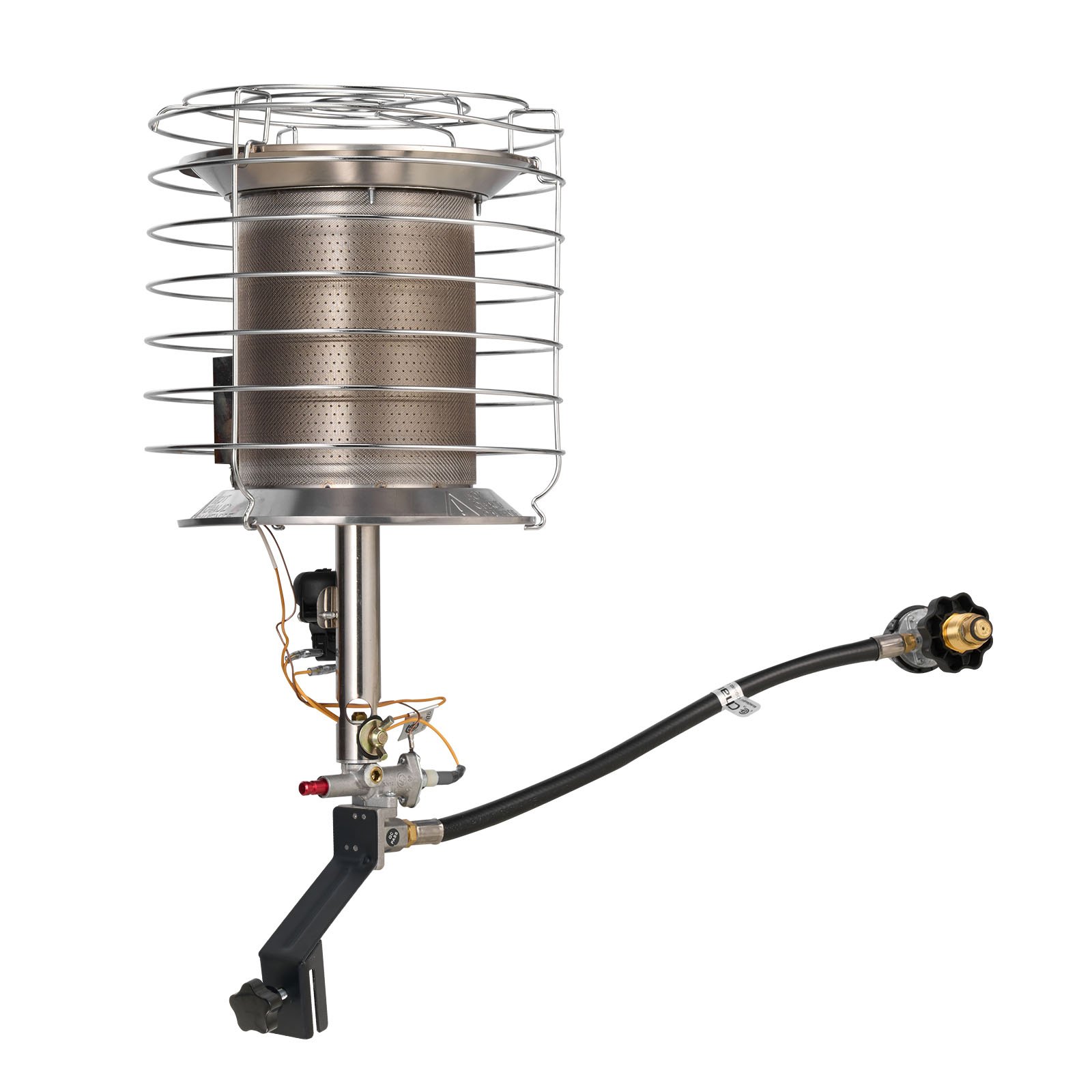 Propane Tank Top Heater, 42000 BTU Rapid Heating 360-Degree Infrared Radiant Top Gas Stepless Temperature Adjustment For Ice Fishing/ Hunting/Outdoor Work, Single Burner$110.99View on Mallflare
Highlights
- Unvented units produce roughly 1 gallon of water vapor per gallon of propane burned, raising indoor humidity and CO2; vented models route exhaust through a B-vent or direct-vent kit.
- BTU output maps to coverage: about 20 BTU per sq ft in mild climates and 40-50 BTU per sq ft in cold, poorly insulated rooms; a 30,000 BTU unit suits roughly 600-1,000 sq ft.
- Unvented heaters require an oxygen depletion sensor (ODS) and a CO alarm; catalytic and blue-flame burners differ in radiant versus convective heat distribution.
- Propane models need a 20 lb tank or larger and a POL/OPD valve, while natural-gas units require a fixed gas line and a licensed plumber for connection and leak testing.
Best use cases
- Best fit: a vented direct-vent wall heater for a finished basement or bedroom used overnight — it exhausts outdoors and avoids indoor moisture and CO2 buildup; skip unvented units for sleeping rooms.
- Best fit: a portable propane radiant or cabinet heater for a garage, patio, or job site with a door cracked and a CO alarm — pick 18,000-30,000 BTU and an ODS-equipped model; skip vent-free units in sealed tiny homes.
- Best fit: a natural-gas garage unit heater or infrared tube heater for a workshop with a fixed gas line — size at 40-50 BTU per sq ft and install with a licensed gas fitter; skip tank-based propane for permanent high-demand heating.
- Wrong fit: unvented heaters in small, airtight apartments, RVs, or tents without ventilation — combustion byproducts and moisture accumulate; choose a vented or electric alternative instead.
Buying tips
- Size by room volume and climate: multiply square footage by 20-50 BTU (ceiling height above 8 ft adds roughly 25%), then choose the nearest standard output tier — 10k, 18k, 20k, 30k, or 50k BTU.
- Choose blue-flame convection for even room warming, radiant/infrared for spot heat on people and objects, and catalytic for silent, flameless low-level heat; all unvented types need ODS and CO alarms.
- Match fuel to infrastructure: propane for portability and off-grid use with a 20 lb OPD tank; natural gas only where a fixed line and shutoff valve exist, installed to local gas code.
- For vented units, confirm the vent kit type (horizontal direct-vent, vertical B-vent, or through-wall) and clearance to combustibles — typically 6-12 inches on sides and above, and never block the exhaust.
Specs
| Venting Type | Unvented vs Direct-vent / B-vent |
|---|---|
| Fuel Type | Propane (20 lb tank) vs Natural gas |
| Heat Output | 10k-50k BTU; 20-50 BTU per sq ft |
| Burner Style | Blue-flame / Radiant / Catalytic |
Related searches
What to check before buying
- Measure the room's square footage and ceiling height, then calculate BTU at 20-50 BTU per sq ft and confirm the heater's rated output covers it.
- Check clearances to walls, furniture, and ceilings — most portable units need 24-36 inches front and 6-12 inches sides; vented units need exterior wall access for the vent kit.
- For unvented use, install a battery-backed CO alarm and an oxygen depletion sensor-equipped unit, and plan a ventilation source such as a cracked window.
- For natural gas, confirm the line's capacity and pressure with a licensed fitter; for propane, use a 20 lb OPD tank with a POL connector and store it outdoors upright.
FAQ
Data sources: eBay / Amazon listings and product attribute feeds. Updated Nov 22, 2026.
Some links on this page are affiliate links. If you buy after clicking one, we may earn a commission at no extra cost to you. This does not change which products appear here or their order. Affiliate disclosure.