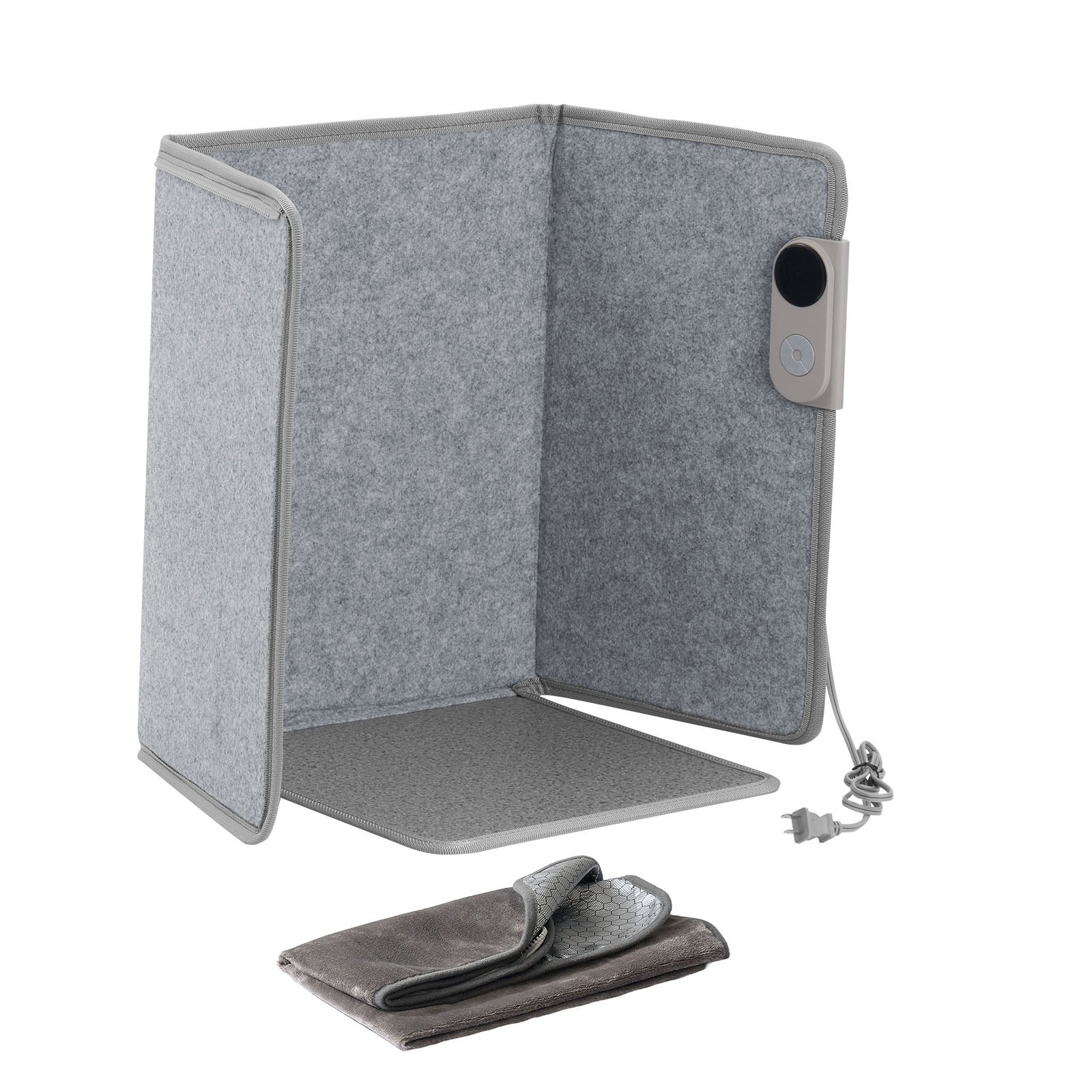

Photos from current listings. Actual item, color, and included accessories may vary.
Electric Wall Heater Buying Guide
Electric wall heaters are fixed, wall-mounted convection or fan-forced appliances that provide primary or supplemental zone heat without floor space. The core trade-off is between high-wattage fan-forced units (fast recovery, higher electrical load) and low-wattage convection panels (silent, steady, slower warm-up), with build quality dictated by element grade, casing gauge, and safety certifications. The decision rule: choose a unit whose wattage matches a dedicated circuit, whose enclosure is steel (not plastic), and whose listing carries UL/ETL listing plus a wall thermostat or built-in thermostat rated for the room volume.
At a glance
- Category
- Fans, Heaters & Humidifiers
- Last updated
- Nov 22, 2026
Current offers
Highlights
- Fan-forced models typically deliver 1,500-4,800W with 5,100-16,400 BTU output, while convection panels run 400-1,000W and rely on silent chimney-effect airflow.
- UL 2021 and ETL listings are the baseline safety standard for fixed electric room heaters; unlisted imports often skip tip-over and overheat cutout testing.
- Steel casing with powder-coat finish and Nichrome wire elements outlast plastic housings and stamped aluminum reflectors, which warp and discolor under continuous load.
- A 240V unit at 4,800W draws 20A and requires a dedicated double-pole breaker; 120V plug-in models max out at 1,500W (12.5A) on a 15A circuit.
Best use cases
- Best fit: a 240V fan-forced wall heater (2,000-4,800W) for a basement, garage, or addition where fast heat recovery and a dedicated circuit are available; skip 120V plug-in units for rooms over 150 sq ft.
- Best fit: a 120V convection panel (400-1,000W) for a bathroom, hallway, or bedroom where silence matters and the unit supplements an existing HVAC system; skip fan-forced models if noise above 45 dB is unacceptable.
- Best fit: a built-in-thermostat steel unit with a wall-mounted external thermostat for large open spaces; skip units with only a tip-over switch and no thermostat for continuous occupancy rooms.
- Wrong fit: plastic-housing bargain heaters in unheated garages or workshops where vibration and temperature swings crack housings; choose steel-cased, UL-listed models only.
Buying tips
- Size by room volume, not floor area: a 240V 4,800W unit heats roughly 500 sq ft in a well-insulated room; derate 20-30% for uninsulated garages or ceilings above 8 ft.
- Match the circuit before buying: 1,500W/120V needs a 15A dedicated circuit; 2,000-3,000W/240V needs a 20A double-pole; 4,000-4,800W/240V needs a 30A double-pole breaker and 10-gauge wire.
- Prefer Nichrome wire elements and steel fins over aluminum or ceramic-core budget elements; Nichrome resists oxidation and maintains output over years of cycling.
- Choose a unit with a built-in or wall-mount thermostat rated for the load, plus a manual reset high-limit cutout; a tip-over switch alone is insufficient for fixed wall installation.
Specs
| Heating Type | Fan-forced vs convection panel |
|---|---|
| Wattage / Voltage | 400-4,800W / 120V or 240V |
| Circuit Requirement | 15A-30A dedicated breaker |
| Safety Listing | UL 2021 or ETL listed |
Related searches
What to check before buying
- Measure the wall cavity and confirm framing depth: recessed models need 3.5-4 in stud depth and a cutout matching the can size; surface-mount units need 2-3 in clearance from sidewalls and floor.
- Confirm the electrical circuit: voltage (120V vs 240V), amperage, and wire gauge at the planned location; a 240V heater cannot run on a standard 120V outlet.
- Check room heat loss: uninsulated walls, single-pane windows, and ceilings over 8 ft require 30-50% more wattage than the square-foot chart suggests.
- Verify listing certifications: UL or ETL mark on the label, plus a thermostat or wall control included; avoid units requiring proprietary controls sold separately.
FAQ
Data sources: eBay / Amazon listings and product attribute feeds. Updated Nov 22, 2026.
Some links on this page are affiliate links. If you buy after clicking one, we may earn a commission at no extra cost to you. This does not change which products appear here or their order. Affiliate disclosure.