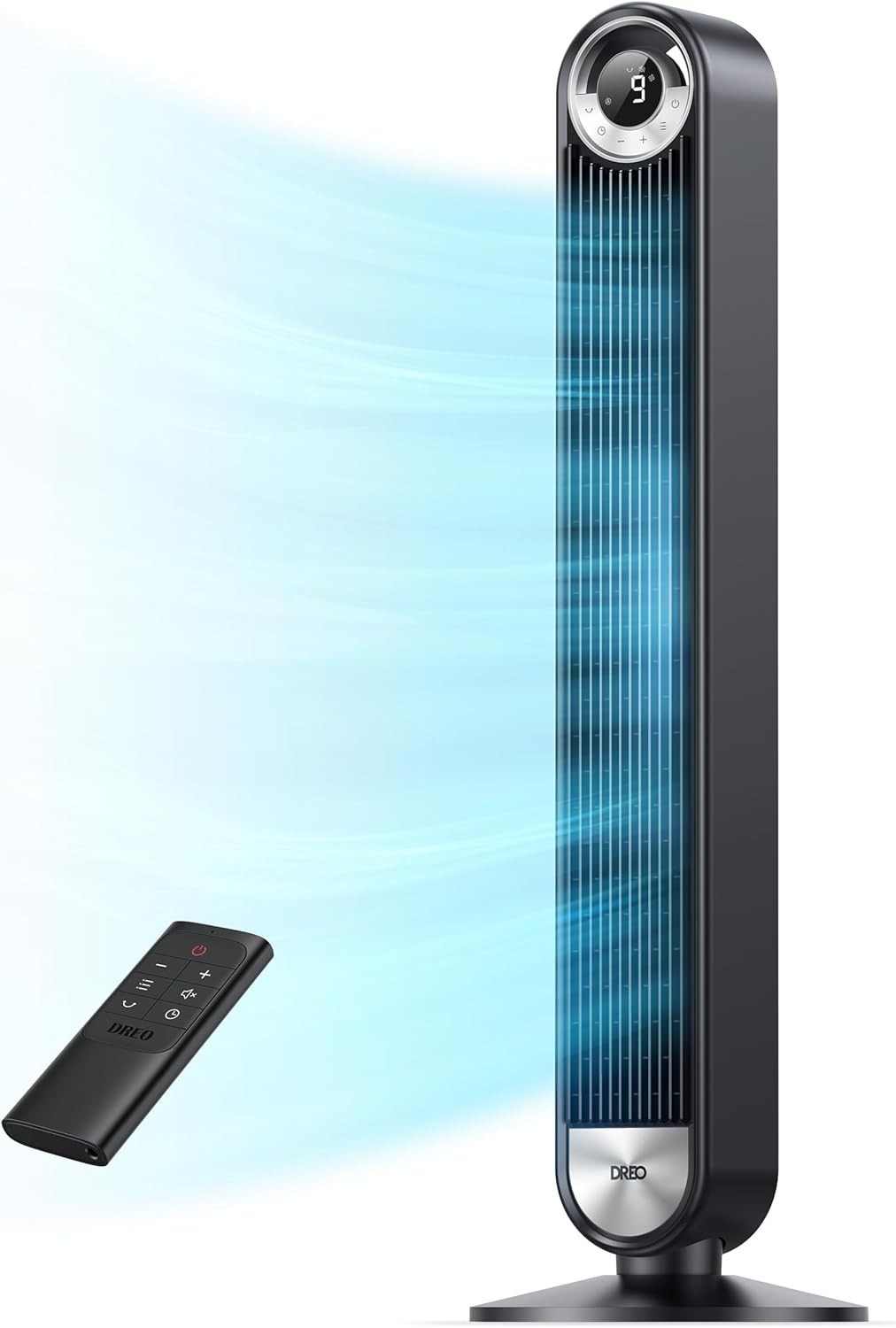

Photos from current listings. Actual item, color, and included accessories may vary.
Dreo Tower Buying Guide
Dreo tower fans are slim, bladeless-style air movers built around a vertical airflow path and wide oscillation, with the key trade-off being airflow velocity versus noise and footprint. The decisive split is between compact bedroom models (lower velocity, quieter, shorter height) and full-height standing models (higher velocity, larger coverage, more audible at top speed). Buy the compact tier for close-range cooling in small rooms; step up to the full-height tier only if you need to move air across a larger living space.
At a glance
- Category
- Fans, Heaters & Humidifiers
- Last updated
- Nov 22, 2026
Current offers
Highlights
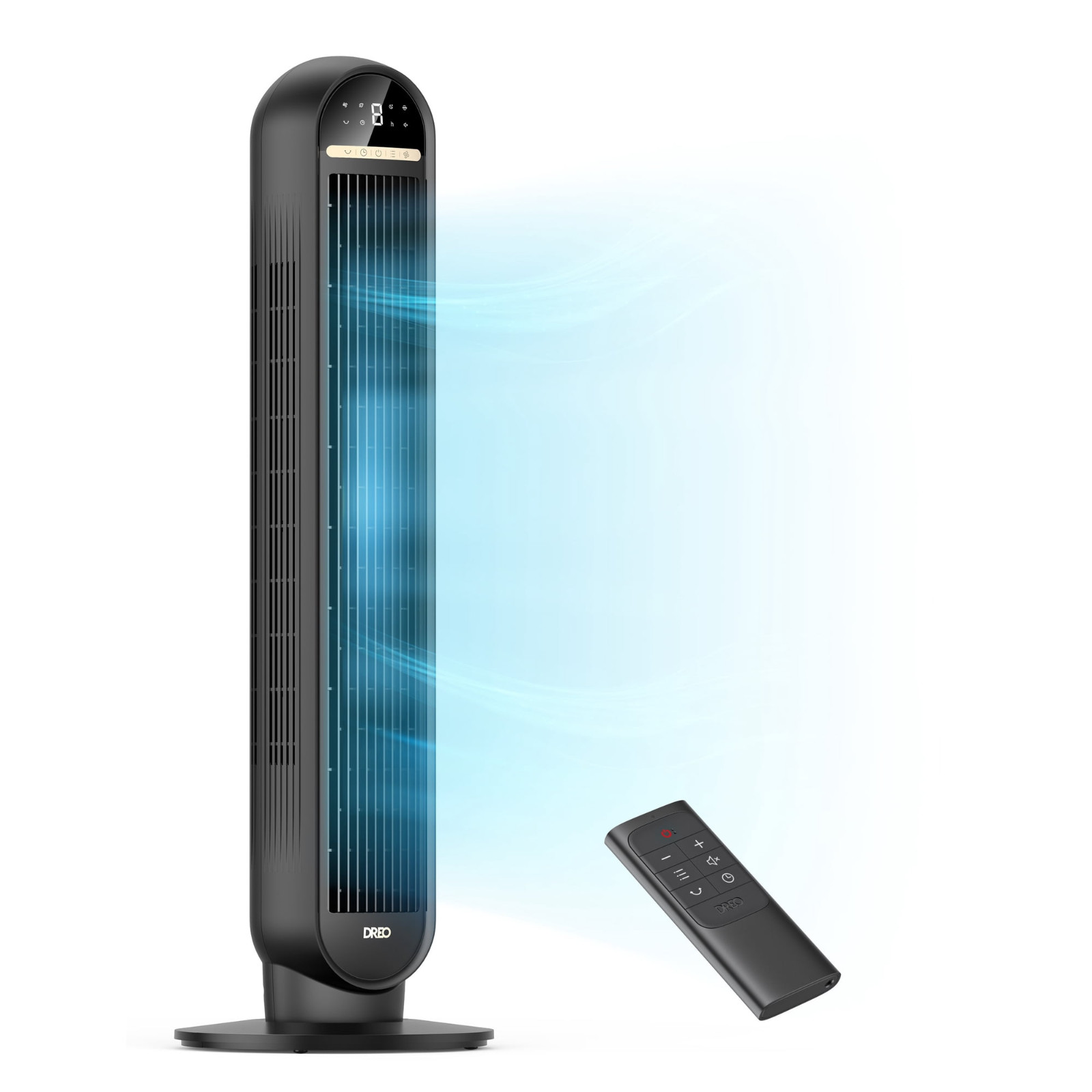
- Airflow velocity tiers separate the lineup: compact bedroom units move roughly 24-25 ft/s, while 36-inch standing models push 24+ ft/s across a taller column for greater throw distance.
- Oscillation arc is typically 90 degrees on these Dreo tower models, which is the practical minimum for side-to-side room coverage from a corner placement.
- Tower architecture uses a vertical bladeless-style outlet with an internal crossflow or centrifugal fan, so footprint stays narrow while airflow exits across the full height of the column.
- Plastic housing is standard across the segment; build quality differences show up in base stability, motor mount isolation, and speed-step count rather than shell material.
Best use cases
- Best fit: compact bedroom or dorm room under ~150 sq ft — pick the shorter 25 ft/s quiet model and run it on low/medium overnight.
- Best fit: living room or open-plan space needing cross-room throw — pick the 36-inch standing model and aim the 90-degree oscillation along the long axis of the room.
- Wrong fit: whole-home cooling or replacing AC — a tower fan only circulates air; for rooms above ~300 sq ft with heat load, a tower fan alone will not lower temperature.
- Wrong fit: households with toddlers or pets that climb — a tall freestanding tower tips more easily than a low-profile floor fan; anchor the base or choose the shorter unit.
Buying tips
- Match height to placement: a 36-inch column directs airflow at seated-to-standing height across a room, while a sub-30-inch unit is best on a nightstand or low dresser for bed-level cooling.
- Use the airflow-per-room rule: one tower fan covers roughly 100-150 sq ft of perceived cooling at medium speed; add a second unit or step up velocity for larger spaces.
- Prioritize speed-step count and a dedicated sleep/night mode over extra features — more speed steps let you find a noise level below ~35 dB for bedroom use.
- Confirm the oscillation arc and tilt: 90-degree oscillation covers a corner placement; a fixed 90-degree sweep without vertical tilt is fine for floor use but limited for desk-height delivery.
Specs
| Tower Height Tier | Compact (<30 in) vs 36 in standing |
|---|---|
| Airflow Velocity | ~24-25 ft/s at high speed |
| Oscillation Arc | 90 degrees horizontal sweep |
| Housing Material | Plastic shell, narrow tower base |
Related searches
What to check before buying
- Measure the floor or table spot: tower bases are typically 10-12 inches across, so confirm the footprint clears furniture and door swings.
- Check outlet placement: cord length on tower fans is usually around 6 feet, so the unit must sit within reach of a wall outlet without an extension cord.
- Clear the intake: tower fans draw air from the rear grille, so leave at least 6-8 inches behind the unit for airflow and to avoid motor overheating.
- For bedroom use, confirm the lowest speed is rated for quiet operation and that the display can be dimmed or turned off for sleep.
FAQ
Data sources: eBay / Amazon listings and product attribute feeds. Updated Nov 22, 2026.
Some links on this page are affiliate links. If you buy after clicking one, we may earn a commission at no extra cost to you. This does not change which products appear here or their order. Affiliate disclosure.