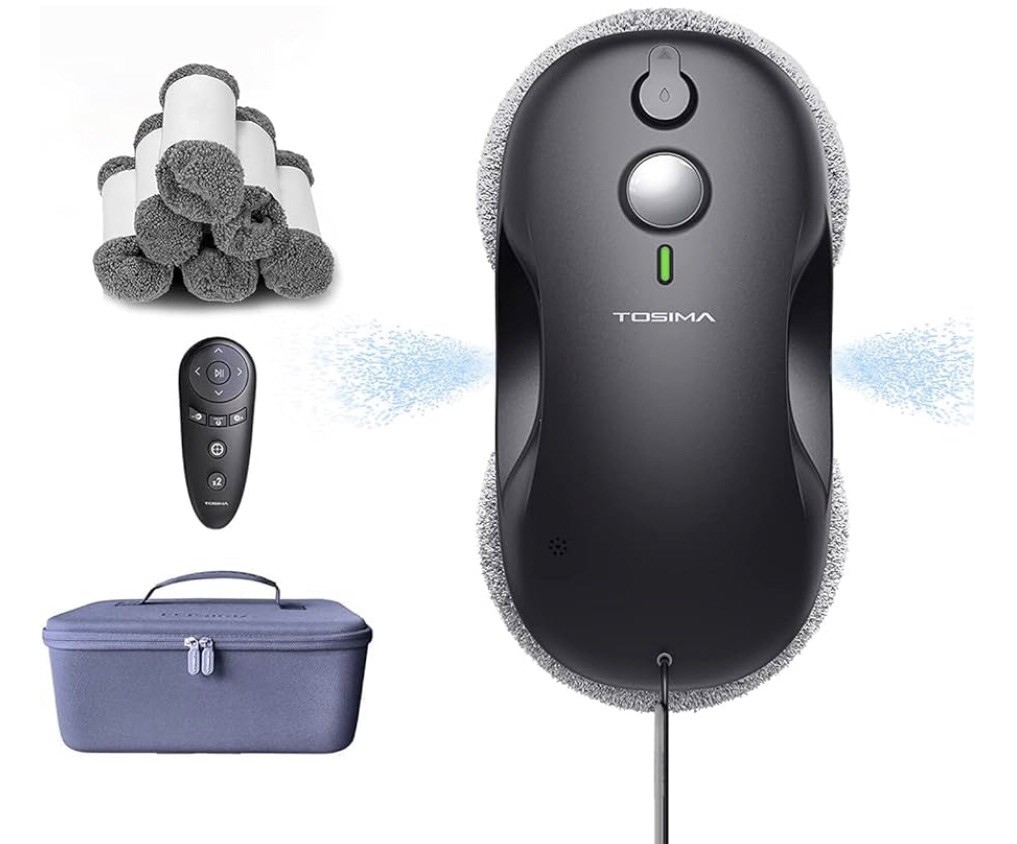

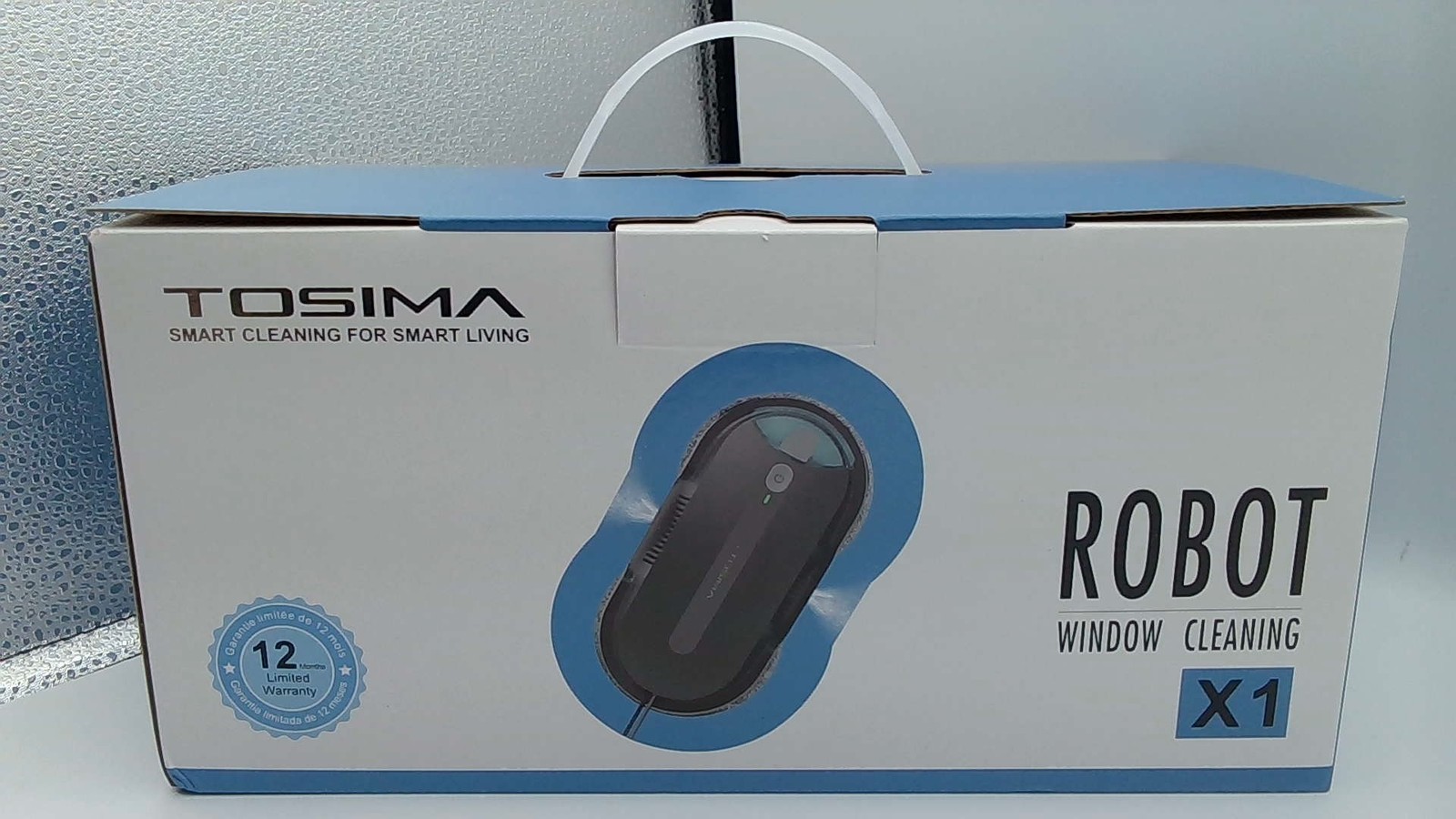
Photos from current listings. Actual item, color, and included accessories may vary.
Tosima Window Cleaning Robot Buying Guide
Tosima window cleaning robots are corded, plastic-bodied devices that climb vertical glass using vacuum suction and dual-direction wiping. The core trade-off is suction power versus safety redundancy: entry tiers rely on a single vacuum motor and tether, while higher tiers add battery backup and edge-detection sensors. Buy a model with a claimed suction hold of at least 20 minutes on battery backup plus a safety tether; skip any unit that lacks both edge sensors and a mechanical fall-arrest strap.
At a glance
- Category
- Smart Cleaning
- Last updated
- Nov 22, 2026
Current offers
Highlights
- Tosima W3 and X1 use dual-direction auto-spray wiping with a single vacuum impeller; W5 adds a higher-capacity spray tank and reinforced suction ring for larger panes.
- All Tosima models are corded electric (100–240 V adapter) with a safety tether; battery backup runtime on the W5 is rated for 20–30 minutes of hold in a power loss.
- Edge-detection uses infrared sensors on three sides; models without a bottom-edge sensor can walk off frameless glass, so confirm a 4-sensor layout on the X1/W5 tier.
- Plastic housing is ABS-grade; the suction seal is a replaceable silicone ring that degrades after roughly 6–12 months of weekly use and must be swapped to maintain grip.
Best use cases
- Best fit: Framed residential windows 3–8 mm thick and up to 2 m tall — pick the W5 for its higher suction and larger tank; the W3 is adequate for panes under 1.5 m.
- Wrong fit: Frameless or frameless-bonded glass balustrades and skylights — skip Tosima unless the model explicitly lists a bottom-edge sensor and tether anchor point; otherwise choose a unit with four-sided edge detection.
- Best fit: Interior high-rise windows with a nearby outlet and a flat sill — corded operation means you need a reachable socket within the cord length (typically 4–5 m); pick the X1 for tighter corners due to its shorter chassis.
- Wrong fit: Textured, frosted, or heavily tinted film glass — suction cups cannot seal on non-smooth surfaces; skip all Tosima robots for these panes and use a manual squeegee.
Buying tips
- Match suction hold to glass thickness: 3–5 mm panes need at least 60 kPa rated suction; 6–8 mm panes need 70 kPa or higher, which the W5/X1 tier provides.
- Confirm a 4-sensor edge layout (top, bottom, left, right) — models listing only 'dual sensor' are unsafe on frameless glass and should be skipped for balcony doors.
- Check cord length and plug standard: Tosima ships with a 4–5 m cord and a regional plug; for windows above 2 m, a 5 m cord plus an extension rated for the adapter's 24 V output is required.
- Replace the silicone suction ring every 6–12 months; a worn ring drops hold pressure by 30–40% and is the most common cause of mid-pane stalls.
Specs
| Power Source | Corded 100–240 V adapter, 24 V DC |
|---|---|
| Edge Sensors | 2-sensor base / 4-sensor W5 & X1 |
| Suction Hold | 60–70 kPa; 20–30 min battery backup |
| Glass Thickness | 3–8 mm smooth, unfilmed panes |
Related searches
What to check before buying
- Measure pane width and height: Tosima robots need at least 30 cm of flat glass in both dimensions to complete a turn; smaller panes will cause repeated edge stalls.
- Verify a grounded outlet within cord reach and confirm the adapter voltage matches your region (100–240 V input, 24 V DC output).
- Check window frame depth: the robot's chassis is roughly 6–8 cm tall, so a frame lip lower than 2 cm will block the suction seal at the start position.
- Confirm the glass surface is smooth and unfilmed; frosted, textured, or applied privacy film prevents the suction ring from sealing and voids safe operation.
FAQ
Data sources: eBay / Amazon listings and product attribute feeds. Updated Nov 22, 2026.
Some links on this page are affiliate links. If you buy after clicking one, we may earn a commission at no extra cost to you. This does not change which products appear here or their order. Affiliate disclosure.