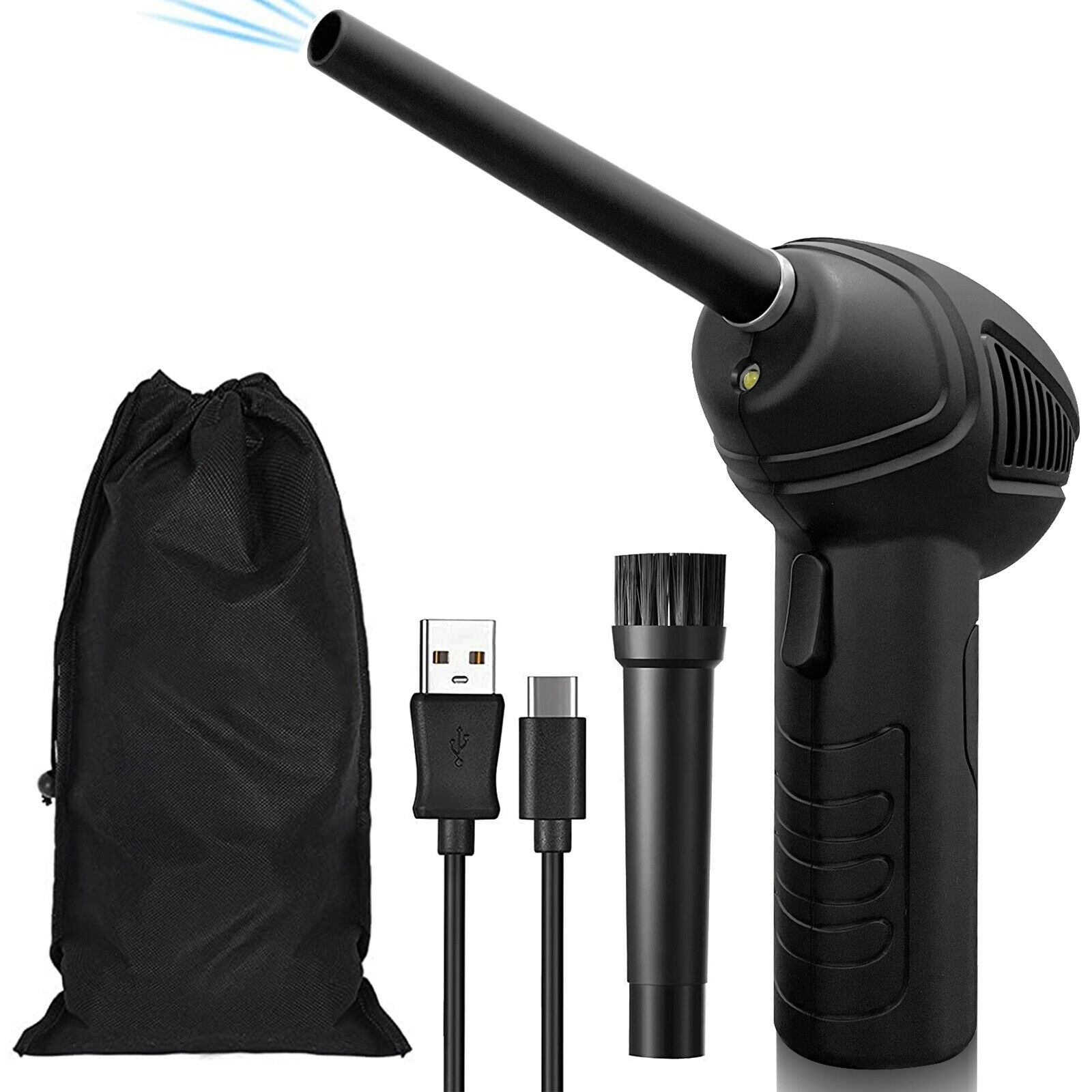

Photos from current listings. Actual item, color, and included accessories may vary.
Electric Air Duster Buying Guide
An electric air duster is a handheld, rechargeable or corded blower that replaces canned air for cleaning keyboards, PCs, cars, and tight household gaps. The core trade-off is motor type and battery architecture: brushed motors with small cells deliver weak, short bursts, while brushless motors with high-discharge lithium cells produce sustained high-CFM airflow and multi-year service life. Buy a brushless, USB-C charged unit rated by CFM and mAh — skip anything that advertises only 'high speed' or 'strong power' with no motor or cell specs.
At a glance
- Category
- Smart Cleaning
- Last updated
- Nov 22, 2026
Current offers
Highlights
- Brushless DC motors spin 30,000–100,000+ RPM and last thousands of hours; brushed motors are cheaper, slower, and wear out their carbon brushes.
- Battery capacity in mAh and discharge rate (C-rating) determine burst power: 2,000–3,000mAh high-drain cells give 10–30 minutes of intermittent use per charge.
- CFM (cubic feet per minute) and nozzle velocity are the real performance metrics — 20–70 CFM covers keyboards to car interiors; sealed blower housings prevent pressure loss.
- USB-C PD charging (18–65W) cuts recharge time to 1–3 hours; micro-USB units are older generation and slower to refill.
Best use cases
- Pick a brushless 2,000mAh+ USB-C unit for daily keyboard/PC cleaning — skip low-cost brushed sticks that lose force after minutes and clog with dust.
- Choose a higher-CFM (40–70 CFM) model with wide and narrow nozzles for car interiors and pet-hair corners; a basic 20-CFM stick is too weak for upholstery.
- For camera lenses and delicate electronics, select a unit with a fine nozzle and low minimum speed; avoid unregulated blowers that blast at full force only.
Buying tips
- Match CFM to task: 20–30 CFM for keyboards/electronics, 40–70 CFM for car seats, vents, and outdoor gear; higher CFM with a narrow nozzle concentrates velocity.
- Choose brushless motors over brushed — they deliver more sustained RPM, run cooler, and typically outlast brushed units by years of intermittent use.
- Require USB-C PD charging and a 2,000mAh+ cell; micro-USB and sub-1,500mAh units are older architecture with short runtimes and slow recharge.
- Check nozzle kit: narrow cone for crevices, wide flat for surfaces, and brush attachment for loosening dust; sealed blower path prevents airflow leaks.
Specs
| Motor Type | Brushless DC vs Brushed |
|---|---|
| Airflow (CFM) | 20–70 CFM by task |
| Battery / Runtime | 2,000–3,000mAh / 10–30 min |
| Charging | USB-C PD 18–65W vs micro-USB |
Related searches
What to check before buying
- Measure the deepest gap you need to reach (keyboard rows, car vent slats) — nozzle length and diameter must fit without disassembly.
- Confirm your charging setup: USB-C PD wall charger of at least 18W is needed for fast recharge; standard 5V USB ports charge slowly.
- For car use, ensure the unit fits a glovebox or console and that the nozzle reaches seat rails and dashboard vents.
- Check noise tolerance: brushless high-RPM blowers emit 70–85 dB; corded models are louder but run indefinitely without battery limits.
FAQ
Data sources: eBay / Amazon listings and product attribute feeds. Updated Nov 22, 2026.
Some links on this page are affiliate links. If you buy after clicking one, we may earn a commission at no extra cost to you. This does not change which products appear here or their order. Affiliate disclosure.