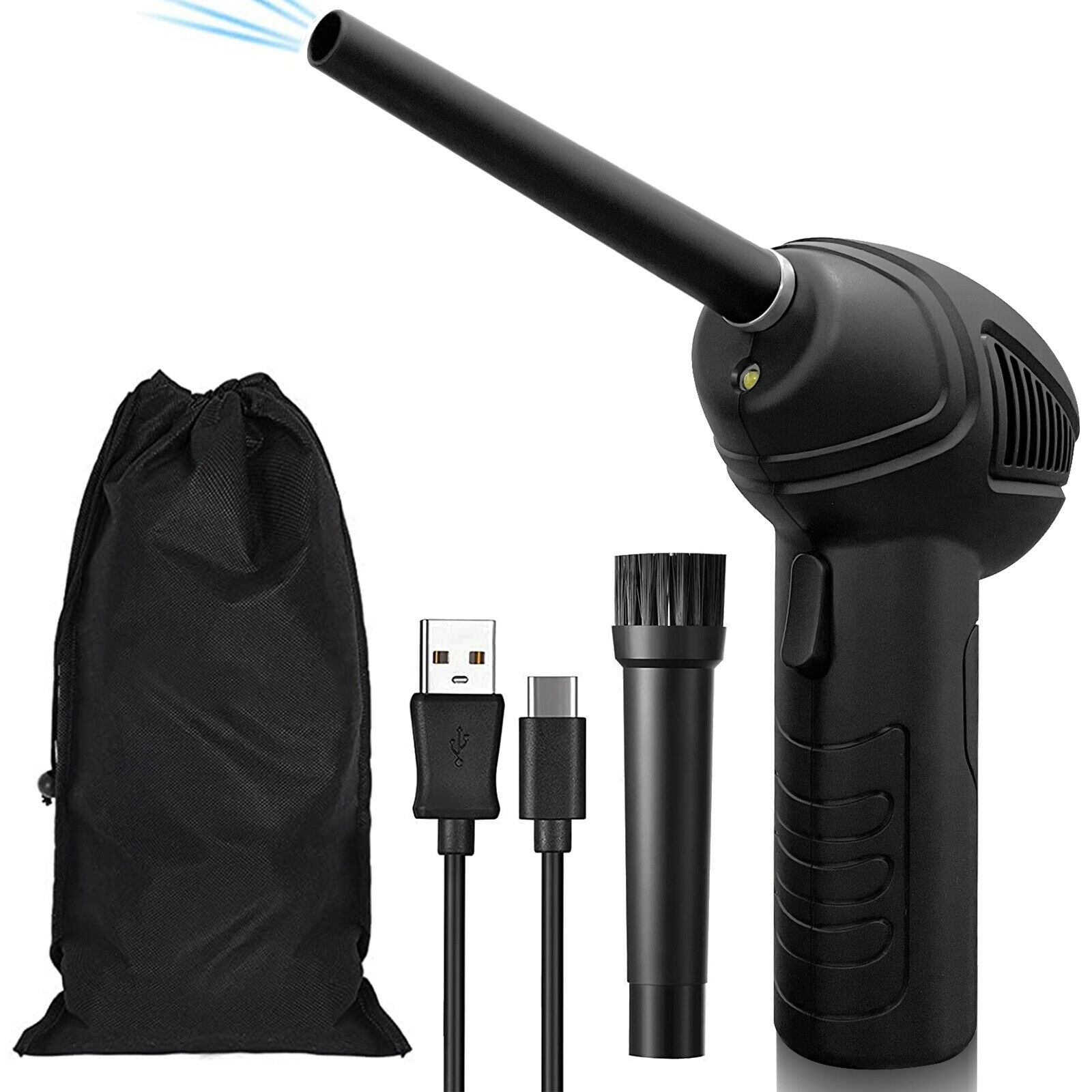

Photos from current listings. Actual item, color, and included accessories may vary.
Electric Duster Buying Guide
An electric duster is a rechargeable, motor-driven air blower that replaces disposable canned-air canisters for cleaning keyboards, PCs, cars, and cameras. The decisive trade-off is between brushless motors with high measured airflow and cheap brushed motors that lose pressure quickly; buy a brushless unit with a sealed battery and honest CFM, and skip anything rated only in vague 'kPa' with no battery or motor spec.
At a glance
- Category
- Smart Cleaning
- Last updated
- Nov 22, 2026
Current offers
Highlights
- Brushless DC motors deliver sustained airflow above roughly 30 m/s and outlast brushed motors by several times, while brushed units lose pressure as the battery drains.
- Canned air is liquefied difluoroethane, which can spray cold liquid and leave residue; electric dusters deliver dry ambient air with no propellant and no frost risk on optics or electronics.
- Usable battery capacity is the runtime limiter: single 18650 cells (roughly 2000-3500 mAh) give short bursts, while 2-3 cell packs or 4000 mAh+ cells sustain cleaning sessions.
- Nozzle diameter and shape set real-world pressure: narrow concentrator nozzles focus air for keyboard crevices and PC fins, while wide nozzles suit car interiors and upholstery.
Best use cases
- Best fit: PC builders and keyboard enthusiasts should pick a brushless unit with a narrow nozzle and at least 30 m/s airflow for dust in heatsink fins and switch plates.
- Best fit: car detailing and pet-hair cleanup need a wide-mouth nozzle and higher sustained CFM from a brushless motor, not a pocket-size single-cell blower.
- Wrong fit: cleaning camera sensors or coated lenses at close range with any electric duster risks propelling grit; use a dedicated sensor swab or bulb blower instead.
- Wrong fit: heavy shop or outdoor use where continuous high-pressure air is needed is air-compressor territory; electric dusters are intermittent-duty tools, not compressors.
Buying tips
- Choose brushless over brushed: brushless motors sustain airflow and typically last multiple times longer, and they avoid brush wear that quietly kills cheap dusters.
- Prioritize a USB-C charged unit with a removable or user-replaceable 18650-class cell; sealed proprietary batteries turn a working duster into e-waste when the cell degrades.
- Compare airflow in m/s or CFM, not 'kPa' alone; look for at least 28-30 m/s for PC cleaning and higher sustained flow with a wide nozzle for car interiors.
- Match nozzle kit to task: a concentrator nozzle for keyboards and electronics, a wide nozzle for upholstery and car vents, and a brush attachment for loosening caked dust.
Specs
| Motor Type | Brushless DC vs Brushed |
|---|---|
| Airflow Speed | 28-35+ m/s brushless class |
| Battery | 18650 cell / 2000-4000 mAh |
| Charging | USB-C vs barrel plug |
Related searches
What to check before buying
- Measure the crevices you need to reach: keyboard gaps and laptop vents need a narrow concentrator nozzle under roughly 10 mm tip diameter.
- Confirm charging standard: USB-C with a standard 5V adapter is universal, while barrel-plug chargers are easily lost and region-specific.
- Check battery accessibility: a duster with a replaceable 18650 cell stays serviceable for years; a sealed pack does not.
- Verify duty cycle expectations: electric dusters are for short bursts, so continuous cleaning of large areas needs either a spare battery or an air compressor.
FAQ
Data sources: eBay / Amazon listings and product attribute feeds. Updated Nov 22, 2026.
Some links on this page are affiliate links. If you buy after clicking one, we may earn a commission at no extra cost to you. This does not change which products appear here or their order. Affiliate disclosure.