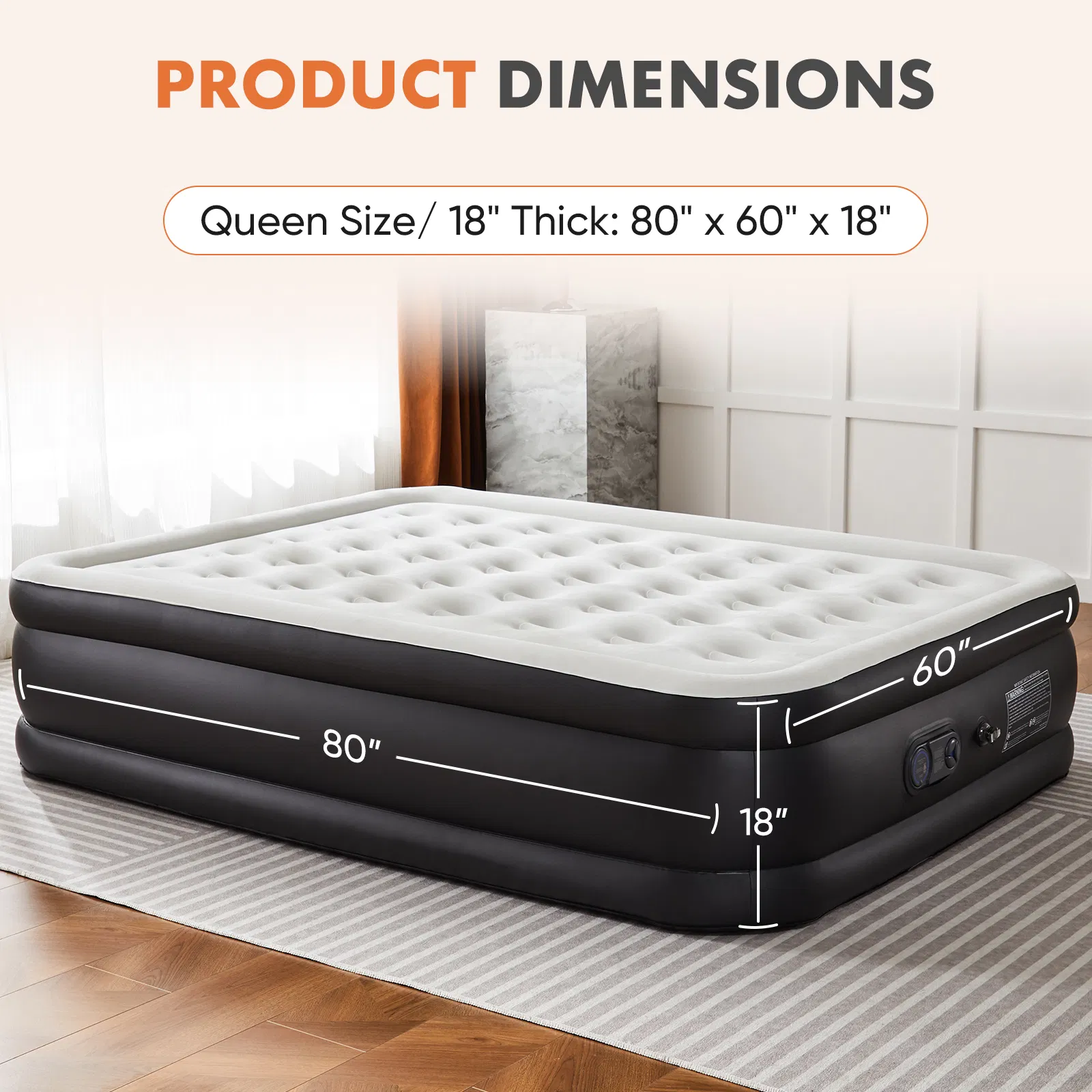

Photos from current listings. Actual item, color, and included accessories may vary.
Air Mattress With Frame Buying Guide
An air mattress with frame combines an inflatable sleep surface with a rigid support structure—either a built-in metal frame or a separate platform bed—to eliminate floor contact and improve stability. The primary trade-off is between frame integration (folding legs vs. separate platform) and mattress construction (PVC thickness, pump capacity, height). Choose a model with a welded, puncture-resistant PVC shell and a high-flow built-in pump for durable weekly use; skip thin vinyl mattresses with low-CFM pumps if you need repeated setup.
At a glance
- Category
- Sleep Comfort
- Last updated
- Nov 22, 2026
Current offers
Highlights
- Frame types: integrated folding steel legs (attached to mattress base) vs. separate platform frame—integrated units fold smaller but limit mattress replacement options.
- PVC shell thickness: 0.6–0.8 mm is durable for regular use; under 0.4 mm vinyl is prone to seam failure and punctures.
- Built-in pump CFM: high-capacity pumps (≥ 120 L/min) inflate a queen in 2–3 minutes; low-flow pumps take 5+ minutes and struggle with double-height mattresses.
- Double-height (18–22 in) mattresses need a frame rated for the inflated height and weight—check leg locking mechanisms and weight capacity (typically 600–800 lb for queen).
Best use cases
- Best fit: guest room or temporary relocation—pick an integrated frame with folding legs and a built-in pump for tool-free setup and compact storage.
- Best fit: camping or RV use—choose a separate low-profile frame with a puncture-resistant PVC mattress and manual pump compatibility for off-grid reliability.
- Wrong fit: permanent nightly sleep—air mattresses lose pressure over weeks; select a hybrid mattress with a metal frame only for short-term or occasional use.
- Skip integrated frames if you already own a platform bed—a standalone air mattress with a non-slip bottom is cheaper and avoids redundant frame bulk.
Buying tips
- Match mattress height to frame: 18–22 in double-height models require a frame with extended leg locks; low-profile (9–12 in) mattresses fit standard platform frames.
- Verify pump power: built-in pumps drawing 120V AC need a nearby outlet; for camping, choose a mattress with a rechargeable battery pump or manual valve compatibility.
- Check PVC grade: look for 0.6 mm+ thickness and welded (not glued) seams; flocked tops improve grip and reduce sheet slippage.
- Frame weight capacity: queen frames should support at least 600 lb; king frames 800 lb—confirm leg design (X-brace vs. straight legs) for stability on carpet.
Specs
| Frame Type | Integrated folding legs vs. separate platform |
|---|---|
| Mattress Height | 9–12 in low-profile / 18–22 in double-height |
| PVC Thickness | 0.6–0.8 mm durable / under 0.4 mm thin |
| Pump Flow | ≥120 L/min built-in / manual valve option |
Related searches
What to check before buying
- Measure your room and doorway: integrated frame units fold to roughly 40×15×15 in—ensure storage space and path clearance.
- Confirm floor type: carpet grips better; on hardwood, choose frames with rubber feet or non-slip bottom design.
- Check voltage: built-in pumps are typically 120V AC for US; for international use, verify 220–240V compatibility or use a separate manual pump.
- Required companion parts: fitted sheets sized to mattress height (18–22 in deep pocket) and a repair patch kit for PVC.
FAQ
Data sources: eBay / Amazon listings and product attribute feeds. Updated Nov 22, 2026.
Some links on this page are affiliate links. If you buy after clicking one, we may earn a commission at no extra cost to you. This does not change which products appear here or their order. Affiliate disclosure.