
Photos from current listings. Actual item, color, and included accessories may vary.
Air Mattress Buying Guide
An air mattress is a portable sleep surface whose durability is determined by shell gauge (PVC or TPU), internal coil/beam architecture, and pump quality. The critical trade-off is between thin single-chamber vinyl that leaks at seams and multi-layer TPU or coil-reinforced PVC that holds pressure and resists puncture. Buyers should choose TPU or 18oz+ PVC with a factory-welded pump flange for repeated use; any 10-15 mil PVC without internal support is a short-term compromise.
At a glance
- Category
- Sleep Comfort
- Last updated
- Nov 22, 2026
Current offers
Highlights
- Shell material defines lifespan: 0.6mm TPU resists abrasion and stays flexible below freezing, while 0.35mm PVC stiffens and cracks at seams after 20-30 inflate cycles.
- Internal architecture separates comfort tiers: coil-count beds (typically 20-40 coils for queen) distribute weight like a hybrid mattress; beam or chamber designs rely on air-column tension and sag more between sleepers.
- Built-in pump throughput matters: 120V AC pumps at 600-800 L/min fill a queen in 90-180 seconds; battery or USB pumps at 300 L/min take 4-6 minutes and cannot reach high firmness.
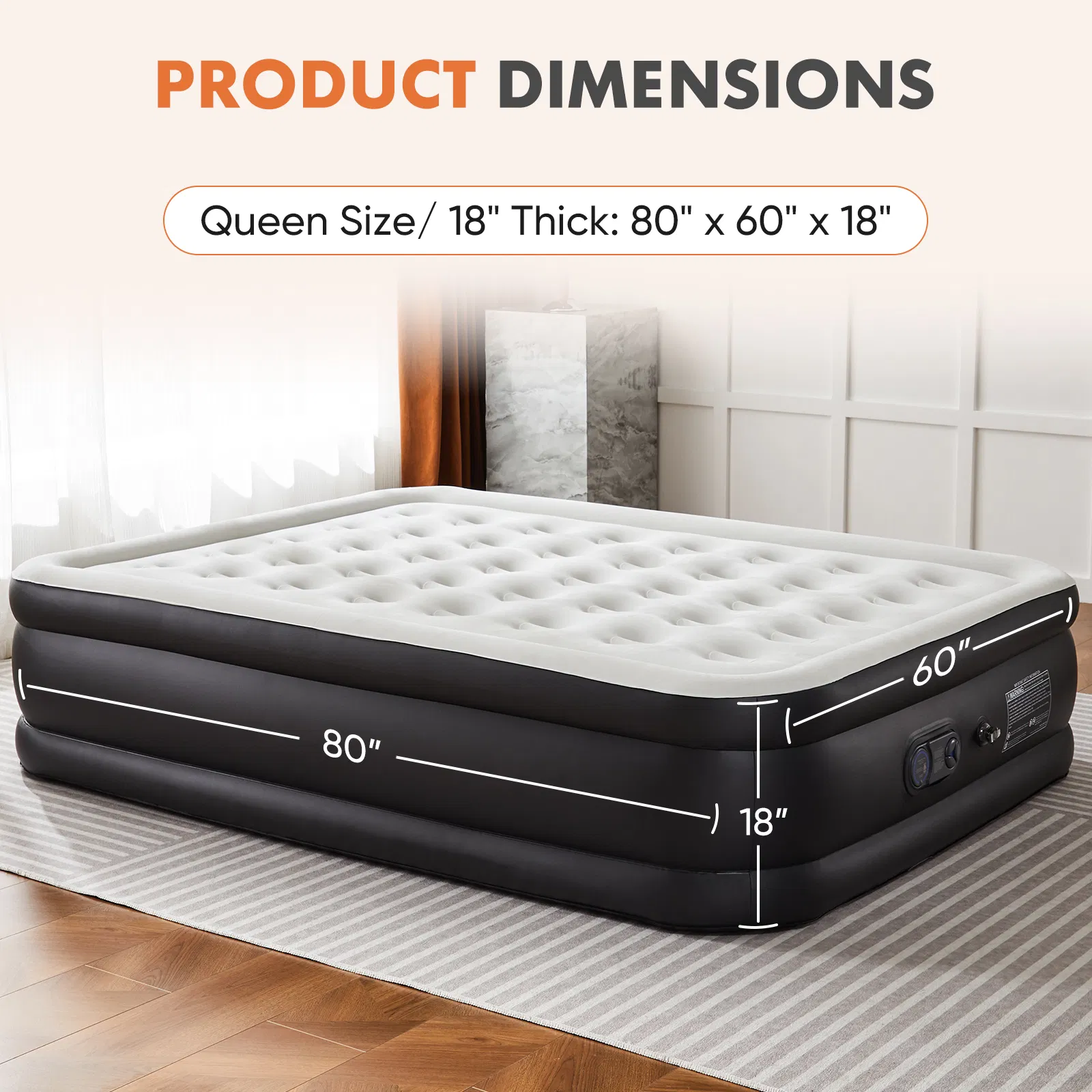
- Double-height (18-24 inch) beds use taller sidewalls and more air volume for easier ingress/egress but require higher pump pressure and are heavier (12-18 lbs) than 9-inch camp pads (3-6 lbs).
Best use cases
- Pick a TPU or 18oz PVC queen with built-in AC pump and coil/beam support for guest beds used more than 10 nights per year; skip 10-12 mil single-chamber vinyl that tears at the valve collar.
- For car camping, choose a 6-9 inch TPU pad with battery or 12V pump and a pack weight under 6 lbs; skip 18-inch double-height beds that exceed 15 lbs and drain a car battery during inflation.
- For full-time or nightly sleep, select a coil-reinforced TPU mattress with a 50,000-cycle pump rating and a repair patch kit; skip any mattress rated only for occasional use or without a puncture-repair kit included.
Buying tips
- Match mattress height to user mobility: 18-24 inch double-height beds reduce floor transfer effort but increase air volume and pump time; 9-12 inch beds suit children and camping.
- Verify pump flange construction: factory-welded TPU flanges outlast glued PVC collars; a replacement pump costs more than the delta to a welded-flange model.
- Check valve standard: Boston valves (wide-mouth) accept most external pumps and deflate faster; recessed one-way valves on cheap PVC beds are slow and prone to cap loss.
- Size the bed to frame and room: a queen air mattress measures 60x80 inches and needs a 61x81 inch minimum footprint; twin (38x75) fits tent floors and truck beds.
Specs
| Shell Material | TPU vs PVC (0.6mm vs 0.35mm) |
|---|---|
| Support Architecture | Coil / Beam / Chamber |
| Pump Type | AC built-in / Battery / Manual |
| Height Class | 9-12 in / 18-24 in double-height |
Related searches
What to check before buying
- Measure the floor or frame footprint and add 1 inch per side for sheet overhang; queen beds need at least 61x81 inches of flat, non-slip surface.
- Confirm room ambient temperature: TPU stays flexible down to 14°F (-10°C); PVC stiffens below 41°F (5°C) and should not be inflated cold.
- Verify power: built-in AC pumps require a grounded 120V outlet within cord reach (typically 6-8 feet); battery and 12V pumps need a charged source and compatible adapter.
- Check included accessories: a repair patch kit, storage bag, and a pump adapter for external valves; missing patches turn a pinhole into a replacement.
FAQ
Data sources: eBay / Amazon listings and product attribute feeds. Updated Nov 22, 2026.
Some links on this page are affiliate links. If you buy after clicking one, we may earn a commission at no extra cost to you. This does not change which products appear here or their order. Affiliate disclosure.