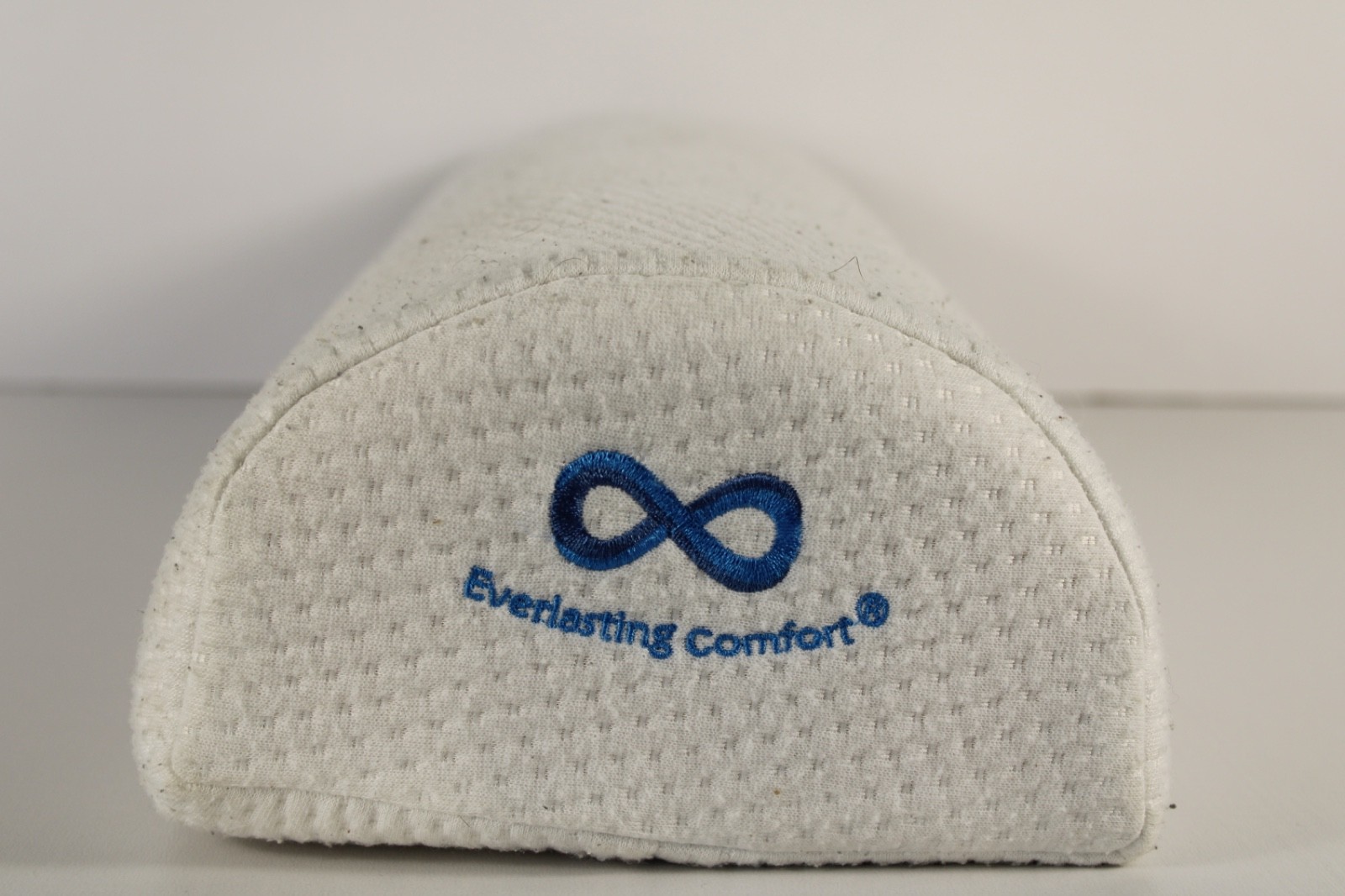

Photos from current listings. Actual item, color, and included accessories may vary.
Knee Pillow Buying Guide
A knee pillow is a shaped cushion placed between the knees or under the legs to align the hips, pelvis, and spine during side or back sleeping. The primary trade-off is between memory foam density and shape retention versus breathability and washability—cheap low-density foams collapse within months, while high-density foam with a removable cover holds alignment for years. The clear rule: buy a pillow with a specified foam density of at least 2.5 lb/ft³, a contoured profile matched to your sleeping position, and a machine-washable cover; skip any pillow that lists only 'memory foam' with no density and has a sewn-in cover.
At a glance
- Category
- Sleep Comfort
- Last updated
- Nov 22, 2026
Current offers
Highlights
- Foam density is the durability metric: 2.5–3.0 lb/ft³ holds shape for 2+ years, while 1.5–2.0 lb/ft³ softens and bottoms out within 6 months.
- Side-sleeper wedges are 6–9 inches wide and 4–6 inches tall to fill the knee gap; back-sleeper half-moon bolsters are 8–12 inches wide and 3–5 inches tall to support the lumbar curve.
- Removable, machine-washable covers in breathable knit or bamboo blends prevent heat buildup and extend pillow life; sewn-in covers trap sweat and degrade foam.
- Firmness grades matter: medium-firm (ILD 12–16) suits most side sleepers, while soft (ILD 8–11) suits back sleepers who need gentle lumbar support.
Best use cases
- Side sleeper with hip or knee pain: choose a contoured wedge 6–9 inches wide with a medium-firm high-density foam core and a washable cover; skip flat rectangular pillows that slip out of place.
- Back sleeper needing lumbar support: pick a half-moon bolster 8–12 inches wide and 3–5 inches tall placed under the knees; skip thick wedges that over-rotate the pelvis.
- Pregnancy or post-surgery recovery: select a full-length body pillow or a firm knee pillow with a strap to keep alignment; skip soft decorative cushions that compress under leg weight.
Buying tips
- Match pillow height to your body: side sleepers need a knee gap fill of 4–6 inches, so choose a 5–6 inch tall wedge; back sleepers need 3–4 inches of lift under the knees.
- Check foam density: 2.5 lb/ft³ or higher resists compression; below 2.0 lb/ft³ is a disposable-tier pillow that will flatten within months.
- Prefer a removable cover with a zipper and machine-washable fabric; sewn-in covers make hygiene maintenance impossible and shorten pillow life.
- For side sleeping, a contoured wedge with a center channel keeps knees from sliding; a flat pillow requires constant readjustment and defeats alignment.
Specs
| Foam Density | High 2.5–3.0 lb/ft³ / Low <2.0 |
|---|---|
| Sleep Position | Side wedge / Back half-moon |
| Cover Type | Removable washable / Sewn-in |
| Firmness (ILD) | Medium-firm 12–16 / Soft 8–11 |
Related searches
What to check before buying
- Measure your knee gap when lying on your side: if it exceeds 5 inches, choose a thicker 6-inch wedge; under 4 inches, choose a 4-inch contour.
- Confirm your mattress firmness: on a soft mattress, a firmer knee pillow (ILD 14–16) prevents sinking; on a firm mattress, a medium (ILD 12–14) suffices.
- Check cover material for breathability: bamboo or open-cell knit dissipates heat; polyester or vinyl traps sweat and causes night waking.
- Verify the pillow fits your sleep position width: side sleepers need 6–9 inches of width to span both knees; back sleepers need 8–12 inches for lumbar coverage.
FAQ
Data sources: eBay / Amazon listings and product attribute feeds. Updated Nov 22, 2026.
Some links on this page are affiliate links. If you buy after clicking one, we may earn a commission at no extra cost to you. This does not change which products appear here or their order. Affiliate disclosure.