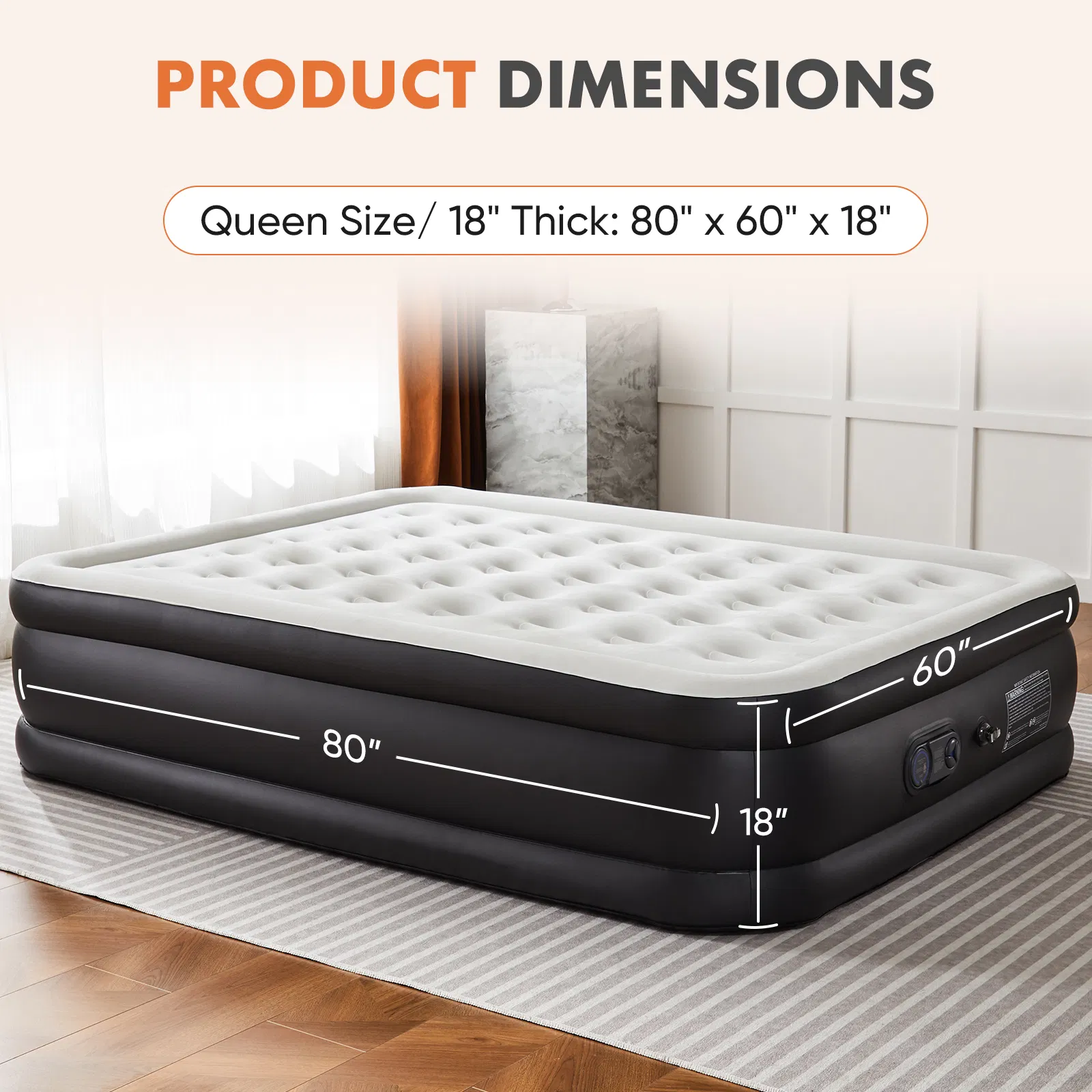

Photos from current listings. Actual item, color, and included accessories may vary.
Air Mattress Camping Buying Guide
A camping air mattress is a portable inflatable sleep surface judged by two core metrics: puncture-resistant shell construction and a pump/valve system that holds pressure overnight. The primary trade-off is between pack weight and thickness—thicker, double-height pads sleep warmer and more like home but add bulk, while thin ultralight pads prioritize packed size over cushioning. Choose a TPU-coated fabric mattress with a built-in pump and a one-way valve for durability; skip PVC singles with friction-fit caps if you camp more than a few nights a year.
At a glance
- Category
- Sleep Comfort
- Last updated
- Nov 22, 2026
Current offers
Highlights
- Shell material determines lifespan: TPU-coated polyester resists punctures and stays flexible in cold, while PVC is heavier, stiffer, and prone to seam splits over time.
- Double-height (16–18 in) mattresses use coil or air-cell baffling to prevent bottoming out, but they weigh 6–12 lb packed—ultralight 3–4 in pads pack to bottle size for backpacking.
- Built-in high-capacity pumps inflate a queen in 2–4 minutes via 120V AC or 12V DC; manual foot pumps and separate battery pumps add setup time and failure points.
- One-way valves with a secondary deflation port hold pressure reliably; friction-fit or single flip-cap valves leak slowly and are the most common overnight-failure cause.
Best use cases
- Car camping and tent basecamps: pick a double-height queen with a built-in AC/DC pump for home-like comfort—skip ultralight pads that bottom out under two adults.
- Backpacking and thru-hiking: choose a 3–4 in TPU pad under 2 lb with a manual or tiny battery pump—skip 18 in airbeds that consume pack volume and add pounds.
- Guest bed and temporary home use: a double-height queen with coil baffling and a 120V pump works for weeks of nightly use—skip thin camping pads not rated for continuous inflation.
- Cold-weather camping below 40°F: use an insulated or foam-topped pad with an R-value of 4+—skip uninsulated airbeds, which conduct body heat away and sleep cold.
Buying tips
- Match thickness to use: 3–4 in for backpacking (under 2 lb), 8–10 in for scout/car camping, 16–18 in double-height for basecamp comfort and guest use.
- Confirm the pump voltage matches your power: 120V AC for car camping with hookups, 12V DC for vehicle outlets, and USB/battery for backcountry—built-in pumps need one of these.
- Check the valve type: a one-way valve with a separate deflation cap holds pressure; flip-cap or friction-fit valves are the top cause of overnight deflation.
- Size the mattress to the tent floor: a queen airbed is 60×80 in and fills a 4-person dome; measure tent footprint and leave 2–3 in per side for wall slope.
Specs
| Shell Material | TPU-coated polyester vs PVC |
|---|---|
| Thickness Tier | 3-4 in pad / 8-10 in / 16-18 in |
| Pump Type | Built-in AC/DC vs manual vs USB |
| Valve Type | One-way + deflation port vs flip-cap |
Related searches
What to check before buying
- Measure your tent floor and door: a double-height queen needs a 5×7 ft footprint minimum and a wide door for inflation inside the tent.
- Confirm your power source: built-in pumps need a 120V outlet, 12V car socket, or USB battery—match the plug before you leave.
- Check the packed weight and dimensions against your carry plan: double-height airbeds pack to 15–20 lb and suitcase size, not backpack size.
- Verify the temperature rating: uninsulated airbeds sleep cold below 40°F; add a foam topper or choose an insulated pad with R-value 4+.
FAQ
Data sources: eBay / Amazon listings and product attribute feeds. Updated Nov 22, 2026.
Some links on this page are affiliate links. If you buy after clicking one, we may earn a commission at no extra cost to you. This does not change which products appear here or their order. Affiliate disclosure.