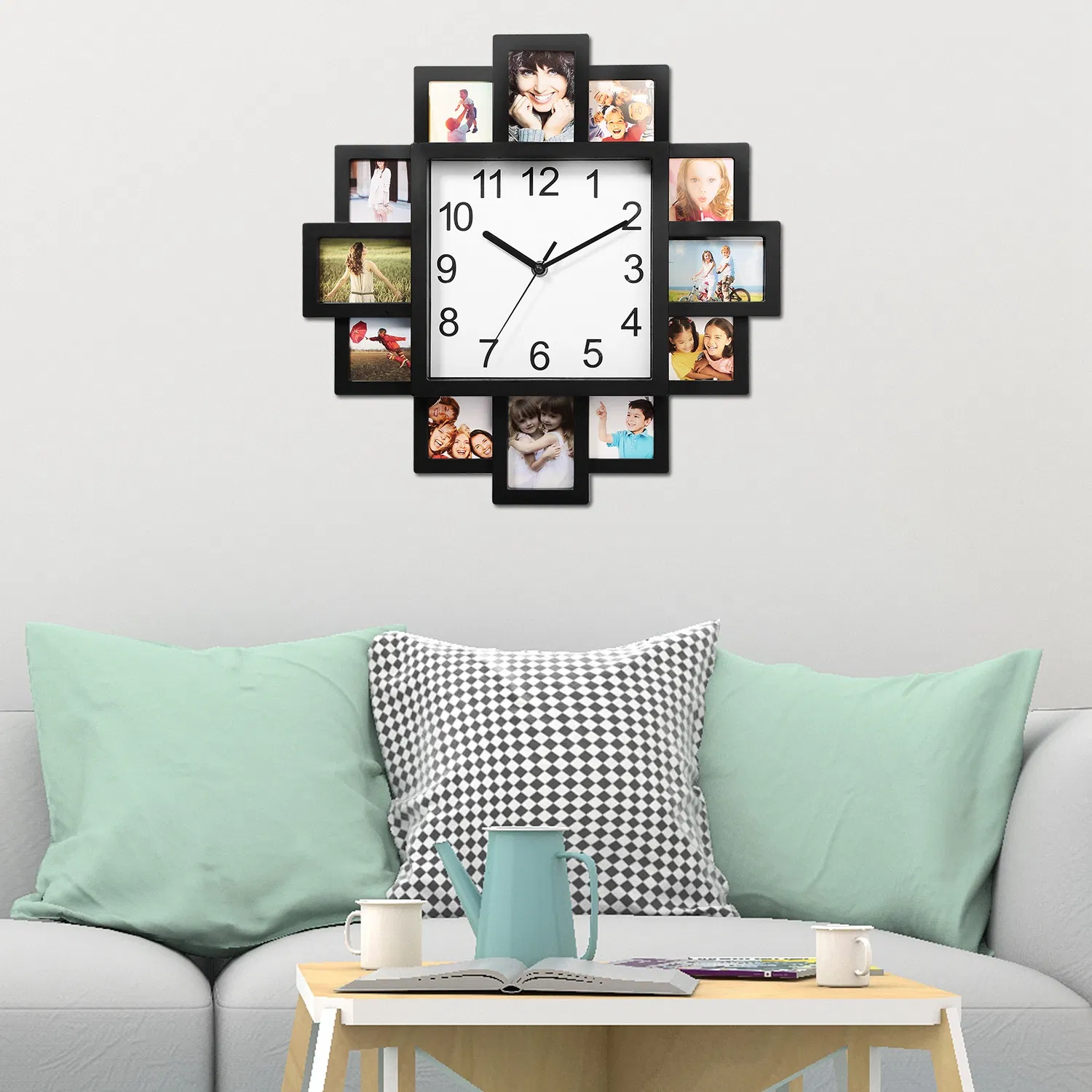

Photos from current listings. Actual item, color, and included accessories may vary.
Wall Clock Living Room Buying Guide
Living room wall clocks balance visual scale against movement quality and material durability. The core trade-off is between silent sweep or standard quartz movements and plastic versus metal or wood casings that resist yellowing and warping. Choose a silent sweep movement with a rigid ABS or metal frame for long-term accuracy; skip budget ticking movements in thin polystyrene shells if quiet operation and longevity matter.
At a glance
- Category
- Home & Desk Clocks
- Last updated
- Nov 22, 2026
Current offers
Highlights
- Quartz movement types split into standard ticking (audible pulse) and silent sweep (continuous second hand); sweep movements eliminate nighttime ticking noise in open-plan living rooms.
- Case material determines aging: ABS plastic resists impact but can yellow under UV; metal and solid wood hold finish longer but cost more and require stable humidity.
- Dial diameter should be 1/3 to 1/2 the width of the wall or console area above the sofa; 12-inch dials suit most living room walls, 16-inch for large feature walls.
- Glass or high-transparency protective covers resist dust and scratching; acrylic covers are lighter and shatter-resistant but static-cling dust over time.
Best use cases
- Best fit: open-plan living room adjacent to bedroom or study — pick a silent sweep quartz movement to avoid audible ticking during quiet evenings.
- Best fit: large feature wall above a sofa or fireplace — choose a 16–24 inch dial with a metal or wood frame for visual weight and durability.
- Wrong fit: high-humidity or sun-blasted sunroom — skip thin ABS and paper-faced dials; specify sealed metal casing or UV-resistant finish.
- Wrong fit: gallery-wall arrangements with multiple frames — skip oversized single clocks; pick a compact 10–12 inch dial or multi-opening frame clock to avoid visual clutter.
Buying tips
- Match dial size to wall: measure the bare wall width and choose a clock 1/3 to 1/2 that width; a 12-inch clock suits a 3–4 ft wall segment.
- Prefer silent sweep quartz over standard ticking for living rooms; sweep movements use a continuous gear train and produce no audible tick.
- Check hanger type: back-hook mounts suit drywall anchors; keyhole slots need a screw head; French cleats distribute weight for clocks over 3 lbs.
- Select ABS with UV-stabilized finish or metal/wood for south- or west-facing walls; unprotected plastic yellows within a few seasons of direct sun.
Specs
| Movement Type | Silent sweep vs standard ticking quartz |
|---|---|
| Case Material | ABS plastic / metal / solid wood |
| Dial Size Range | 10–24 in (25–61 cm) diameter |
| Power Source | 1× AA battery (typical quartz) |
What to check before buying
- Measure the wall segment width and height above the sofa or console; confirm the clock diameter fits within 1/3 to 1/2 of that width.
- Verify wall substrate: drywall needs self-drilling anchors; plaster or brick needs masonry plugs; back-hook and keyhole hangers require matching fastener heads.
- Check room humidity and sun exposure; specify sealed metal or UV-stable ABS if the wall receives direct afternoon sun or sits in a bathroom-adjacent zone.
- Confirm battery type and compartment access: most quartz clocks use one AA cell; side-load compartments are easier to service on wall-mounted units than rear-load.
FAQ
Data sources: eBay / Amazon listings and product attribute feeds. Updated Nov 22, 2026.
Some links on this page are affiliate links. If you buy after clicking one, we may earn a commission at no extra cost to you. This does not change which products appear here or their order. Affiliate disclosure.