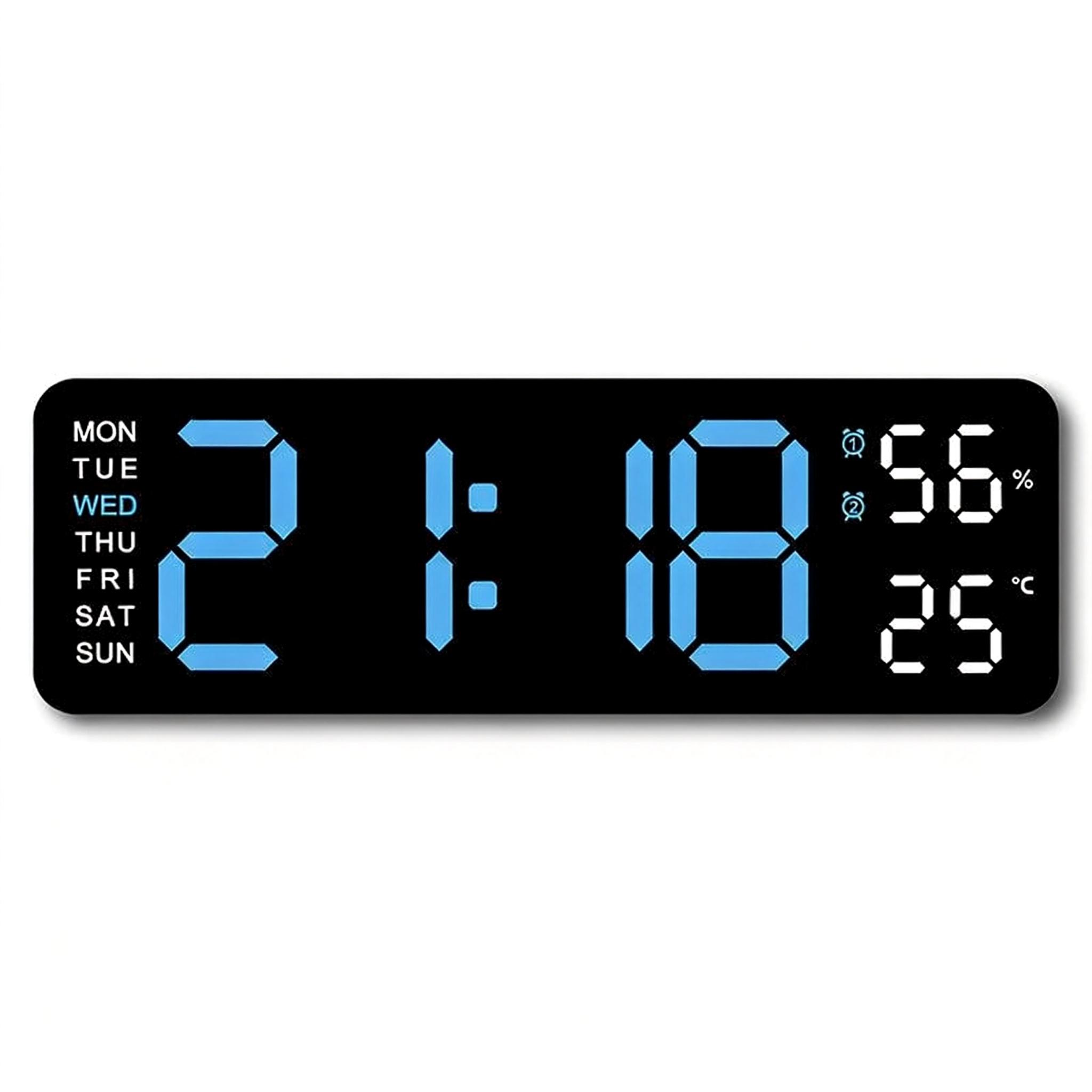

Photos from current listings. Actual item, color, and included accessories may vary.
Large Wall Clock With Numbers Buying Guide
Large wall clocks with numbers split into two architectures: analog sweep/step movements in metal or wood cases, and LED digital displays with auto-dimming. The trade-off is legibility at distance versus environment fit—analog needs a case diameter and contrast ratio matched to room size, while digital needs nits and dimming to avoid glare in bedrooms. Choose analog for silent, battery-only, decade-durable hallway or kitchen walls; choose LED digital only where a power outlet sits within cable reach and dimming is automatic.
At a glance
- Category
- Home & Desk Clocks
- Last updated
- Nov 22, 2026
Current offers
Highlights
- Analog sizes 12–24 in cover most walls; 24–36 in is required for reading from 15+ ft in large rooms or classrooms.
- Metal cases (aluminum or steel) resist warping and humidity better than MDF; thickness 1.2–2 mm steel or 1.5 mm aluminum signals durability.
- Silent sweep movements eliminate the tick noise; stepped quartz is cheaper but audible in bedrooms and quiet offices.
- LED digital clocks must offer auto-dimming or a night mode; fixed-brightness displays wash out dark rooms and disrupt sleep.
Best use cases
- Large living room or open-plan kitchen: pick a 20–24 in analog metal-case clock with high-contrast dial and silent sweep movement.
- Bedroom or nursery: choose a 12–16 in analog with silent movement, or an LED with automatic dimming and a night mode—skip fixed-brightness LED.
- Classroom, gym, or warehouse: select 24–36 in analog with bold numerals readable from 30–40 ft; skip decorative open-face designs that lack contrast.
- Office or hallway with no nearby outlet: analog battery quartz is the only practical choice; LED digital requires a corded power source.
Buying tips
- Sizing rule: dial diameter in inches should be roughly 1/10 of the farthest viewing distance in feet—10 ft away needs about 12 in, 20 ft needs 24 in.
- Case material grade: prefer powder-coated steel or anodized aluminum over painted MDF or plastic; metal resists swelling and fading in humid rooms.
- Movement choice: silent sweep (continuous second hand) for bedrooms and offices; standard step quartz is acceptable in loud or distant spaces.
- LED digital tier: require auto-dimming or a scheduled night mode plus a backup battery to retain time during outages; fixed-brightness models are desk-only.
Specs
| Display Type | Analog numbered vs LED digital |
|---|---|
| Case Material | Steel/aluminum vs MDF/plastic |
| Dial Size Range | 12-36 in (analog); 10-20 in (LED) |
| Movement/Power | Silent sweep quartz vs corded LED |
Related searches
What to check before buying
- Measure the wall area: clock diameter should leave at least 6–12 in of clearance on each side so numerals are not crowded by doorframes or shelves.
- Confirm hanging hardware and wall type: metal-case clocks over 16 in weigh enough to need a stud or drywall anchor rated for the clock's weight.
- For LED digital, verify an outlet is within the cord length—typically 6–10 ft—because these are corded, not battery-only.
- Check the numeral contrast against wall color: black numerals on white or white on black read best at distance; low-contrast metal-on-metal dials blur past 10 ft.
FAQ
Data sources: eBay / Amazon listings and product attribute feeds. Updated Nov 22, 2026.
Some links on this page are affiliate links. If you buy after clicking one, we may earn a commission at no extra cost to you. This does not change which products appear here or their order. Affiliate disclosure.