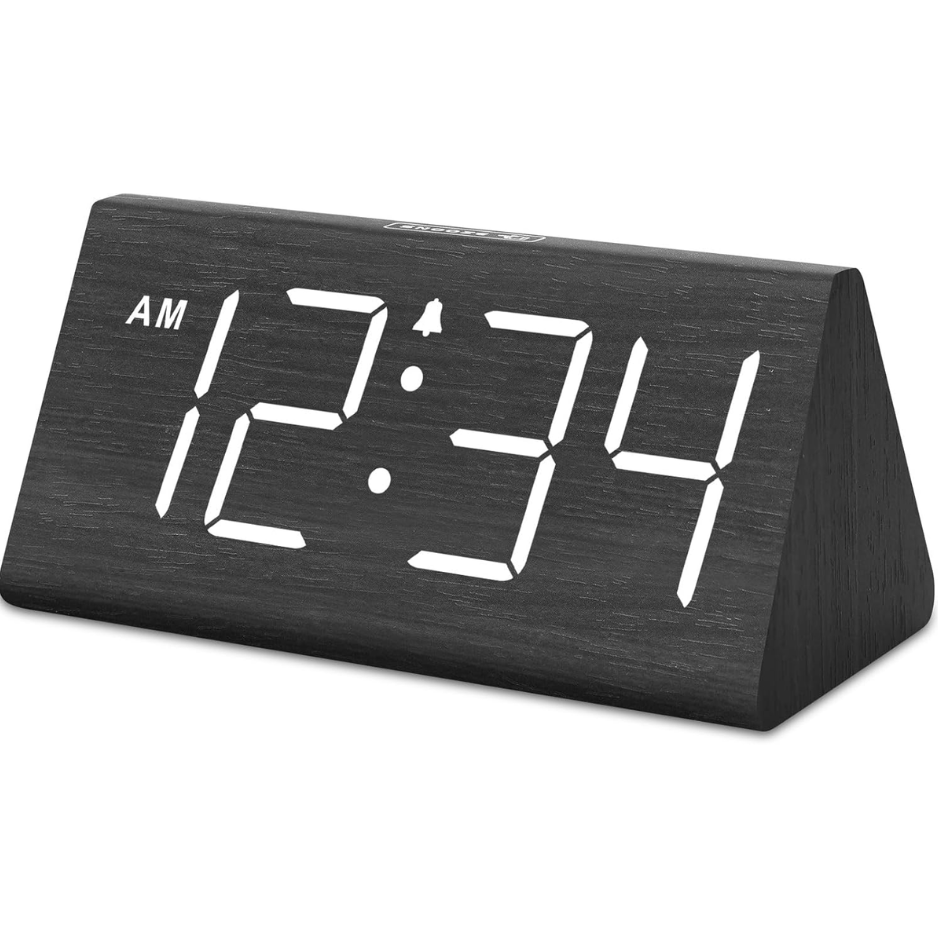

Photos from current listings. Actual item, color, and included accessories may vary.
Large Living Room Clock Buying Guide
A large living room clock is a focal-point timepiece typically 12–24 inches wide, and the core trade-off is between silent, accurate quartz sweep movements in solid wood/metal versus loud ticking or flimsy plastic builds. The decision rule is simple: buy a clock with a continuous-sweep (non-ticking) quartz or radio-controlled movement and a rigid frame; skip anything that ticks audibly or uses printed plastic faces where legibility and longevity matter.
At a glance
- Category
- Home & Desk Clocks
- Last updated
- Nov 22, 2026
Current offers
Highlights
- Continuous-sweep quartz movements eliminate the audible tick and reduce wear versus standard stepped quartz, which is the single biggest livability factor for a living room.
- Radio-controlled (atomic) movements syncing to WWVB keep time to within one second and auto-adjust for DST, removing manual correction twice a year.
- Solid wood or brushed metal frames with glass lenses resist warping and glare; MDF with printed paper dials is the cost-cutting tier prone to fading and peeling.
- Large-format legibility depends on numeral height: 2–3 inch numerals suit 12–15 inch dials, while 4–5 inch numerals are needed on 18–24 inch dials for across-room reading.
Best use cases
- Best fit: open-plan living rooms viewed from 10–20 feet — pick a 16–24 inch dial with 3–5 inch high-contrast numerals and a silent sweep movement.
- Best fit: bedrooms or quiet reading rooms — a radio-controlled silent clock prevents tick noise and eliminates DST resetting.
- Wrong fit: small apartments or narrow wall segments under 30 inches wide — a 20-inch-plus clock overwhelms the wall; choose a 10–12 inch dial instead.
- Wrong fit: high-humidity sunrooms or kitchens — untreated wood and paper dials warp; specify sealed metal or glass-encased construction.
Buying tips
- Match dial diameter to viewing distance: roughly 1 inch of dial per 1–2 feet of distance, so a 15-foot sofa-to-wall view calls for an 18–24 inch clock.
- Verify the movement type explicitly — 'silent sweep' or 'non-ticking' quartz, or radio-controlled; standard quartz ticks and is the most common regret.
- Choose 1.5V AA alkaline power for quartz movements; avoid budget clocks with soldered coin cells that cannot be user-replaced.
- For wood frames, confirm solid wood or veneer over MDF rather than printed laminate; solid wood resists warping and holds screw threads for hanging.
Specs
| Movement Type | Silent sweep / radio-controlled vs ticking quartz |
|---|---|
| Dial Diameter | 12–24 in for living-room walls |
| Numeral Height | 2–5 in high-contrast |
| Frame Material | Solid wood / metal vs MDF laminate |
Related searches
What to check before buying
- Measure the wall segment and hanging height: the clock center should sit near eye level, roughly 60–66 inches from the floor.
- Confirm the hanging hardware and wall type — stud, drywall anchor, or French cleat — since a 20-inch wood clock can weigh several pounds.
- Check the frame depth and clearance against nearby doors, shelving, or TV mounts so the dial is not occluded from the main seating area.
- For radio-controlled models, confirm signal reception in your location; steel-frame or basement walls can block WWVB sync.
FAQ
Data sources: eBay / Amazon listings and product attribute feeds. Updated Nov 22, 2026.
Some links on this page are affiliate links. If you buy after clicking one, we may earn a commission at no extra cost to you. This does not change which products appear here or their order. Affiliate disclosure.