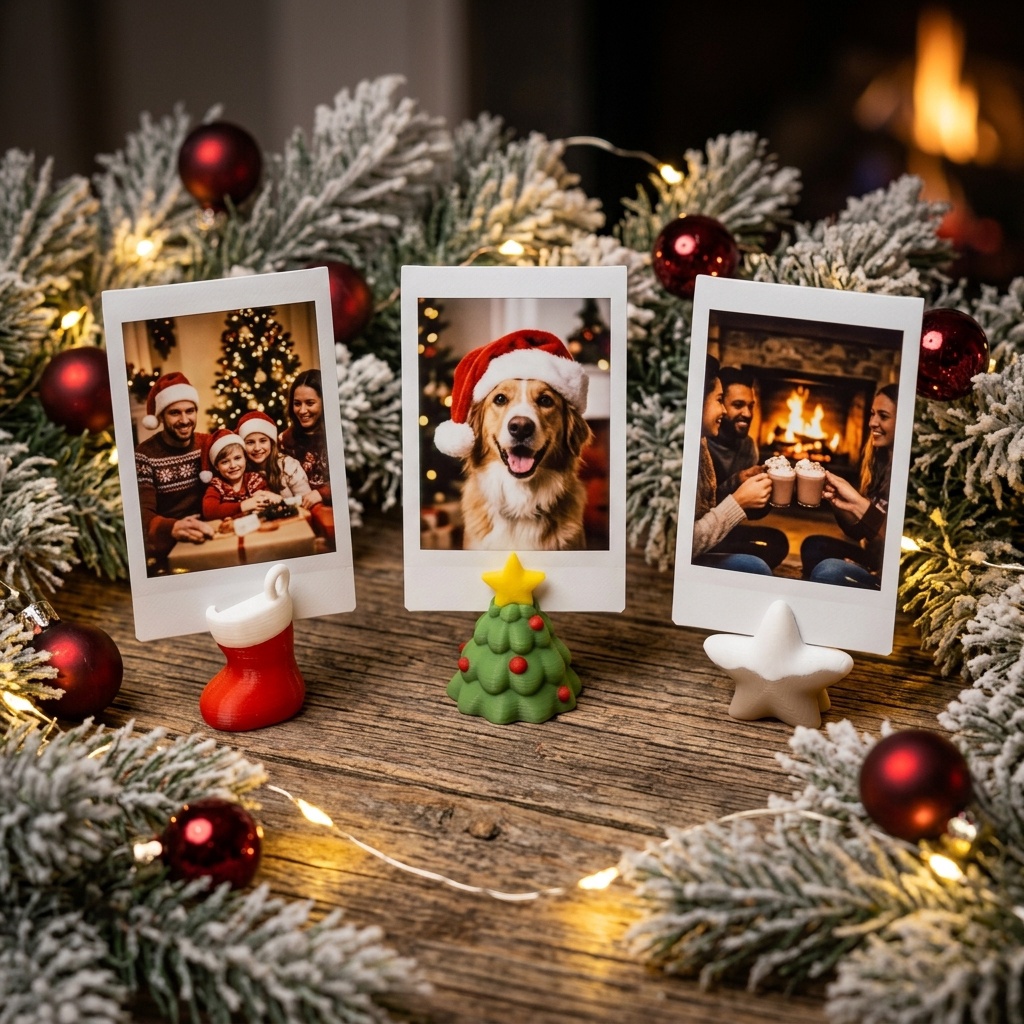

Photos from current listings. Actual item, color, and included accessories may vary.
Picture Holder Card Buying Guide
A picture holder card is a small freestanding clip, slot, or stand designed to display greeting cards, photos, and notes upright; the core trade-off is between thin injection-molded plastic that flexes and tips, and thicker 3D-printed or metal constructions with weighted bases and spring-tension clips. The decision rule: buy a holder with a base mass and clip grip rated for the card weight you display, and skip ultra-thin novelty stands that cannot hold a folded card without bending.
At a glance
- Category
- Picture Frames & Photo Displays
- Last updated
- Nov 22, 2026
Current offers
Highlights
- 3D-printed PLA holders resist about 50°C before softening, so keep them off radiators and direct summer window sills; PETG or metal versions hold shape above 70°C.
- Clip grip force matters more than style: spring-steel or screw-tension clips hold 200–300 gsm folded cards, while friction-fit plastic slots slip once card stock exceeds 250 gsm.
- Base footprint versus height determines tip resistance: a stand under 40 mm wide with a card center of gravity above 80 mm tips in normal handling.
- Injection-molded polystyrene stands crack at clip hinges; 3D-printed parts fail at layer lines, so thick-walled (>2 mm) or metal wire stands outlast thin decorative plastics.
Best use cases
- Best fit: display 5–20 holiday cards on a mantel or sideboard — pick a multi-slot or clip-rail stand with a base wide enough to span the card row and non-slip feet.
- Best fit: single-photo desk display — choose a weighted metal or thick 3D-printed stand with a spring clip rated for 4x6 prints; skip hollow plastic easels that rock when touched.
- Wrong fit: hanging cards on a wall or tree — card holders are freestanding tabletop items; use ornament hooks or wall clips instead of balancing stands on narrow shelves.
- Wrong fit: displaying heavy rigid acrylic or framed pieces — picture holder cards grip paper and card stock only; use a picture frame or easel for anything over 300 gsm or glass-covered.
Buying tips
- Match clip opening to card thickness: standard greeting cards are 200–300 gsm (about 0.25–0.4 mm per sheet); a holder slot or clip should open at least 2 mm to accept a folded card without bowing.
- Check base geometry: a stable stand needs a footprint depth at least 40% of the card height it holds; for a 5-inch-tall card, the base should extend at least 2 inches front-to-back.
- Prefer PETG, metal wire, or thick-walled PLA over thin polystyrene for outdoor-adjacent or heated rooms; PLA softens near 50°C and thin walls creep under clip tension.
- For multi-card sets, count actual clip or slot positions — a 'set' often means 4–6 holders, not a single rail; buy per-card positions matching your expected card count.
Specs
| Holder Material | PLA / PETG / Metal / Polystyrene |
|---|---|
| Clip Grip Type | Spring clip / Friction slot / Wire loop |
| Max Card Thickness | 2–4 mm (200–300 gsm folded) |
| Base Stability | Weighted or footprint ≥40% card height |
Related searches
What to check before buying
- Measure your shelf or mantel depth: a card holder with a 3–4 inch base depth needs at least that much flat surface plus clearance for the card leaning back.
- Verify the card size you display: 4x6 prints and 5x7 folded cards need different clip heights; a holder sized for business cards will not grip a 5x7 without tipping.
- Check room temperature and sunlight: PLA 3D-printed holders deform on hot windowsills or near radiators; choose PETG or metal for sun-exposed spots.
- Confirm the holder arrives as a complete stand — some sets ship as flat printed sheets requiring assembly, and missing base weights make them unusable.
FAQ
Data sources: eBay / Amazon listings and product attribute feeds. Updated Nov 22, 2026.
Some links on this page are affiliate links. If you buy after clicking one, we may earn a commission at no extra cost to you. This does not change which products appear here or their order. Affiliate disclosure.