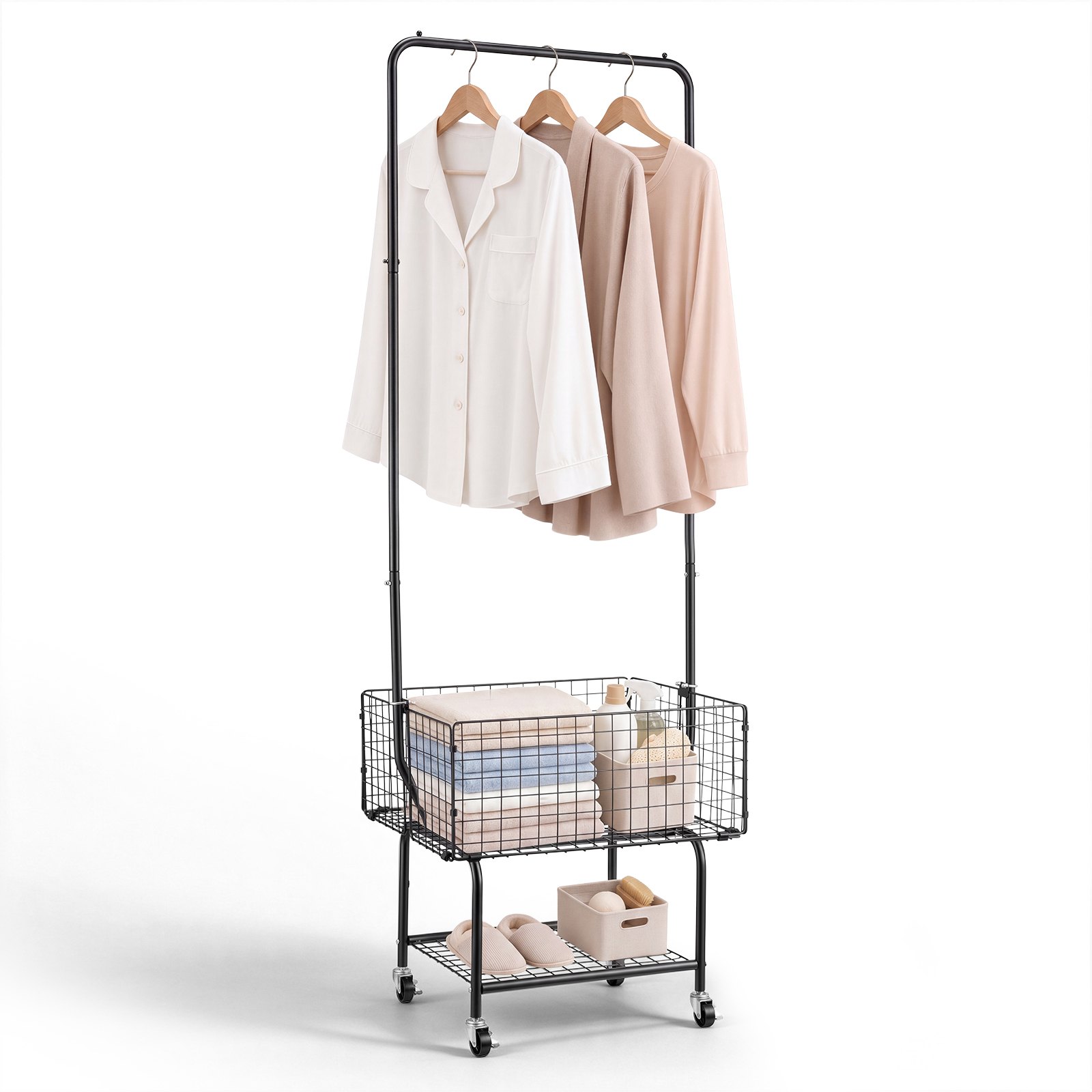

Photos from current listings. Actual item, color, and included accessories may vary.
Laundry Cart With Hanging Rack Buying Guide
A laundry cart with hanging rack combines a rolling hamper with a rigid overhead bar, so you can sort, transport, and air garments in one footprint. The critical trade-off is frame rigidity versus wheel quality: thin-gauge wire racks wobble and tip under a full load, while welded steel frames with sealed casters stay stable for years. Buy a cart rated at least 80 lb capacity with a reinforced hanging bar; skip flimsy foldable wire units that flex at the joints.
At a glance
- Category
- Laundry & Garment Care
- Last updated
- Nov 22, 2026
Current offers
Highlights
- Load rating is the primary durability metric: 100 lb total capacity typically means a 40-50 lb basket limit plus 50-60 lb hanging capacity; under 60 lb total ratings use thinner 3-5 mm wire that bends at welds.
- Frame construction: welded 6-8 mm steel wire with powder-coat finish resists rust and flex; bolted or clip-together frames loosen within months under wet laundry loads.
- Caster grade determines rolling ease: 2-inch sealed ball-bearing casters roll over carpet and thresholds; 1.5-inch friction-fit plastic wheels bind and flat-spot.
- Hanging bar height and clearance: a 40-48 inch bar height keeps long garments off the floor; less than 36 inches means hem drag and limited hanging utility.
Best use cases
- Best fit: small bedrooms or bathroom corners where floor space is tight—pick a vertical cart with a 20-25 gal basket and top-mounted hanging bar to consolidate sorting and airing in one spot.
- Best fit: laundry rooms with a short hallway run to the washer—choose 100 lb capacity with 2-inch casters for smooth rolling over thresholds and rugs.
- Wrong fit: outdoor or garage use in damp climates—skip powder-coated wire and choose stainless or galvanized frames; wet laundry plus humidity rusts standard coatings.
- Wrong fit: households with toddlers—avoid open wire baskets with sharp wire ends at child height; choose a cart with a solid fabric liner or enclosed bin.
Buying tips
- Match basket volume to load frequency: 20-25 gal (78-95 L) suits 1-2 people washing twice weekly; 30+ gal suits families but check that the frame rating stays at 100 lb or higher.
- Measure your doorway and hallway width before choosing: carts 18-22 inches wide clear standard 30-inch doors; wider carts with side hanging bars can exceed 26 inches and won't pass.
- Verify caster type: sealed ball-bearing casters (2-inch minimum) roll loaded carts over carpet; plain plastic wheels are the first failure point on any cart under 80 lb rating.
- Check hanging bar attachment: bars welded to the frame uprights handle 40-60 lb of garments; bars that clip onto the basket rim are rated for light items only and sag under coats.
Specs
| Load Capacity | 60-100+ lb total rating |
|---|---|
| Frame Material | Powder-coated steel vs stainless |
| Caster Type | 2 in sealed bearing vs plastic |
| Basket Volume | 20-30 gal (76-114 L) |
Related searches
What to check before buying
- Measure your laundry area and doorway: cart footprint (typically 18-24 in wide, 16-20 in deep) plus hanging bar overhang must clear door frames and turning radius.
- Confirm floor surface: carpet and rugs require 2-inch casters; hard floors tolerate 1.5-inch wheels but sealed bearings still extend life.
- Check the basket depth and liner: wire baskets snag knits; a removable fabric liner or smooth-edge basket protects delicates.
- Verify assembly hardware: included tools and bolt-through frame joints indicate sturdier construction than snap-fit or clip assembly.
FAQ
Data sources: eBay / Amazon listings and product attribute feeds. Updated Nov 22, 2026.
Some links on this page are affiliate links. If you buy after clicking one, we may earn a commission at no extra cost to you. This does not change which products appear here or their order. Affiliate disclosure.