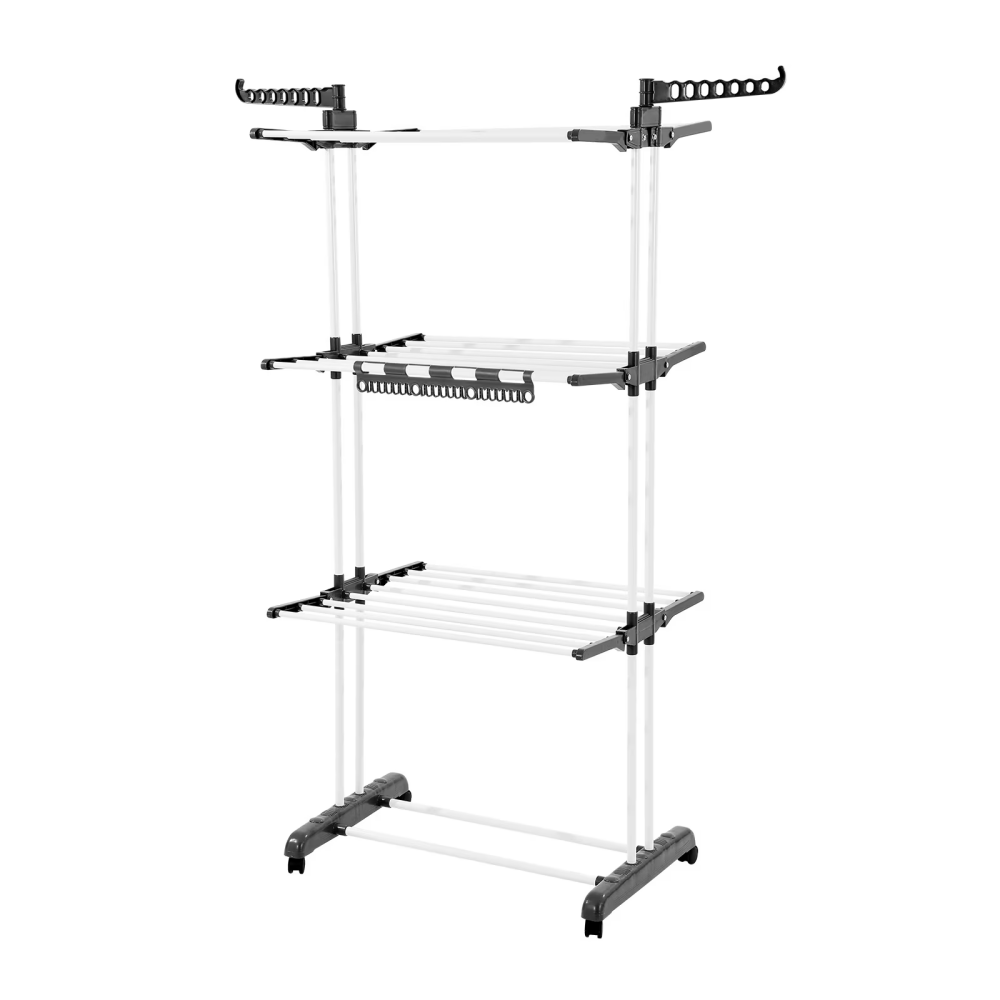

Photos from current listings. Actual item, color, and included accessories may vary.
Indoor Laundry Drying Rack Buying Guide
Indoor laundry drying racks range from flimsy wire accordions to furniture-grade wood or powder-coated steel towers that hold a full wash load without sagging. The core trade-off is between fold-flat convenience and load-bearing rigidity: thin aluminum and low-grade plastic joints flex and corrode, while heavier steel or kiln-dried hardwood frames with locking hinges stay square for years. Buy by frame material, joint construction, and drying surface—not by tier count alone.
At a glance
- Category
- Laundry & Garment Care
- Last updated
- Nov 22, 2026
Current offers
Highlights
- Frame material decides lifespan: powder-coated steel resists rust for damp-room use; kiln-dried hardwood (beech/birch) holds shape but needs periodic oiling; thin aluminum dents and plastic joints crack under wet laundry weight.
- Tier and rod count map to capacity: a 4-tier rack with 24 rods typically handles one to two full washer loads, while 2-tier 12-rod models suit single-person daily washes.
- Foldable wing designs with locking hinges allow flat storage behind doors; fixed A-frame racks dry more per footprint but need permanent floor space.
- Caster wheels must be at least 1.5 inches and lockable on hard floors; cheap plastic casters snap under loaded racks and scratch wood flooring.
Best use cases
- Best for apartments without outdoor lines: pick a 3-4 tier foldable steel rack with lockable casters to dry a full load in a bathroom or spare room, then fold flat for storage.
- Best for family households with heavy weekly wash: choose a furniture-grade wood or heavy steel tower rated for full wet loads; skip lightweight aluminum accordion racks that flex and tip.
- Wrong fit for humid basements or unheated garages: untreated wood and bare carbon steel rust or warp—use powder-coated or stainless hardware and run a dehumidifier.
- Wrong fit for tiny studios: oversized 24-rod towers block walkways; a 2-tier wall-mounted or over-door rack maximizes drying without floor footprint.
Buying tips
- Match rack width to your widest laundry item: hanging rods should span at least 24 inches so wet sheets and towels drape without bunching and blocking airflow.
- Check joint hardware: locking metal hinges and welded cross-braces outperform riveted plastic clips that loosen after repeated folding.
- For wood racks, confirm kiln-dried hardwood and a moisture-resistant finish; unfinished pine warps and grows mildew in damp laundry rooms.
- Caster diameter of 1.5-2 inches rolls over thresholds and rugs; smaller wheels jam and require lifting the loaded rack.
Specs
| Frame Material | Powder-coated steel / hardwood |
|---|---|
| Tier & Rod Count | 2-4 tiers, 12-24 rods |
| Fold & Mobility | Foldable wings / lockable casters |
| Load Capacity | 15-25 lb wet laundry |
Related searches
What to check before buying
- Measure the folded and open footprint plus ceiling clearance—a 4-tier tower needs roughly 5-6 feet of height when fully extended.
- Confirm floor type for caster compatibility: lockable rubber wheels for hardwood, larger casters for carpet transitions.
- Check room humidity and ventilation; unvented damp rooms need powder-coated or stainless frames and a dehumidifier.
- Verify the rack ships with all wing locking pins and hanger hooks—missing hardware makes foldable tiers unstable.
FAQ
Data sources: eBay / Amazon listings and product attribute feeds. Updated Nov 22, 2026.
Some links on this page are affiliate links. If you buy after clicking one, we may earn a commission at no extra cost to you. This does not change which products appear here or their order. Affiliate disclosure.