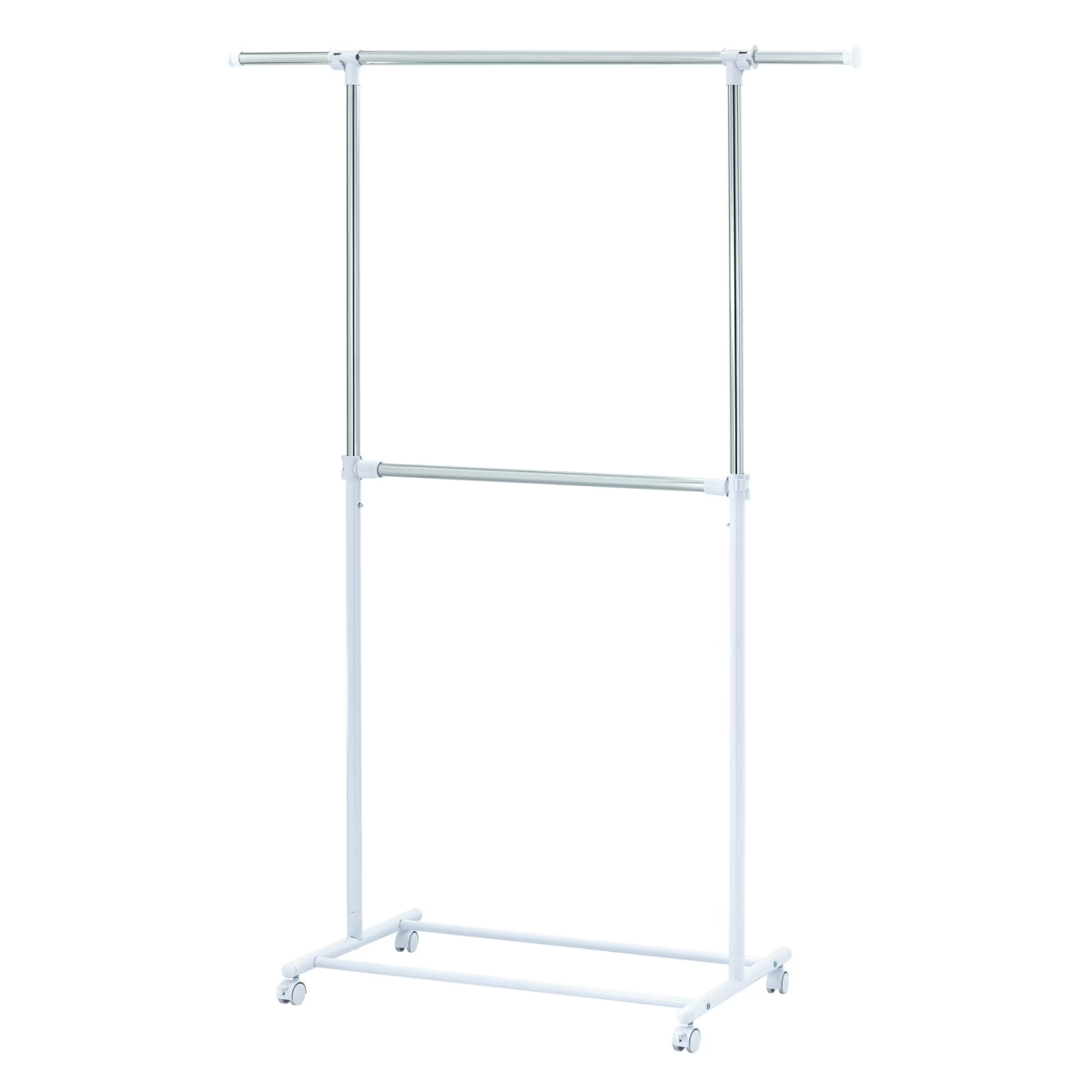

Photos from current listings. Actual item, color, and included accessories may vary.
Garment Rack Buying Guide
A garment rack is a freestanding frame for hanging and drying clothes, defined by its frame material, load rating, and footprint. The core trade-off is between thin tubular steel or plastic joints that wobble under wet laundry and thicker-gauge steel or aluminum with reinforced connectors that stay rigid. Buy a rack rated for wet-weight loads with locking casters for drying; choose a lighter, static rack only for dry closet overflow.
At a glance
- Category
- Laundry & Garment Care
- Last updated
- Nov 22, 2026
Current offers
Highlights
- Frame gauge drives rigidity: 22–25 mm diameter steel tubing with 0.8–1.2 mm wall thickness resists bowing under 30–50 lb of wet garments; thin 0.5 mm tubes flex and fatigue at joints.
- Joint type separates durable from disposable: welded or bolted metal collars and reinforced plastic sleeves outlast press-fit plastic T-connectors that crack under repeated load.
- Caster quality determines mobility and safety: locking polyurethane or rubber wheels protect hard floors and hold position; cheap nylon casters skid and flat-spot.
- Shelf configuration changes capacity: a 2-shelf model adds folded-item or shoe storage below the hanging bar, while single-rail racks prioritize hanging length and a smaller footprint.
Best use cases
- Best fit: pick a 2-shelf locking-caster rack for air-drying wet laundry in a utility room or bathroom — the shelves catch drips and hold detergent, and locks prevent rolling.
- Best fit: choose a single-rail heavy-gauge rack for bedroom or closet overflow of dry garments; prioritize hanging length and a narrow footprint over shelves.
- Wrong fit: skip press-fit plastic-joint racks for wet towels or heavy coats — they wobble and crack; reserve them for lightweight dry blouses only.
- Wrong fit: avoid locking-caster racks on thick carpet or uneven garage floors; choose fixed feet or large-diameter wheels instead for stability.
Buying tips
- Match load rating to wet weight: a soaked bath towel is roughly 3–4 lb and a wet winter coat 5–8 lb; total your wettest load and pick a rack rated at least 1.5× that.
- Measure hanging length per garment: allow 2–3 inches of rail per hanger; a 36-inch rail holds about 12–15 shirts, so size the rail to your typical weekly load.
- Check tube diameter and wall thickness: 25 mm steel with 1 mm walls is the durability floor for wet laundry; 22 mm or thinner is dry-goods only.
- Prefer locking casters (two locking minimum) for drying racks and fixed feet or glides for static closet racks; confirm caster diameter of 2 inches or more for carpet.
Specs
| Frame Material | Steel tube vs aluminum vs plastic |
|---|---|
| Tube Gauge | 22–25 mm dia / 0.8–1.2 mm wall |
| Load Rating | 30–50 lb wet-weight capacity |
| Mobility | Locking casters vs fixed feet |
Related searches
What to check before buying
- Measure the floor footprint and ceiling clearance: a 2-shelf rack typically needs about 36 × 18 inches of floor and leaves hanging height below 60 inches for long garments.
- Confirm door and hallway widths: locking-caster racks must roll through the doorway where you dry clothes; collapsible or narrow 18-inch frames fit tight spaces.
- Check floor type: locking polyurethane casters for tile and wood, larger wheels or fixed feet for carpet and uneven concrete.
- Verify assembly hardware and tools: bolted steel frames need a hex key or wrench; press-fit plastic models assemble by hand but trade rigidity.
FAQ
Data sources: eBay / Amazon listings and product attribute feeds. Updated Nov 22, 2026.
Some links on this page are affiliate links. If you buy after clicking one, we may earn a commission at no extra cost to you. This does not change which products appear here or their order. Affiliate disclosure.