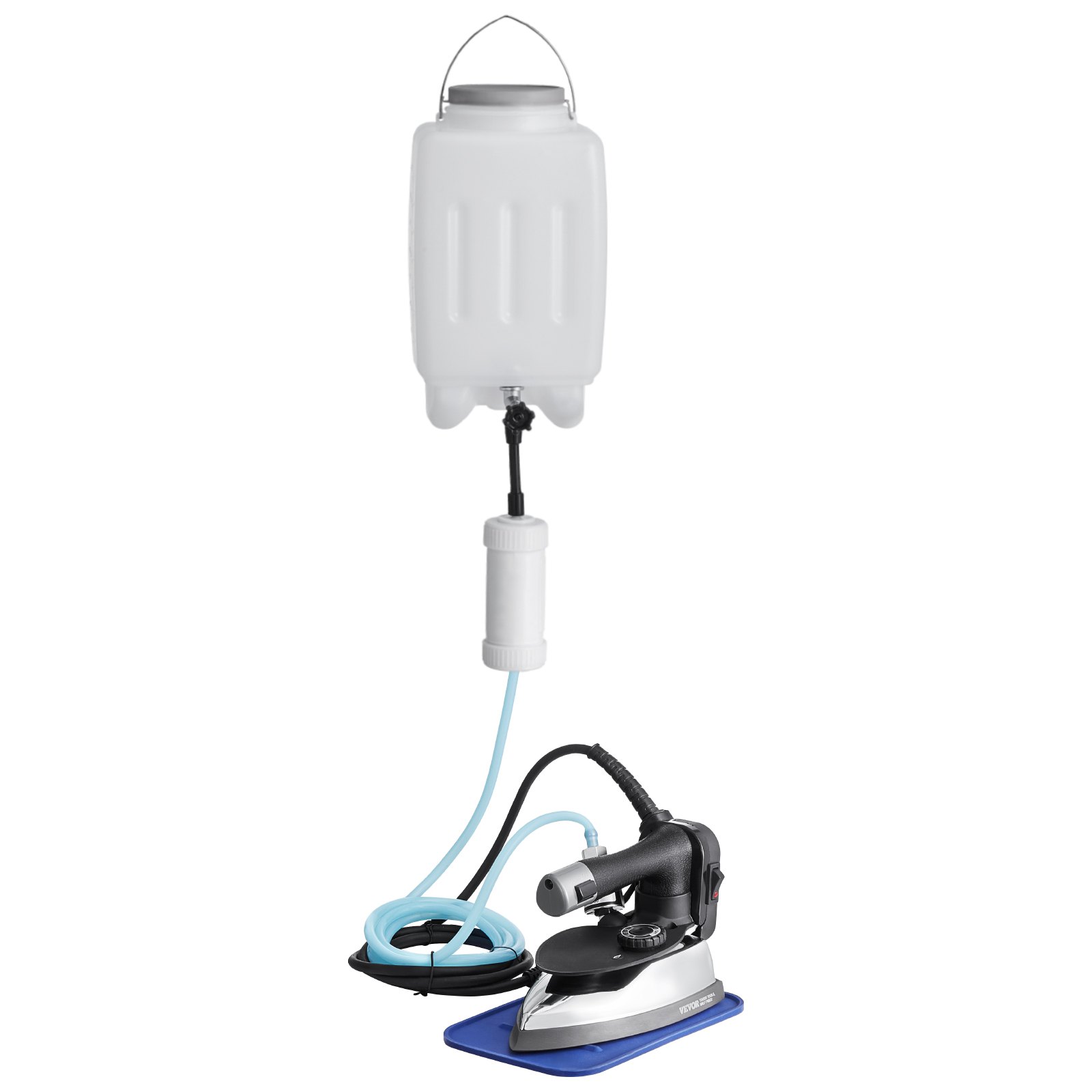

Photos from current listings. Actual item, color, and included accessories may vary.
10 Steam Iron Buying Guide
A steam iron is a garment-care appliance that combines a heated soleplate with moisture to relax fabric fibers, and the primary trade-off is between lightweight handheld units with limited tank capacity and gravity-feed or boiler-style irons that deliver continuous, high-volume steam for long sessions. Durable options use stainless-steel or ceramic-coated soleplates, anti-scale filtration, and ≥1500 W heating elements; compromises show up as thin nonstick coatings, tiny 200–300 ml tanks, and unregulated steam bursts that fade after minutes.
At a glance
- Category
- Laundry & Garment Care
- Last updated
- Nov 22, 2026
Current offers
Highlights
- Gravity-feed irons use a 3–4 L reservoir feeding steam by gravity, delivering 60–120 g/min continuous steam versus 20–40 g/min from typical 300 ml handheld irons.
- Wattage tiers matter: 1000–1400 W suits occasional touch-ups, while 1600–2000 W elements sustain steam pressure for back-to-back garments and thicker fabrics like denim and linen.
- Soleplate material determines glide and longevity — anodized aluminum and ceramic-coated plates resist scratching, while bare nonstick coatings wear through within months of daily use.
- Anti-scale systems range from replaceable demineralizer cartridges (best for hard water) to built-in calc-clean valves; cartridge systems preserve steam output where tap water exceeds 150 mg/L hardness.
Best use cases
- Best fit: households ironing multiple garments daily or handling linen, denim, and cotton — choose a 1600 W+ gravity-feed or boiler iron with a 2–4 L tank and demineralizer cartridge; skip 1000 W handhelds that run dry mid-basket.
- Best fit: sewists and quilters pressing seams with precision — pick a dry/steam iron with a pointed ceramic soleplate and adjustable 100–200 °C thermostat; avoid gravity-feed units whose bulk obscures the soleplate tip.
- Best fit: small apartments or travel touch-ups — a 1000–1200 W compact iron with a 200–300 ml tank is sufficient; skip 3.5 L gravity-feed systems, which are heavy, tether to a stand, and need counter space.
- Wrong fit: continuous industrial steaming of upholstery or curtains — a steam iron's soleplate contact is required; choose a dedicated garment steamer with a ≥1.5 L boiler instead.
Buying tips
- Match tank size to session length: a 300 ml tank lasts roughly 10–15 minutes of continuous steam; a 3.5 L gravity-feed tank covers 1.5–2 hours of steady ironing.
- Check soleplate composition before price: ceramic-coated stainless steel glides on synthetics without shine, while polished stainless suits high heat on cotton and linen.
- Verify steam output in g/min, not just 'burst' claims — continuous output ≥60 g/min is needed for vertical steaming and thick fabrics; burst-only ratings overstate real performance.
- For hard water above 150 mg/L, require a demineralizer cartridge or built-in anti-calc system; otherwise scale clogs the steam chamber and drops output within months.
Specs
| Steam Feed Type | Gravity-feed vs handheld tank |
|---|---|
| Tank Capacity | 200-300 ml compact / 2-4 L gravity |
| Heating Power | 1000-1400 W light / 1600-2000 W heavy |
| Soleplate Material | Ceramic-coated, anodized, stainless |
Related searches
What to check before buying
- Measure ironing-board space and outlet reach: gravity-feed irons need a stable stand for the 3–4 L tank plus a 1.5–2 m hose reach to the board.
- Confirm voltage and plug standard matches your region (120 V/60 Hz North America vs 230 V/50 Hz Europe) — irons are not dual-voltage and need a transformer abroad.
- Check your water hardness; if above 150 mg/L, budget for replacement demineralizer cartridges or choose a model with a calc-clean valve.
- Verify soleplate size and tip shape against your work — a narrow pointed tip is required for between-button and seam pressing; wide plates suit flat yardage.
FAQ
Data sources: eBay / Amazon listings and product attribute feeds. Updated Nov 22, 2026.
Some links on this page are affiliate links. If you buy after clicking one, we may earn a commission at no extra cost to you. This does not change which products appear here or their order. Affiliate disclosure.