
Photos from current listings. Actual item, color, and included accessories may vary.
Plastic Box Buying Guide
Plastic boxes are rigid storage containers defined by resin type, wall thickness, and lid architecture — the trade-off is paying for virgin PP/PC that resists cracking and yellowing versus brittle regrind that fails under stack load. The decision rule: buy clearly labeled virgin polypropylene (PP) or polycarbonate (PC) with a reinforced rim and positive-latch lid; skip unlabeled thin-wall totes and soft foldable fabric-faced boxes for anything heavy or archival.
At a glance
- Category
- Home Storage & Organization
- Last updated
- Nov 22, 2026
Current offers
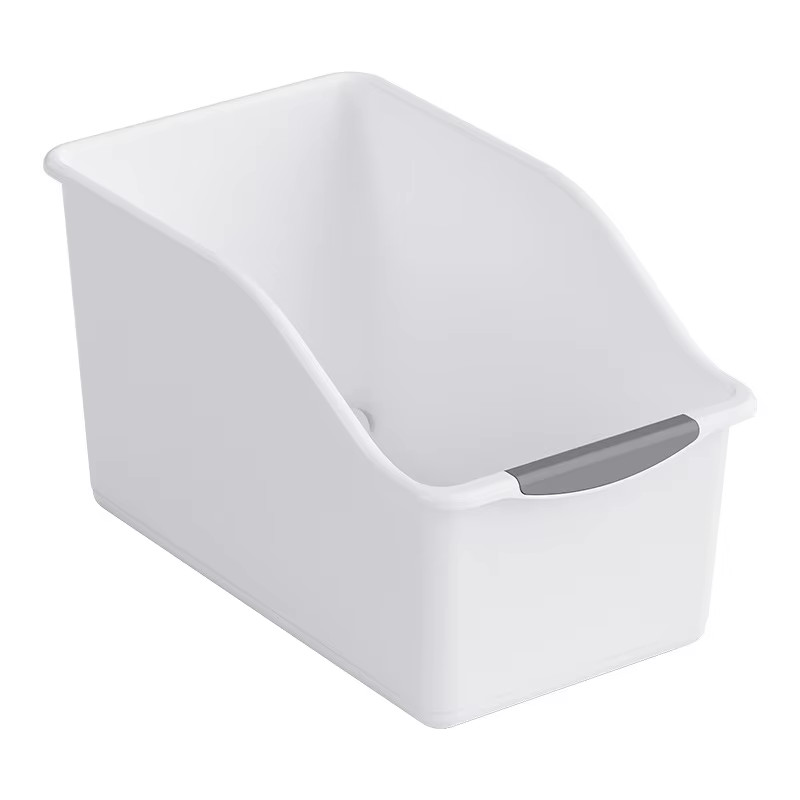 Curved Plastic Storage Bins Set - Multipurpose Home Organization Boxes for Clean$8.98View on eBay
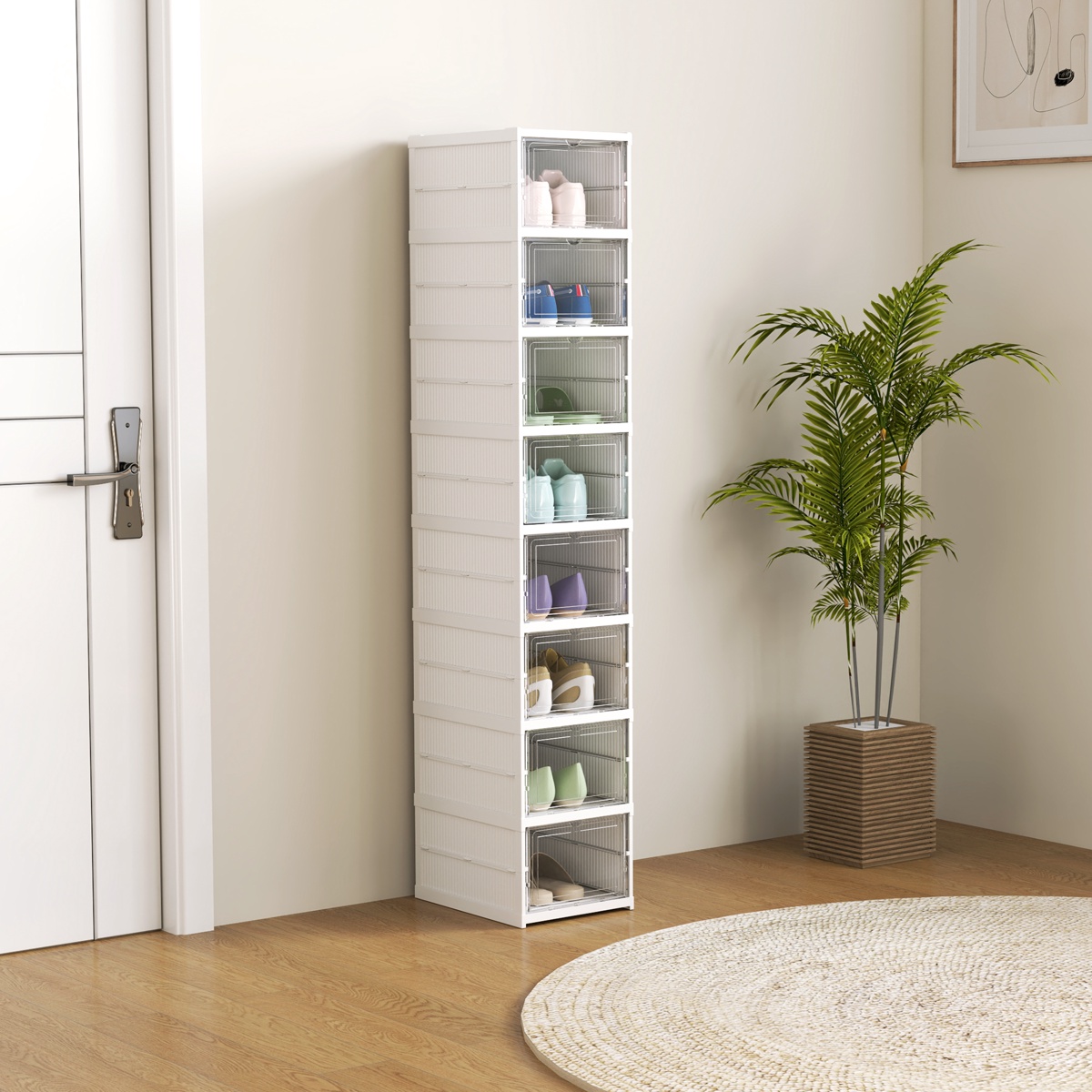 Stackable Plastic Shoe Boxes, 8 Pack Foldable Storage with Clear Door, No Assembly, Fit Size 10, White$51.99View on Mallflare
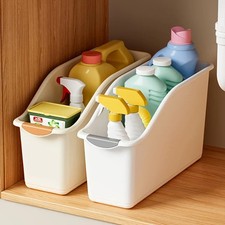 Curved Plastic Storage Bins Set - Multipurpose Home Organization Boxes for Clean$9.99View on eBay
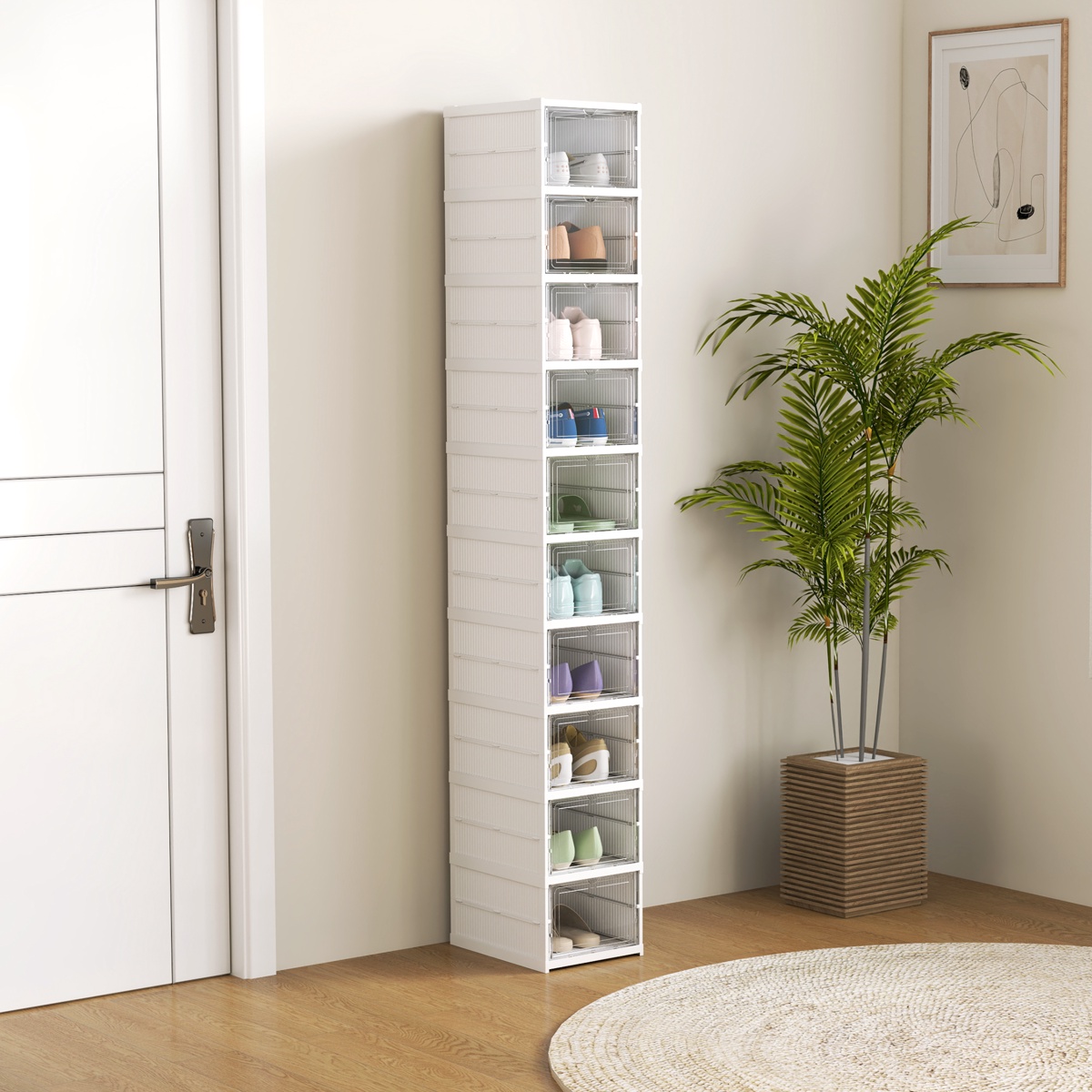 Stackable Plastic Shoe Boxes, 10 Pack Foldable Storage with Clear Door, No Assembly, Fit Size 10, White$68.99View on Mallflare
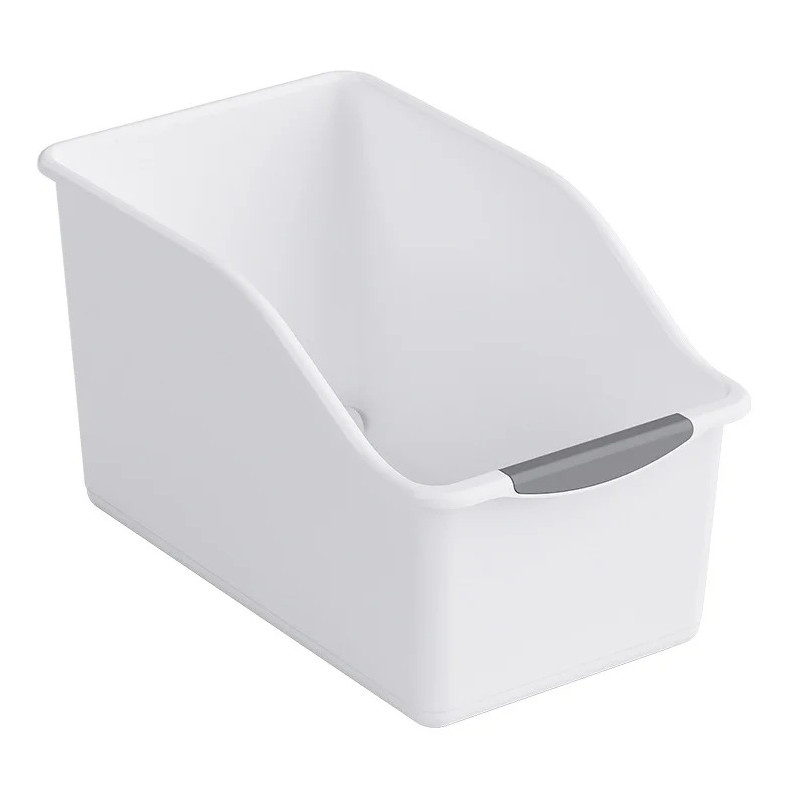 1 pc Curved Plastic Storage Bins Set Multipurpose Home Organizer Boxes$12.29View on eBay
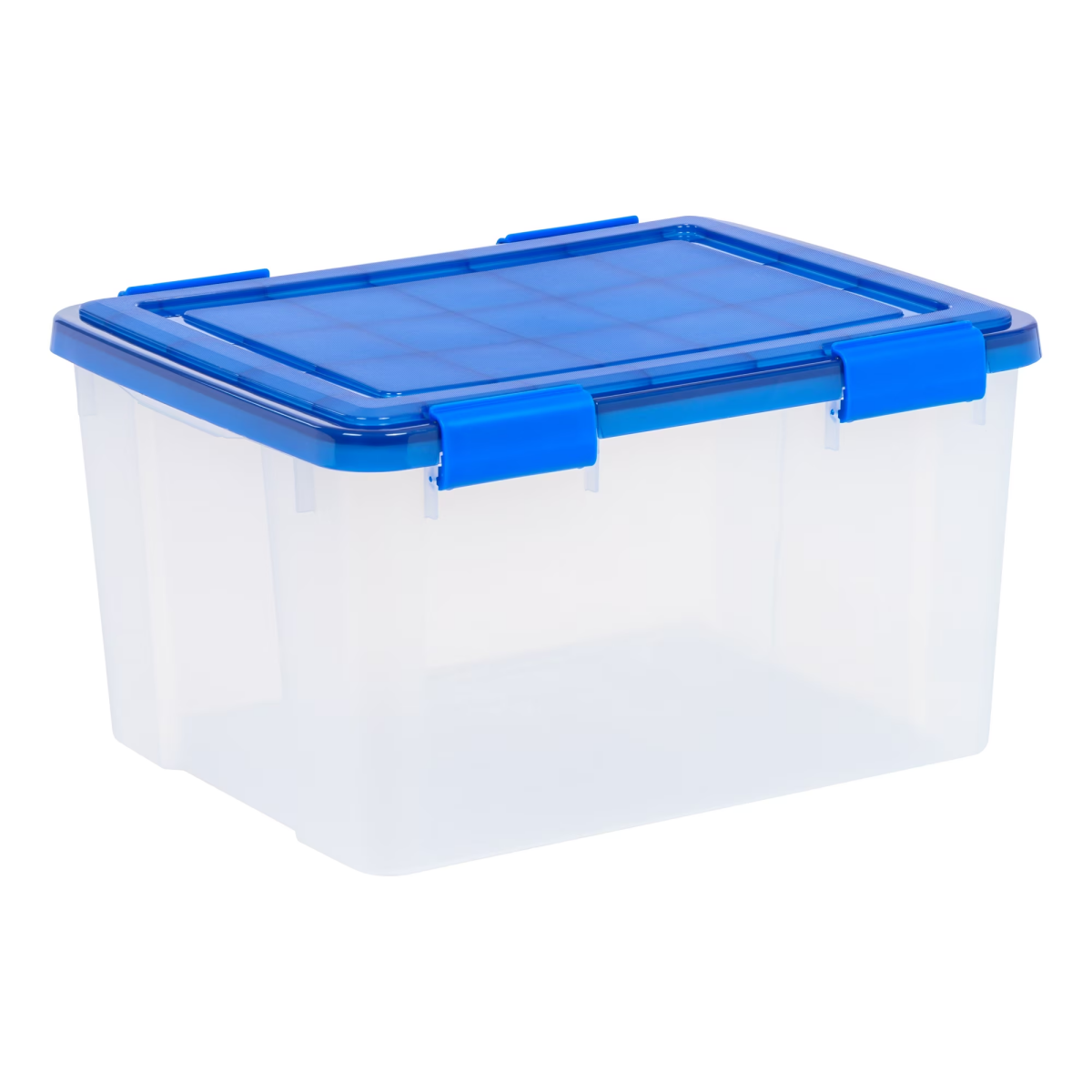 46 Qt. Plastic Storage Bins with Sealed Lids, Clear Gasket Box, Airtight Containers$69.99View on Mallflare
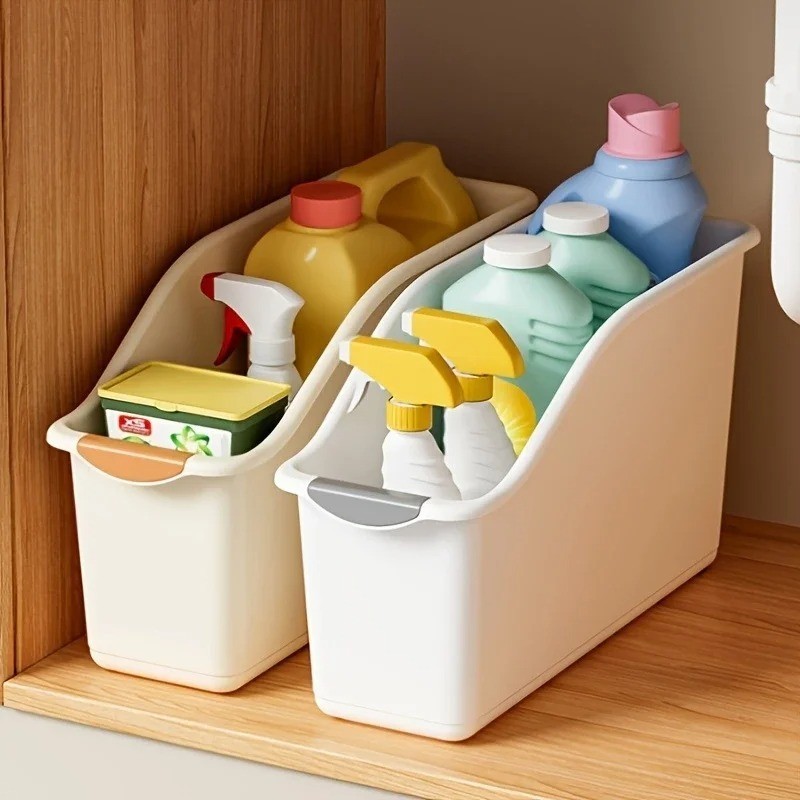 Curved Plastic Storage Bins Set Multipurpose Home Organizer Boxes 2PCS$19.90View on eBay
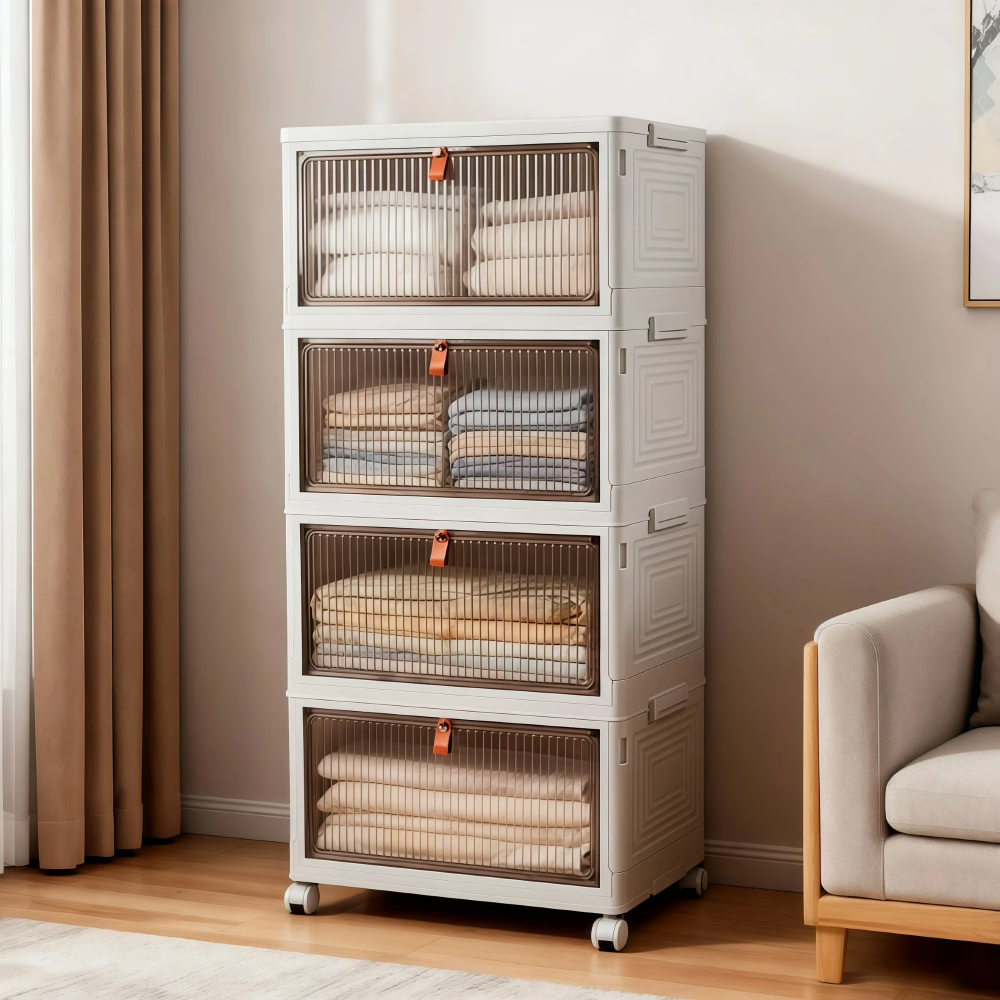 92 Qt Stackable Storage Bins with Lids and Wheels, 4 Tier Folding Box Doors, Plastic Closet Organizers and Containers for Living Room, Office, Dorm$92.99View on Mallflare
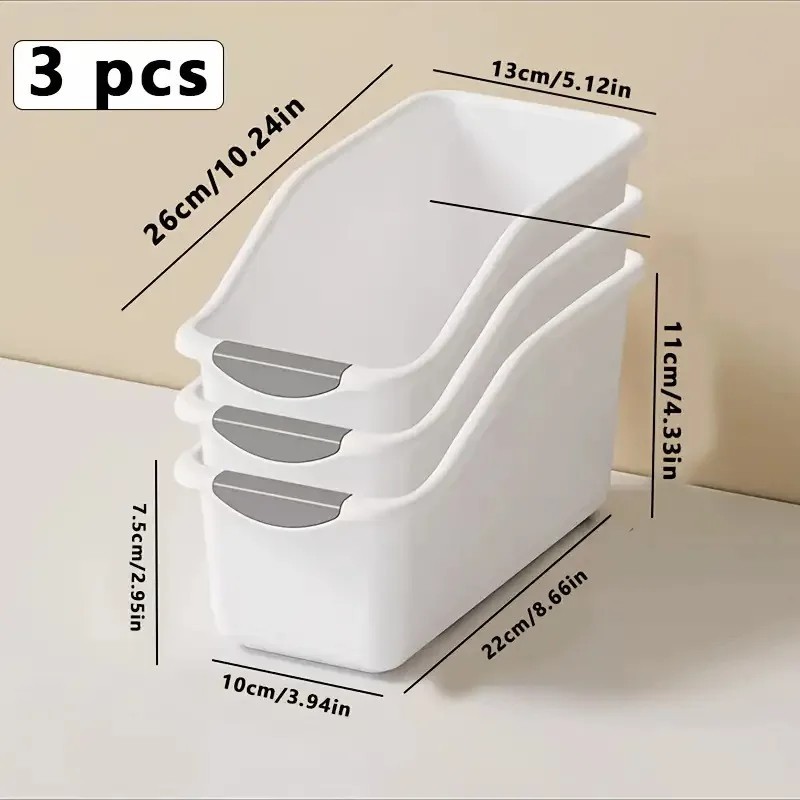 Curved Plastic Storage Bins Set Multipurpose Home Organizer Boxes$20.99View on eBay
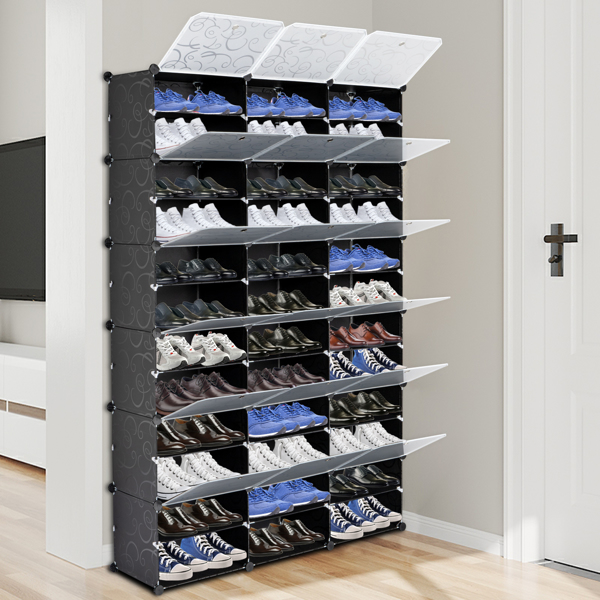 3 Rows, 12 Layers, 36 Compartments Plastic Shoe Box Storage Rack$103.99View on Mallflare
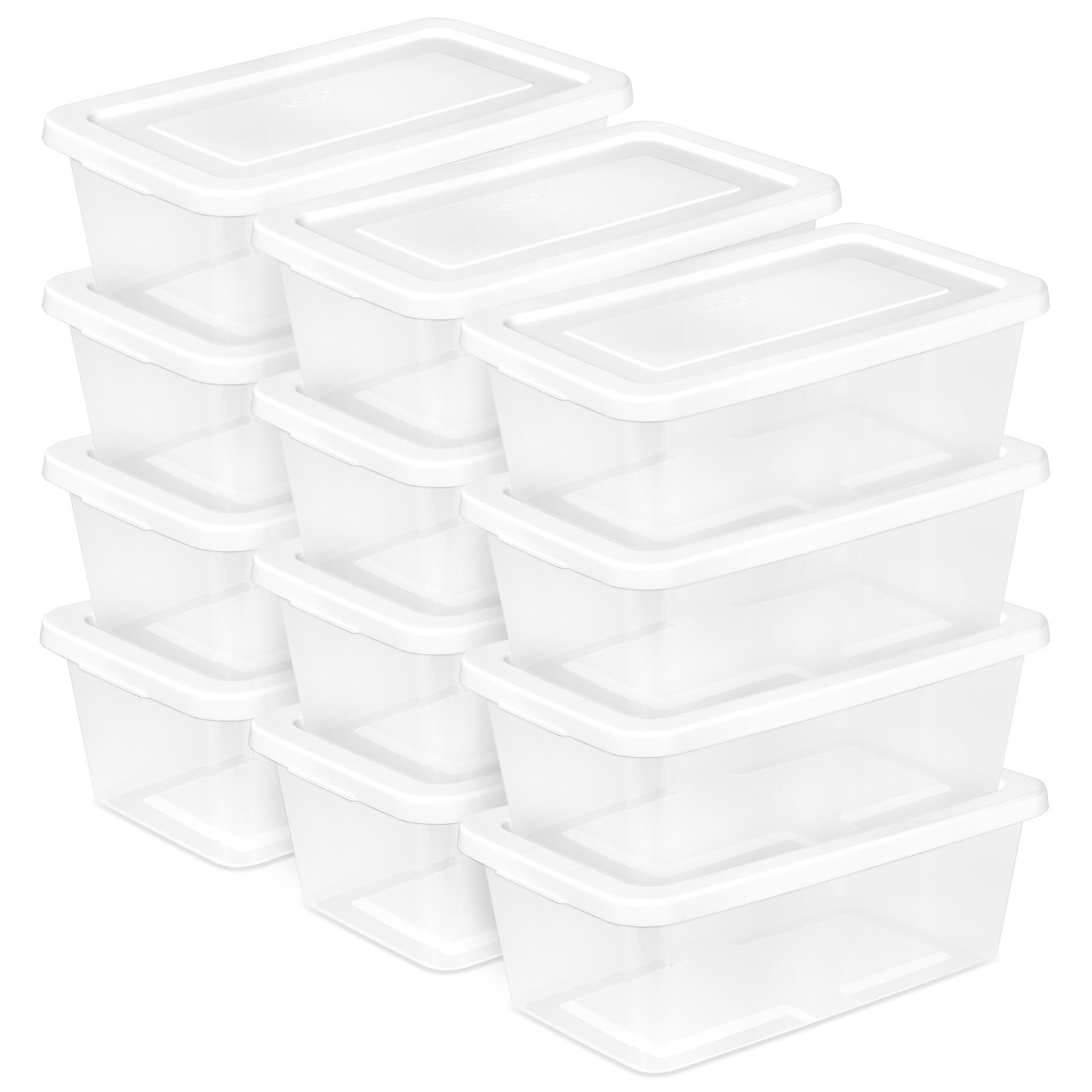 Sterilite 6 Qt Storage Box, Stackable Plastic Container, Home Organizer, 12 Pack$31.99View on eBay
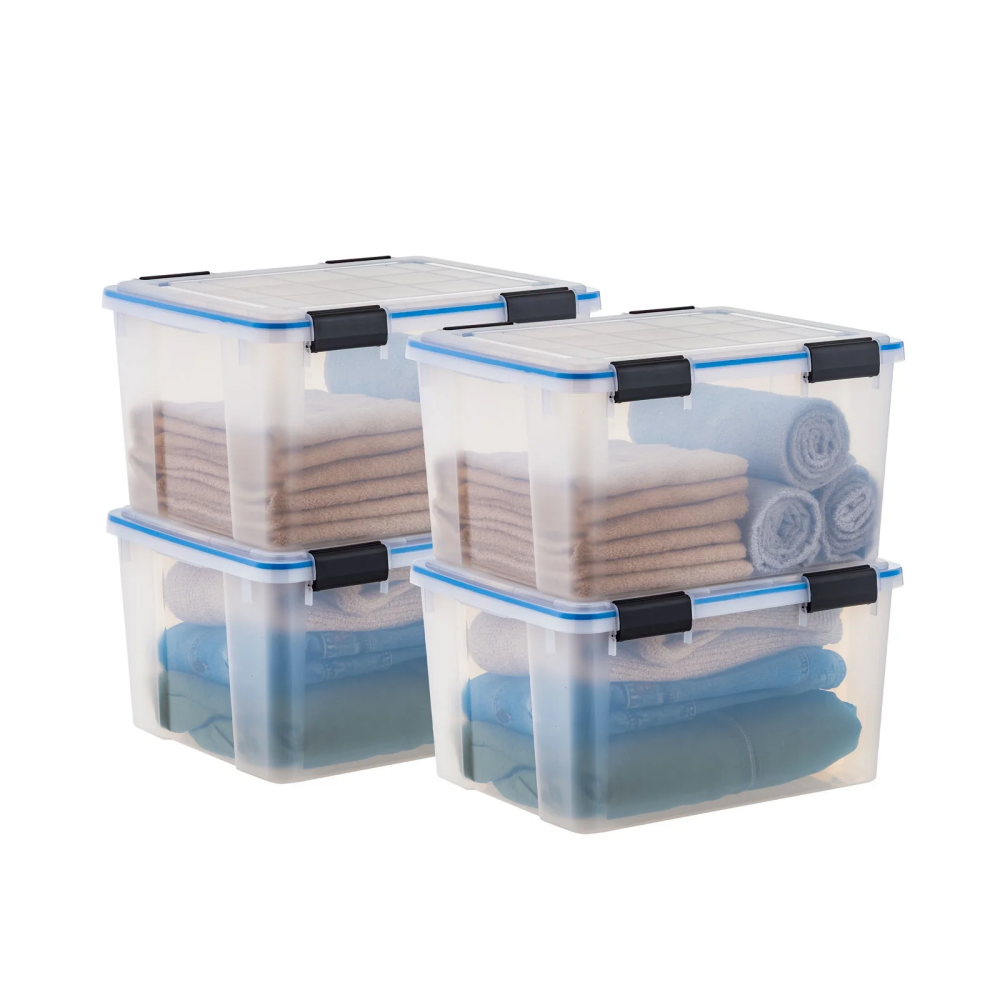 44 Qt. Plastic Storage Bins with Sealed Lids, Clear Gasket Box, Airtight Containers 4Pk$118.99View on Mallflare
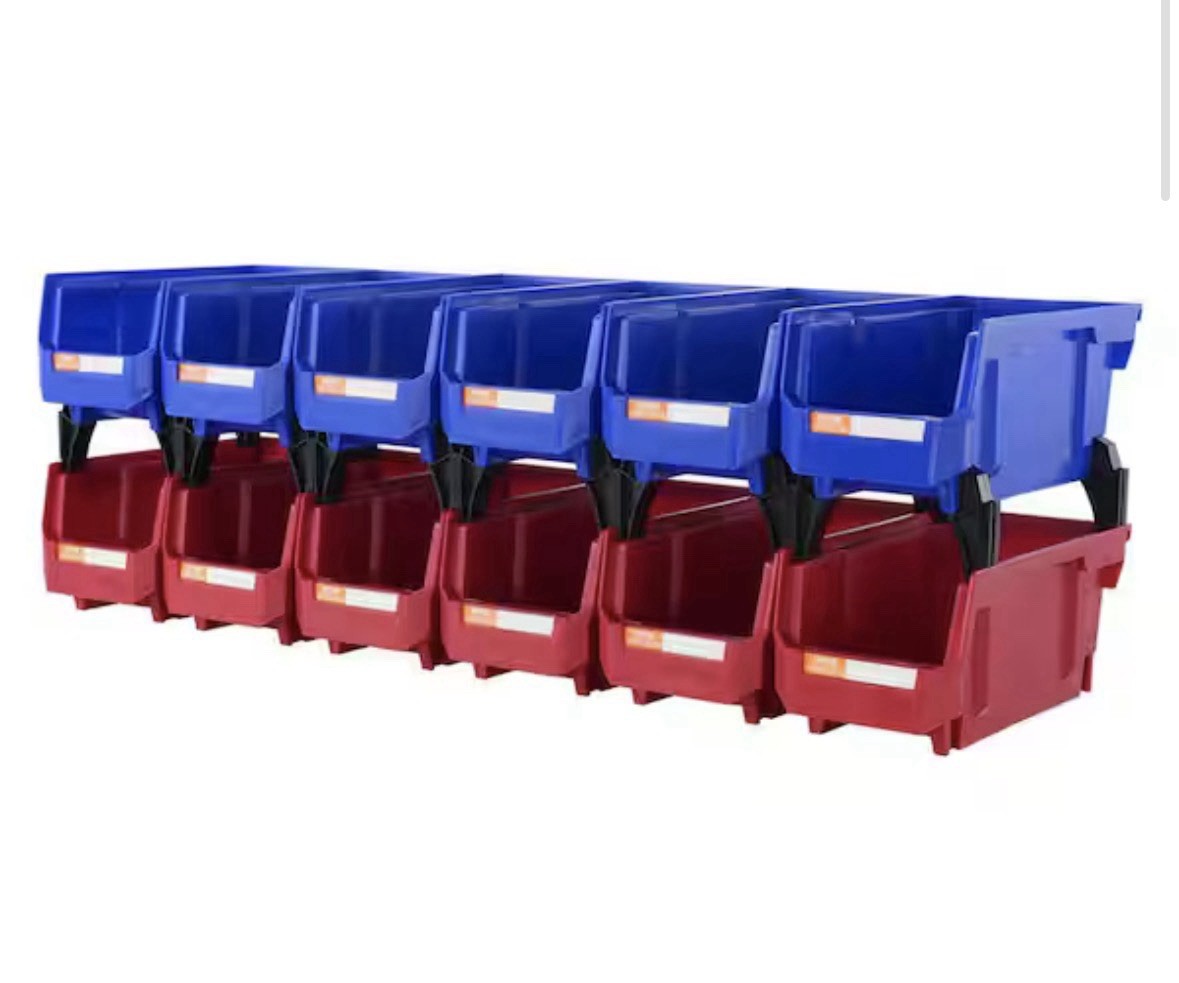 VEVOR Hanging Stackable Storage Bin Plastic Organizer Garage Box 12 PCS Blue/Red$35.99View on eBay
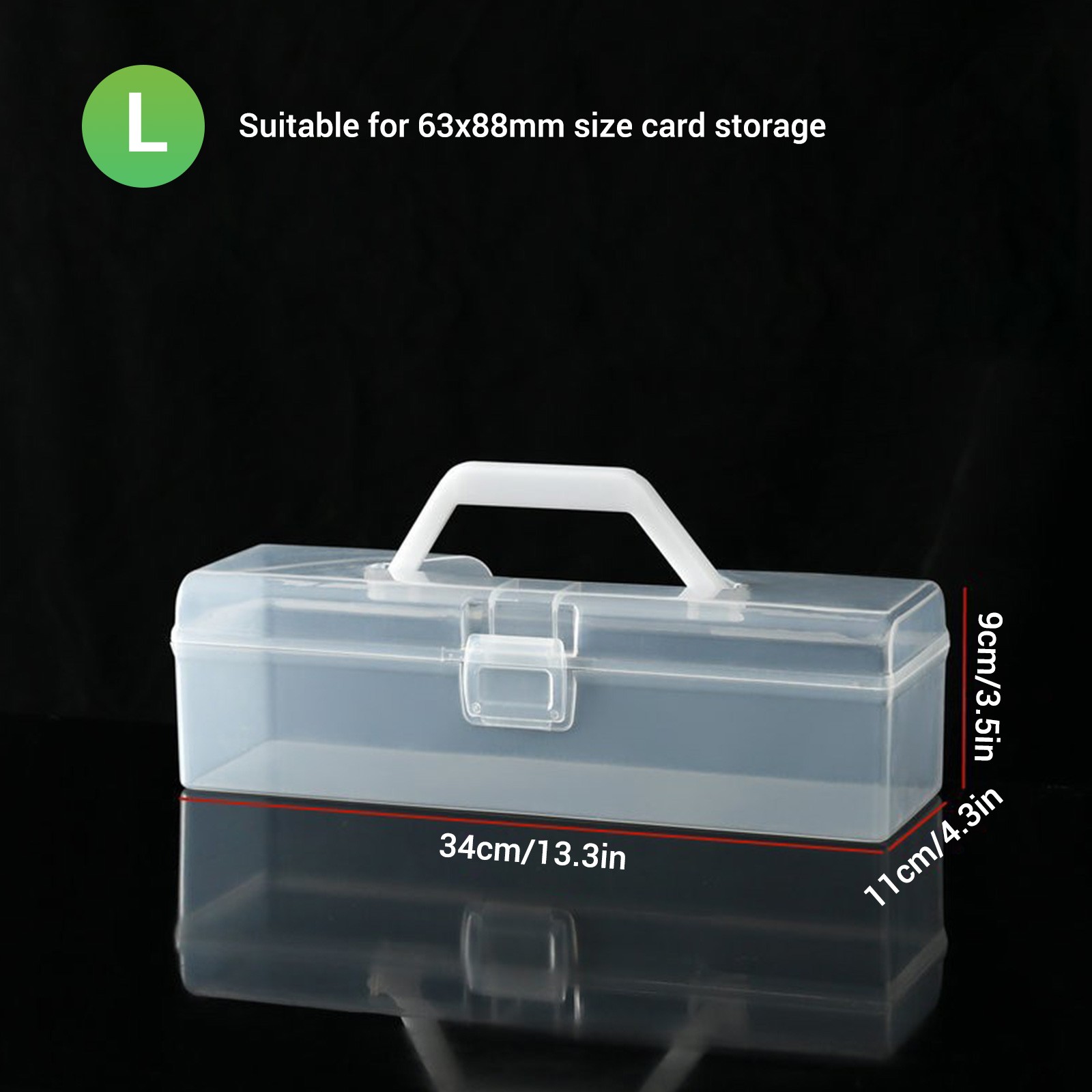 Card Collection Plastic Storage Box Tool Stationery Organizer for Home Office$51.05View on eBay
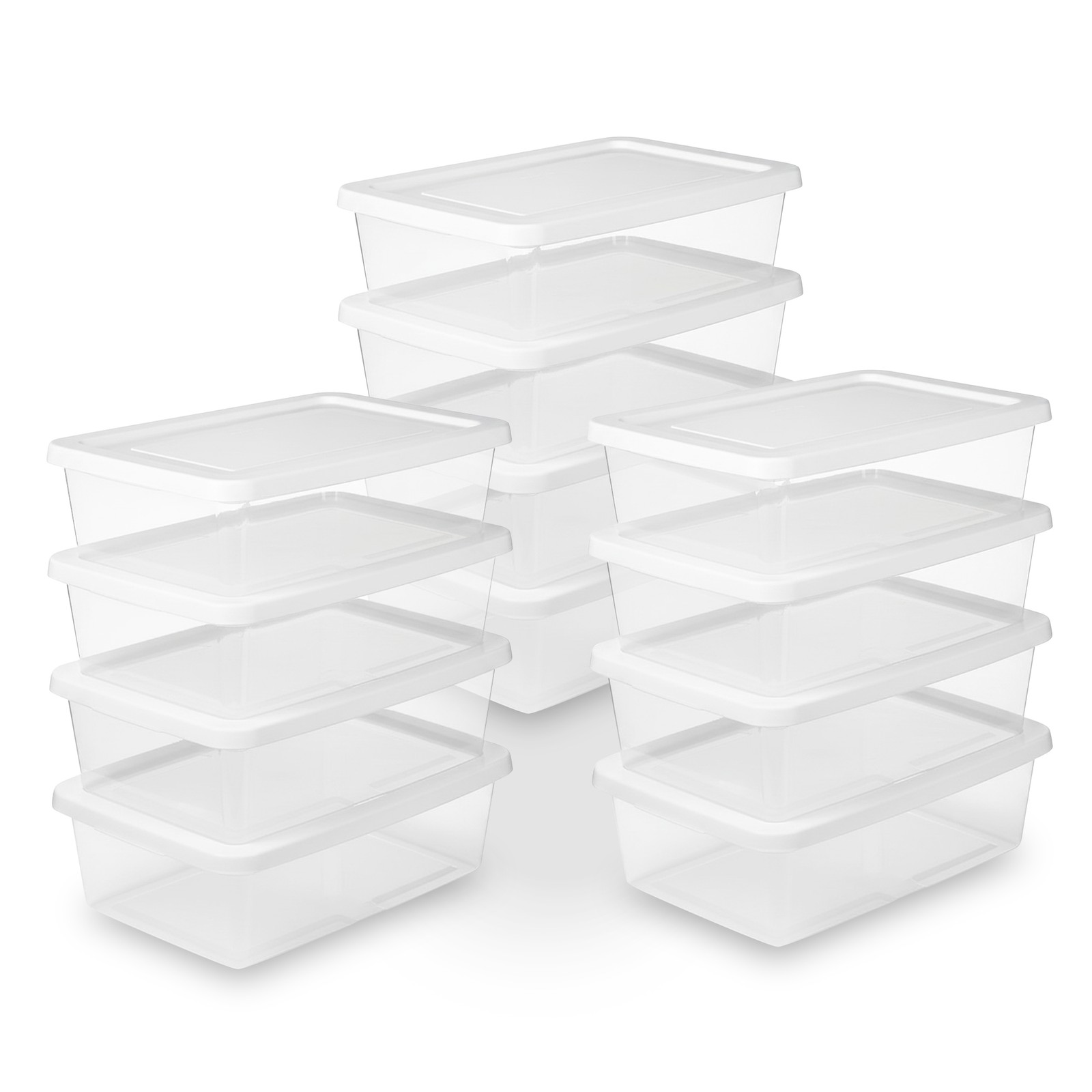 Sterilite 12Qt Storage Box, Stackable Plastic Container, Home Organizer, 12 Pack$53.99Last checked Nov 20, 2026View on eBay
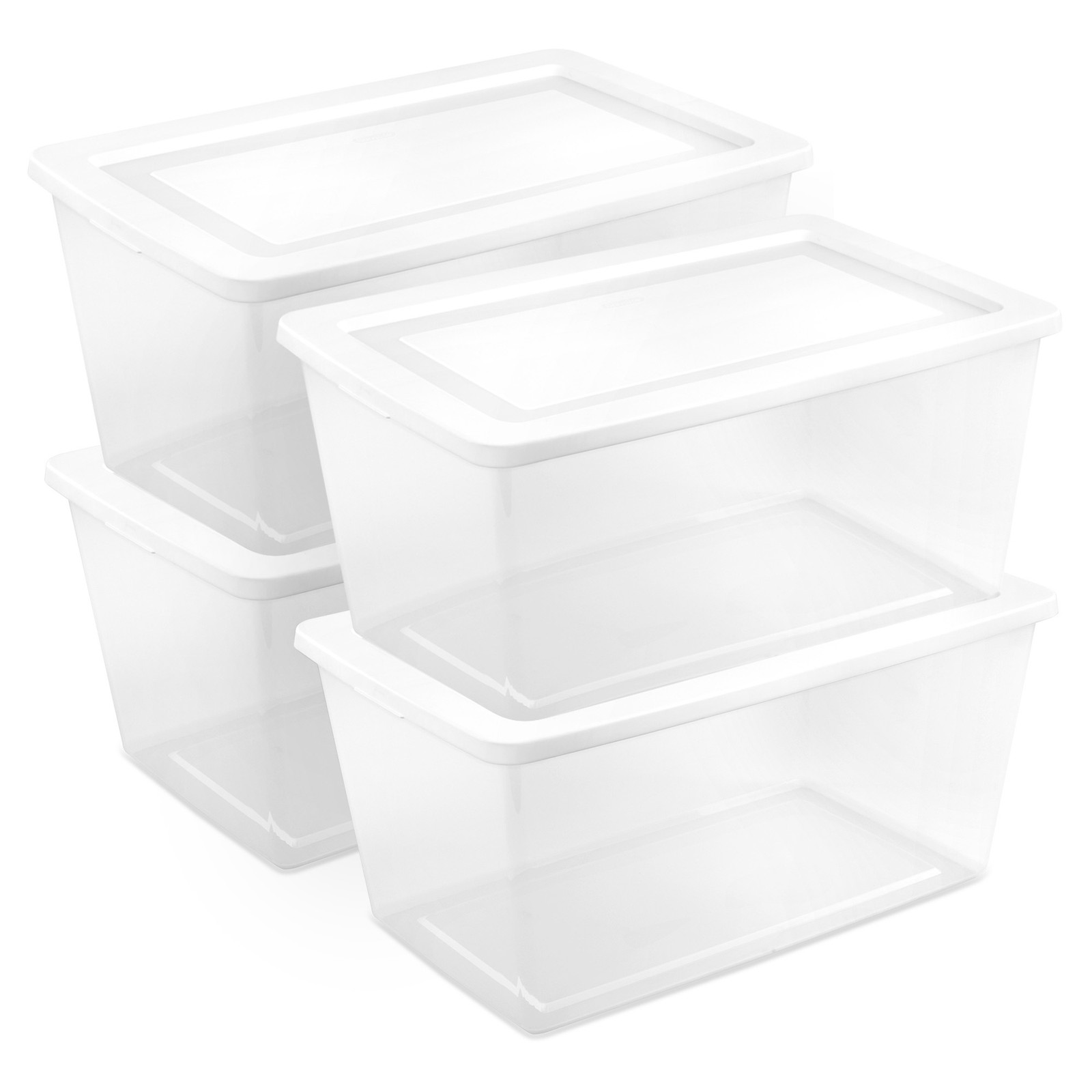 Sterilite 90 Qt Storage Box, Stackable Plastic Container, Home Organizer, 4 Pack$76.99View on eBay
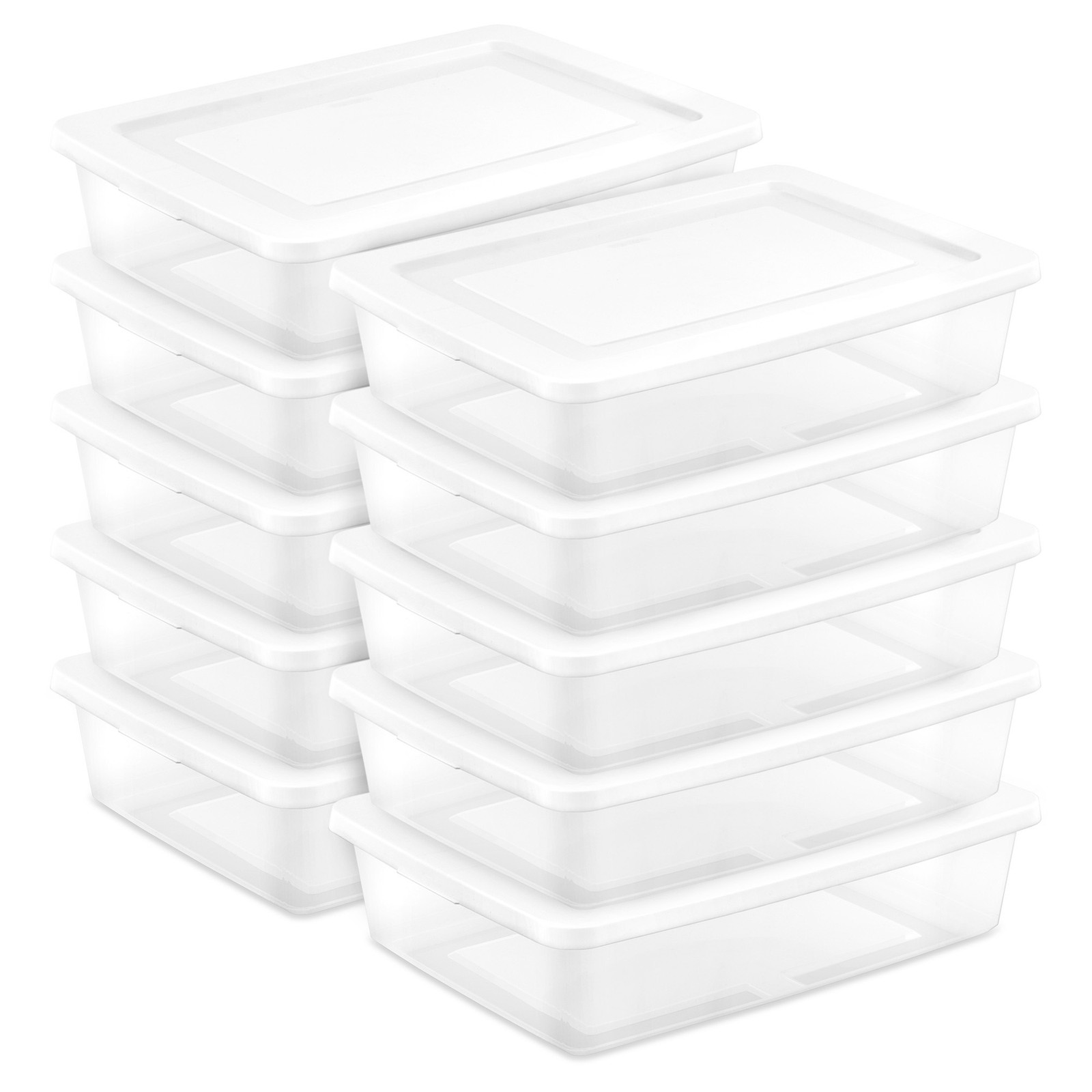 Sterilite 28 Qt Storage Box, Stackable Plastic Container Home Organizer, 10 Pack$94.99View on eBay
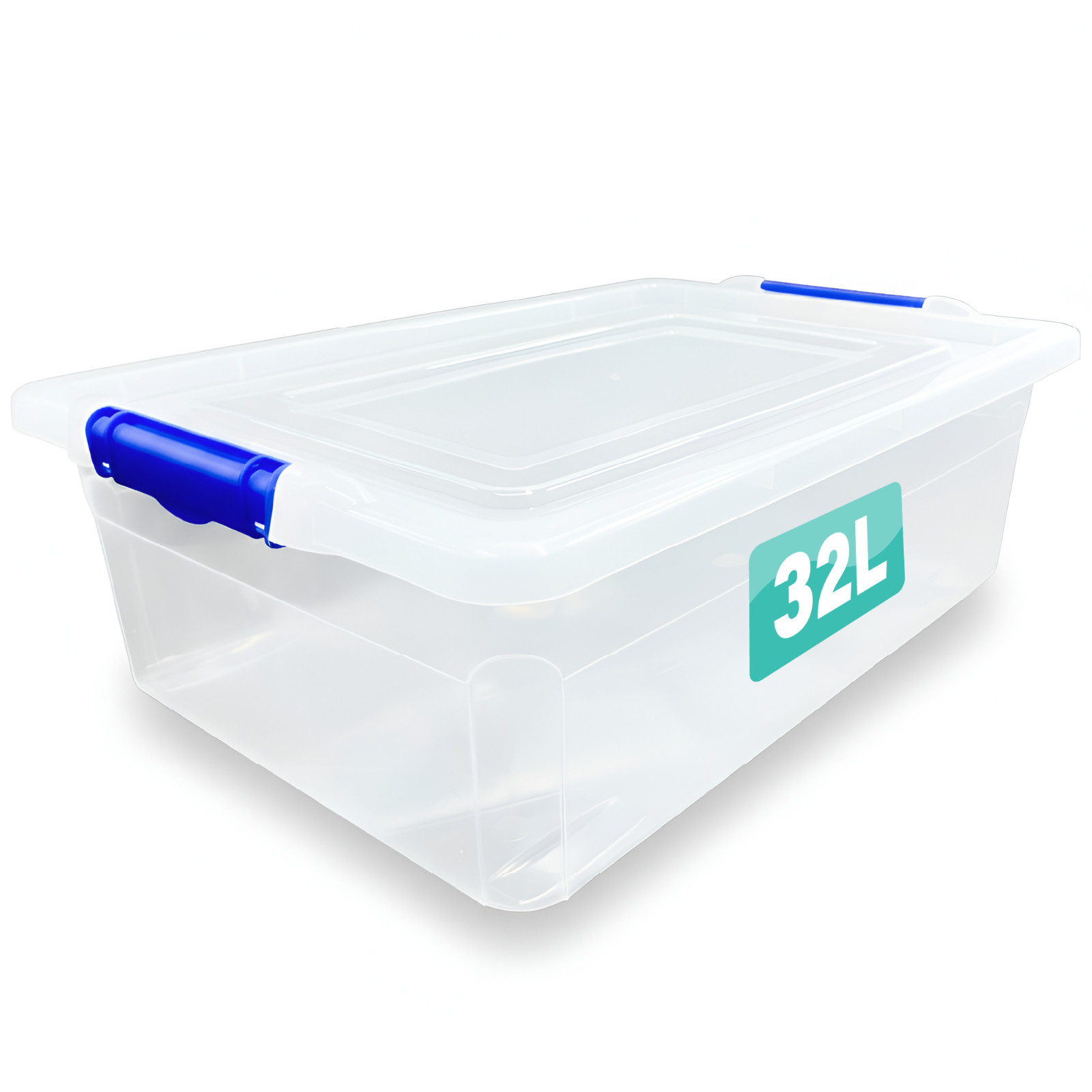 Clear Plastic Storage Box Boxes With Lids UK BRITISH MADE Home Office Stackable$115.92View on eBay
Highlights
- Resin grade drives durability: virgin PP handles 0–80 °C and repeated stacking; PC adds impact resistance for garage/shed use; regrind and PS craze and crack at rim stress points.
- Wall thickness threshold: structural clear boxes run 1.5–3 mm walls; under 1 mm flexes and splits at handle cutouts under 10 kg loads.
- Lid architecture separates tiers: gasketed latching lids seal against dust and humidity; friction-fit and snap lids are dust-permeable and unsuitable for garages or basements.
- Volume classes align to use: 6–12 qt for craft/shoe, 20–40 qt for closet/shelf, 50–80 qt for underbed/garage, 80–120 qt for heavy bulk — match box footprint to shelf depth before capacity.
Best use cases
- Closet and shelf organization: pick 12–32 qt clear PP boxes with straight walls and stack-only lids; skip gasketed latching boxes — the latch hardware adds height that wastes shelf clearance.
- Garage and basement bulk: choose 50–80 qt opaque PP with gasketed latching lids and reinforced corners; skip clear thin-wall totes that yellow and crack under UV and cold.
- Underbed and low-clearance: use 32 L clip boxes with 6–7 in height and dual side latches; skip tall 80 qt trunks that exceed 8 in frame clearance and cannot slide under the rail.
Buying tips
- Measure interior shelf depth, width, and height first, then subtract 1 in clearance; a 40 qt box is typically ~26 × 16 × 7 in — confirm your shelf exceeds that footprint before choosing capacity.
- For stacking, choose boxes rated for at least 2-high static load with interlocking rims; flat-lid friction boxes slide and should be limited to single-layer shelf use.
- For humidity control (basements, garages), select gasketed latching lids with a continuous seal channel; snap-lid boxes pass ambient moisture and are wrong for textile or paper storage.
- Prefer virgin PP or PC over PS or unlabeled regrind; PP tolerates cold to –20 °C without shattering, while PS and thin regrind crack at handles and corners in unheated spaces.
Specs
| Resin Grade | Virgin PP / PC vs PS regrind |
|---|---|
| Wall Thickness | 1.5–3 mm structural; <1 mm flexes |
| Lid Type | Gasketed latch vs snap vs friction |
| Volume Class | 6–12 qt / 20–40 qt / 50–80 qt |
Related searches
What to check before buying
- Measure shelf depth, width, and vertical clearance; box footprint plus 1 in clearance must fit before capacity matters.
- Confirm floor type and climate: unheated garage or basement requires PP/PC and gasketed lids; heated closet tolerates standard snap lids.
- Check stacking plan: count layers and confirm the lid rim is designed to nest or interlock, not just rest flat.
- Verify companion fit: shoe boxes need internal length ≥ 12.5 in for a US men's size 10; underbed boxes need height ≤ 7 in for standard frames.
FAQ
Data sources: eBay / Amazon listings and product attribute feeds. Updated Nov 22, 2026.
Some links on this page are affiliate links. If you buy after clicking one, we may earn a commission at no extra cost to you. This does not change which products appear here or their order. Affiliate disclosure.