
Photos from current listings. Actual item, color, and included accessories may vary.
Metal Storage Bin Buying Guide
Metal storage bins are rigid containers or overhead rack systems built from steel or aluminum, used for heavy-duty organization in garages, workshops, and utility rooms. The primary trade-off is between thin-gauge stamped steel that dents under load and thicker welded construction that holds shape for years. Choose welded 20-gauge or heavier steel with reinforced corners for permanent storage; skip pop-riveted 24-gauge bins if you plan to stack or hang them loaded.
At a glance
- Category
- Home Storage & Organization
- Last updated
- Nov 22, 2026
Current offers
Highlights
- Steel gauge determines durability: 20-gauge (0.036 in) or thicker resists denting, while 24-gauge (0.024 in) crumples under 30+ lb point loads.
- Welded seams and spot-welded corner gussets outperform pop-riveted or folded-tab joints for rack and bin load ratings.
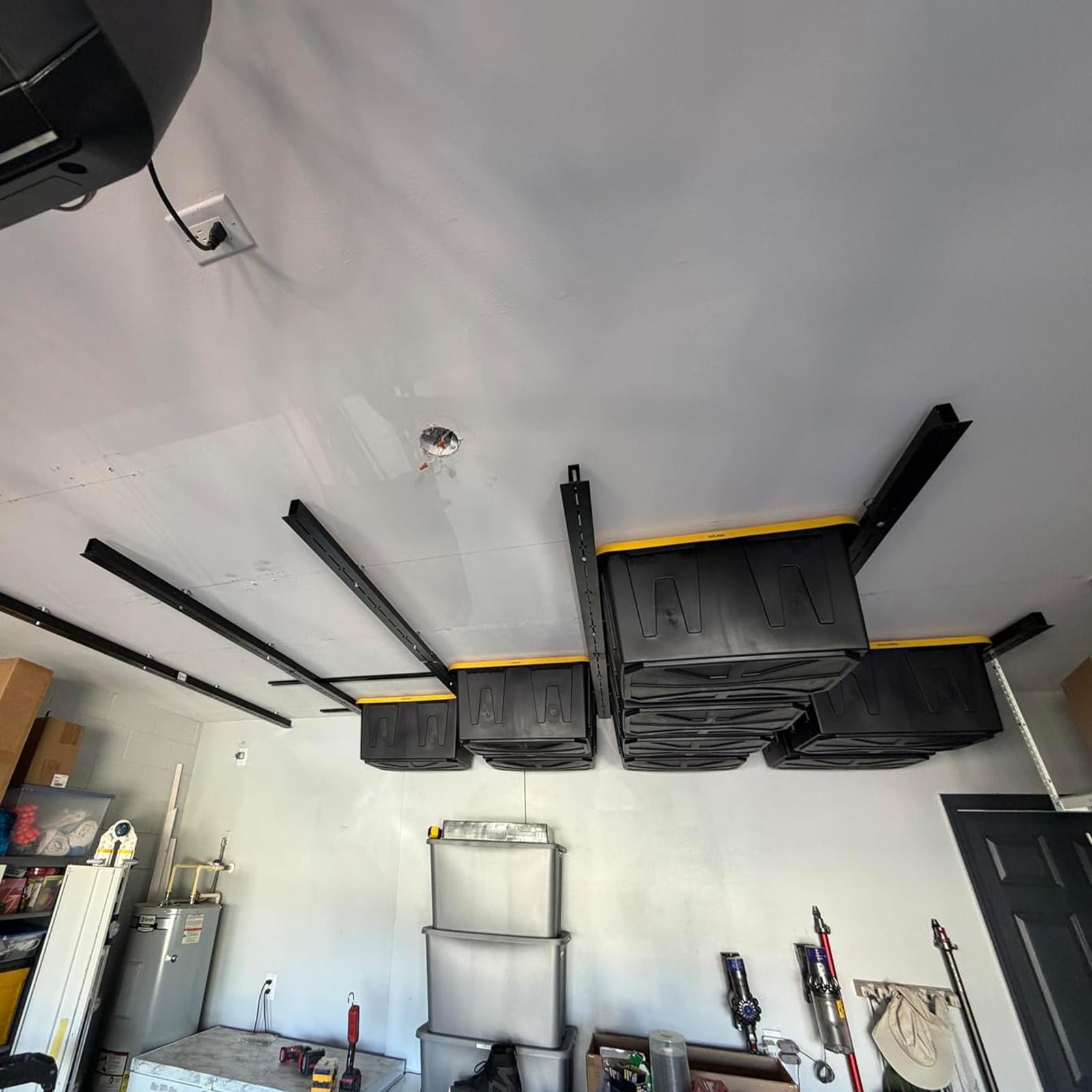
- Overhead ceiling rack systems use 12–14-gauge cold-rolled steel channels with 500–1,000 lb total capacity when anchored into joists.
- Powder-coated finishes resist rust better than painted or galvanized-only surfaces in humid garages and unheated sheds.
Best use cases
- Best fit: overhead ceiling racks with 12-gauge steel channels for storing 27-gallon tote bins in garages with exposed joists—pick a rack rated for at least 2x your planned load.
- Best fit: welded 20-gauge steel stackable bins for workshop parts and tools where bins stay on shelving and never hang from a rack.
- Wrong fit: 24-gauge pop-riveted bins for ceiling suspension—the rivets shear and the thin walls deform under 25–30 lb loads.
- Wrong fit: open-wire metal bins for small hardware in dusty shops—fasteners fall through gaps; choose solid-sided steel bins with folded rims instead.
Buying tips
- Measure joist spacing first: ceiling racks need mounting brackets aligned to 16-in or 24-in on-center joists; racks with adjustable crossbars fit both.
- Add up loaded bin weight and multiply by 2—overhead rack capacity must exceed that total, since static load ratings assume even distribution.
- Check bin wall thickness in gauges: 20-gauge (0.036 in) is the minimum for stacking more than two high; 22–24-gauge suits light shelf use only.
- For outdoor or unheated spaces, specify powder-coated or galvanized steel; bare or painted steel rusts at cut edges and weld spots within a season.
Specs
| Steel Gauge | 20-24 ga (0.036-0.024 in) |
|---|---|
| Joint Type | Welded / Riveted / Folded |
| Rack Capacity | 500-1,000 lb (ceiling systems) |
| Finish | Powder-coat / Galvanized / Painted |
Related searches
What to check before buying
- Verify ceiling height and joist access: overhead racks need at least 12 in of clearance above the rack plus exposed structural joists for lag-bolt anchoring.
- Confirm your tote bin footprint (common 27-gallon bins are about 24 x 18 x 15 in) fits the rack's rail spacing and crossbar length.
- Check floor or shelf loading: stacked steel bins concentrate weight—confirm shelf or floor rating exceeds total stacked bin weight by 50%.
- For wall-mounted bins, verify wall material: lag bolts into wood studs or concrete anchors into masonry are required; drywall alone will not hold loaded steel bins.
FAQ
Data sources: eBay / Amazon listings and product attribute feeds. Updated Nov 22, 2026.
Some links on this page are affiliate links. If you buy after clicking one, we may earn a commission at no extra cost to you. This does not change which products appear here or their order. Affiliate disclosure.