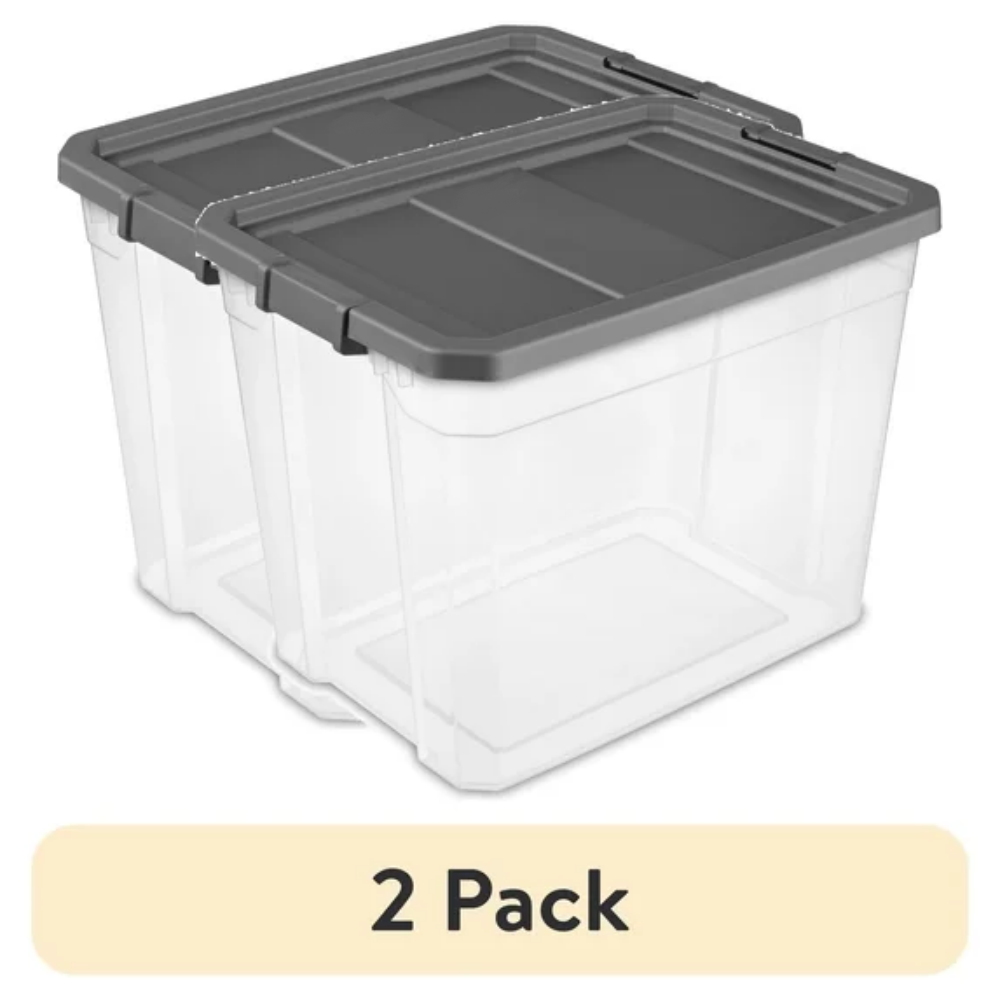

Photos from current listings. Actual item, color, and included accessories may vary.
Large Clear Storage Container With Lids Buying Guide
Large clear storage containers with lids are rigid plastic bins typically sized from 40 to 120+ quarts, used for visible, dust-protected organization of bulky items in garages, closets, and basements. The core trade-off is wall thickness and lid-latch engineering versus flexibility: thin translucent bins crack under stacked load, while thick clear polypropylene or polycarbonate bins with gasketed latches cost more but survive years of seasonal use. The decision rule is simple—buy clear bins rated for stacking with reinforced corners, molded handles, and mechanical latches; skip tapered, thin-wall 'storage totes' with snap-on lids if you plan to stack more than two high or store in unconditioned spaces.
At a glance
- Category
- Home Storage & Organization
- Last updated
- Nov 22, 2026
Current offers
Highlights
- Quart capacity is the universal sizing unit: 40–66 qt fits shelves and closets, 80–108 qt handles king bedding and bulk gear, and 120+ qt is for oversized items only—never fill beyond the lid line for stack stability.
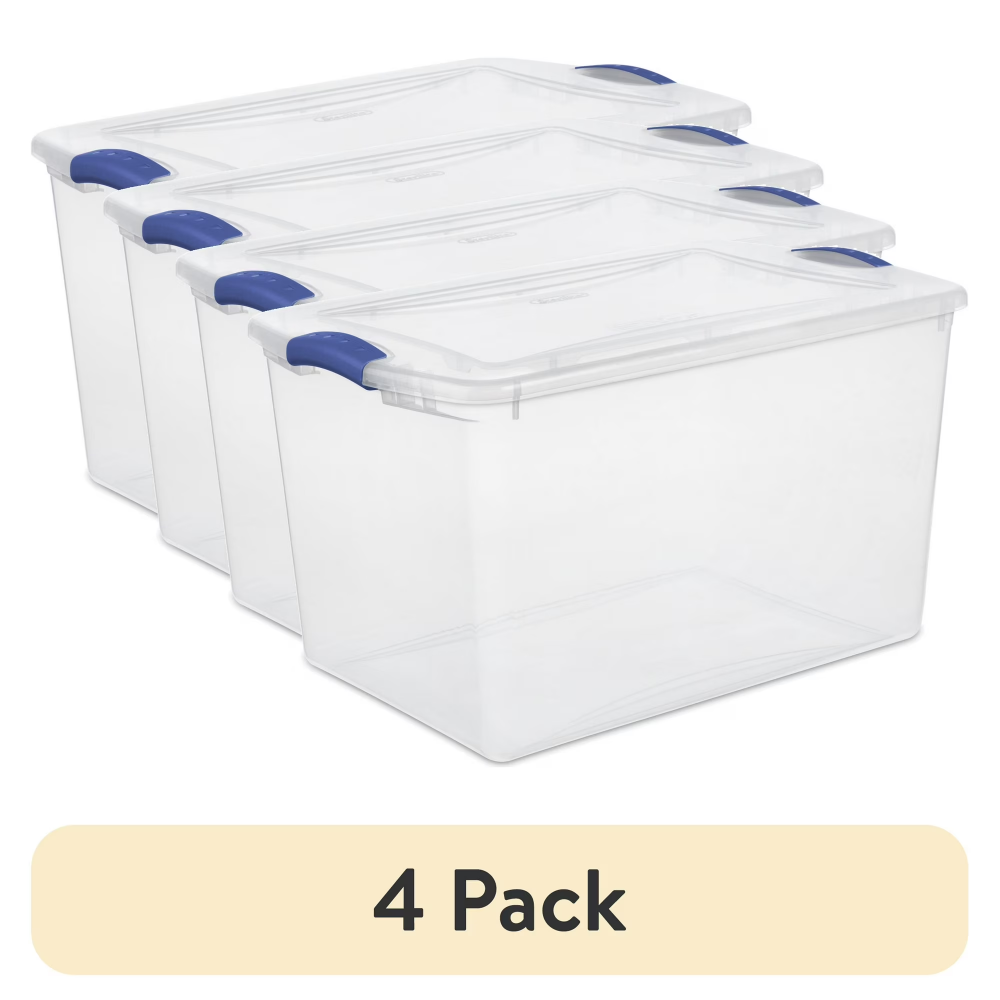
- Latch lids with gaskets or full-perimeter channel seals block dust and pests; simple snap-on lids on tapered bins are not airtight and are unsuitable for garages, attics, or basements.
- Reinforced corners, ribbed sidewalls, and molded handles distinguish stackable bins from crush-prone totes; clear polypropylene and polycarbonate resist impact better than thin translucent polyethylene.
- Dark gray or opaque lids provide UV and light protection for stored contents while the clear body keeps contents visible; fully clear lids are best for closet and indoor use.
Best use cases
- Best fit: garage or basement bulk storage of tools, seasonal decor, and camping gear—pick 80–108 qt clear bins with gasketed latch lids and stack no more than three high.
- Best fit: closet and bedroom organization of bedding, off-season clothing, and shoes—choose 40–66 qt clear bins with snap or latch lids that fit standard 16-inch shelf depths.
- Wrong fit: long-term attic or unconditioned shed storage—skip thin translucent totes with press-on lids and instead select impact-resistant polypropylene bins with full-perimeter seals.
- Wrong fit: heavy dense loads like books or tile—avoid large 100+ qt bins entirely; use smaller 20–40 qt bins with reinforced bases so weight stays manageable and walls do not bow.
Buying tips
- Match bin length and width to your shelf depth: standard closet shelves are 12–16 inches deep, so choose bins no wider than 15 inches for flush shelf storage; garage racks typically accept 18–24 inch widths.
- Stack height math: only stack bins whose lids are rated for top loading, and never exceed three high for 80+ qt sizes—bottom bins bear the full weight and thin walls bow outward over time.
- Material grade matters: polypropylene (PP) offers the best balance of clarity, impact resistance, and cost; polycarbonate (PC) is clearer and stronger but pricier; avoid polystyrene (PS) bins, which crack under cold and load.
- Latch type determines seal: gasketed cam latches or full-channel lids are the only reliable dust and pest barriers; simple snap-on lids are fine for indoor closet use but not for garages or basements.
Specs
| Capacity Range | 40–120+ qt (66/80/108 qt common) |
|---|---|
| Lid Seal Type | Gasketed latch vs snap-on |
| Plastic Grade | PP / PC / PE (avoid PS) |
| Stack Rating | 2–3 high max (size-dependent) |
Related searches
What to check before buying
- Measure shelf depth, cabinet width, and door clearance before choosing capacity—an 80+ qt bin is typically 26–30 inches long and will not fit standard 16-inch closet shelves.
- Confirm floor or shelf load capacity: a full 100 qt bin of dense goods can weigh 60–80 lbs, so verify shelf brackets and rack ratings support stacked weight.
- Check climate: unheated garages and attics require impact-resistant PP or PC bins with sealed lids; thin PS or translucent PE bins become brittle below freezing.
- Verify lid retention hardware—hinged latches or separate cam latches—and ensure replacement latches or lids are available if the bin model is a long-term storage purchase.
FAQ
Data sources: eBay / Amazon listings and product attribute feeds. Updated Nov 22, 2026.
Some links on this page are affiliate links. If you buy after clicking one, we may earn a commission at no extra cost to you. This does not change which products appear here or their order. Affiliate disclosure.