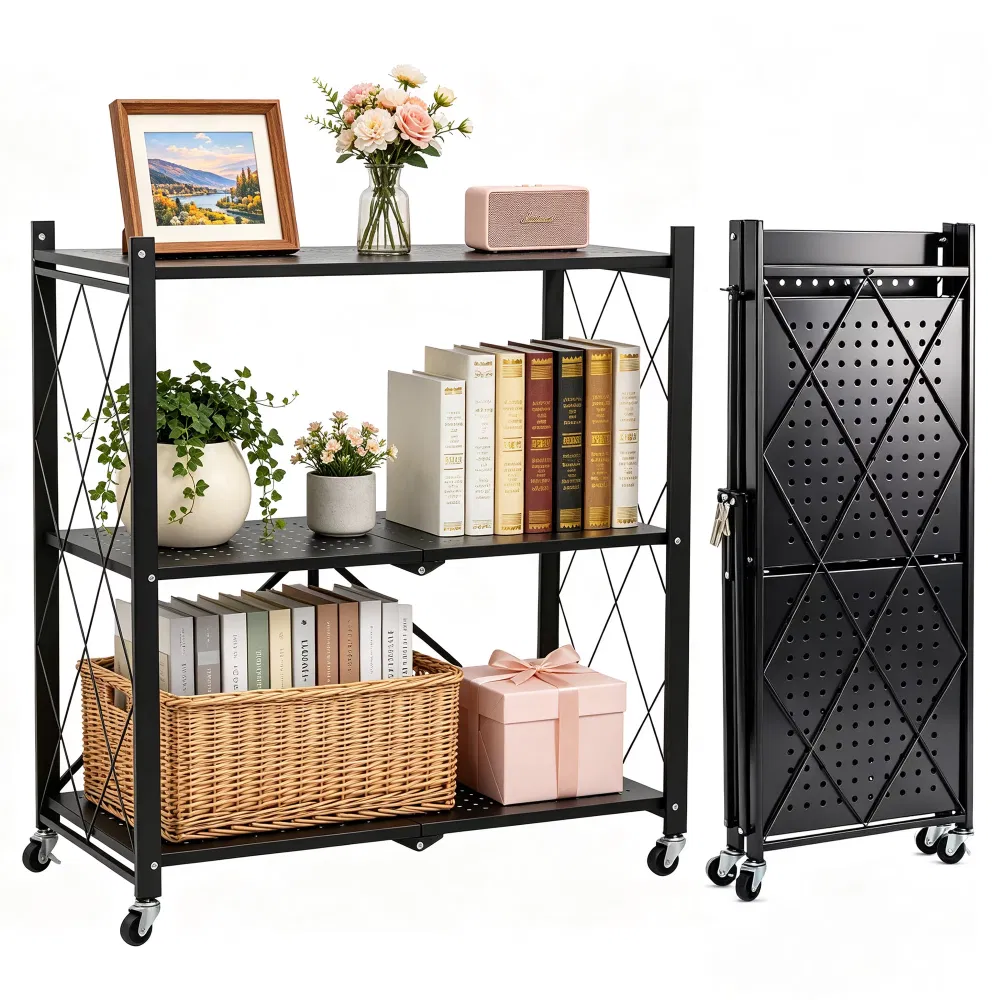

Photos from current listings. Actual item, color, and included accessories may vary.
Heavy Duty Rolling Storage Rack Buying Guide
A heavy-duty rolling storage rack is a mobile shelving unit built to carry dense loads—tires, tools, pantry goods, or appliances—while rolling on casters over concrete, tile, or thresholds. The decisive trade-off is caster load rating and frame gauge versus portability: thin-gauge steel with small plastic wheels flexes and flat-spots under weight, while welded or bolted 14–16 gauge steel on full-bearing casters stays true for years. Choose a rack rated per-shelf for your heaviest load and with casters at least 2 inches in diameter; skip any unit rated only by total capacity without per-shelf or per-caster figures.
At a glance
- Category
- Home Storage & Organization
- Last updated
- Nov 22, 2026
Current offers
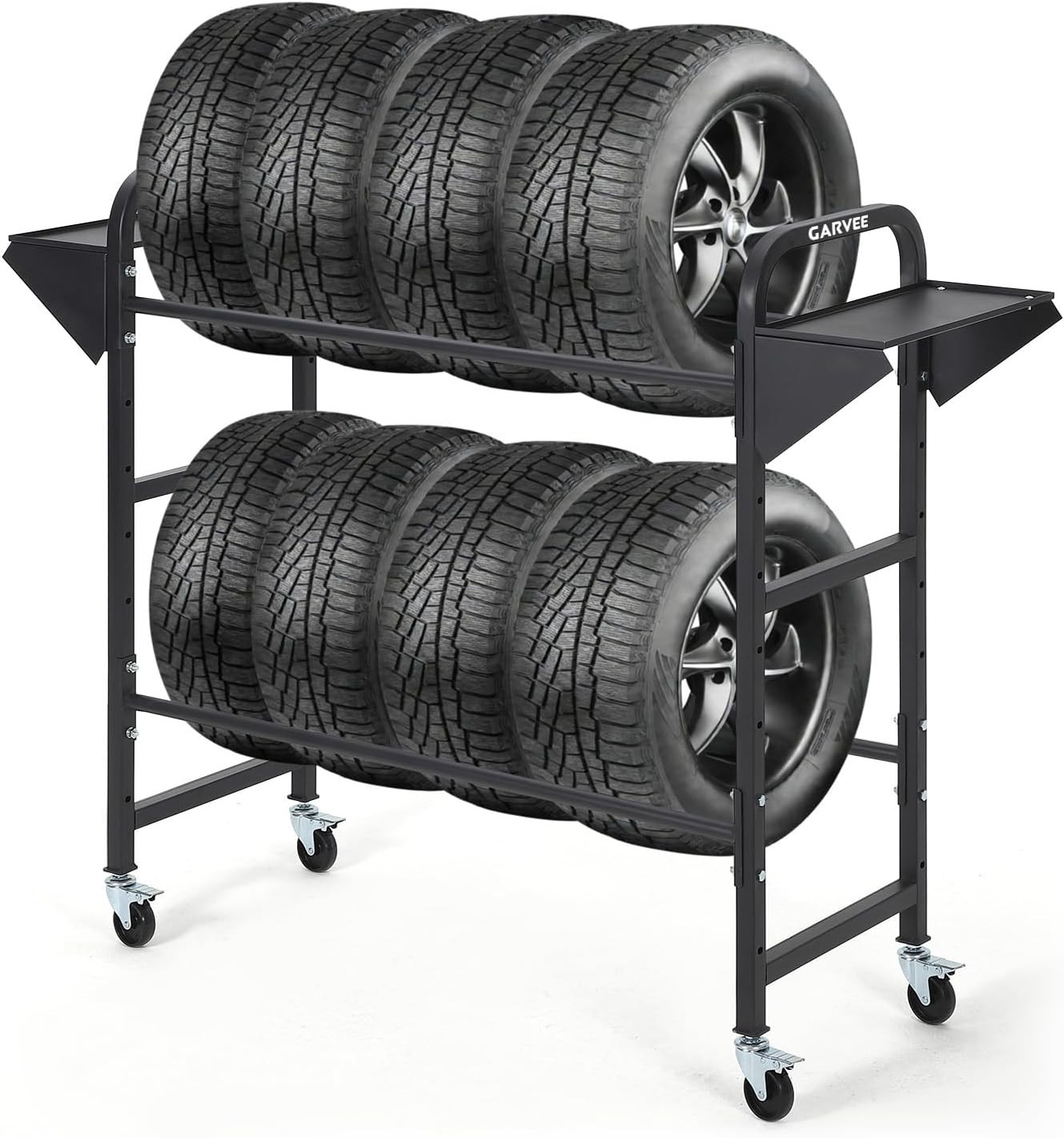
Highlights
- Caster load rating is the true bottleneck: a 4-caster rack carries only half its total rating on two wheels during movement, so pick casters rated for at least 1.5x the expected moving load.
- Steel gauge drives rigidity: 14–16 gauge welded posts resist racking and torsion, while 18+ gauge bolt-together frames need cross-bracing and should be re-torqued after loading.
- Wheel type changes floor compatibility: polyurethane or rubber casters roll quiet and grip tile without scratching, while hard nylon casters roll easily on concrete but can mar wood and laminate.
- Adjustable shelf pitch (typically 1-inch increments on slotted posts) and a foldable or knock-down frame separate garage-grade tire racks from lightweight kitchen organizers rated for far lower point loads.
Best use cases
- Garage tire storage: choose a rack with ≥1-inch shelf adjustability, a 45-inch-wide stance, and casters rated for the combined tire weight—skip folding kitchen racks, whose thin shelves and small casters deform under 40+ lb wheel loads.
- Kitchen or pantry overflow: pick a 3-tier foldable rack with locking casters and per-shelf ratings around 50–80 lb for appliances and bulk goods; skip welded garage racks that are too deep and heavy for indoor aisles.
- Workshop or utility room: use a bolted 14–16 gauge rack with polyurethane casters and cross-bracing for toolboxes and paint; skip decorative wire carts with plastic sleeves if you need to roll over thresholds or uneven concrete.
- Temporary or rental spaces: choose a foldable, tool-free rack that collapses flat for storage and transport; skip permanent welded units if you move frequently or have no dedicated floor space.
Buying tips
- Size by the heaviest single shelf load, not total capacity: divide the heaviest item weight by the number of supporting shelves, then require a per-shelf rating at least 1.5x that figure.
- Measure your doorway and turning radius: add 2–4 inches to the rack depth and width for caster swing, and confirm caster diameter clears thresholds—casters under 2 inches hang on lips above 1/2 inch.
- Match caster material to floor: polyurethane or rubber for tile, wood, and laminate; nylon or steel for bare concrete and garage slabs; always choose at least two locking casters.
- Check post gauge and joint type: welded 14–16 gauge frames are stiffer for static garage loads, while bolted frames are serviceable and ship flat—re-tighten bolts after the first full load.
Specs
| Frame Steel Gauge | 14–16 ga welded / 18 ga bolt-together |
|---|---|
| Caster Type | Polyurethane, rubber, or nylon, 2–5 in |
| Shelf Adjustability | 1-inch slotted posts / fixed fold |
| Load Rating Basis | Per-shelf and per-caster ratings |
Related searches
What to check before buying
- Measure the floor footprint and the path from delivery to placement, including door widths and turns; the rack plus caster swing must clear every pinch point.
- Weigh your heaviest planned shelf load and confirm the per-shelf rating and caster rating independently—total capacity alone does not protect individual shelves or wheels.
- Identify your floor type and threshold heights; pick caster material and diameter that roll cleanly without marking the surface or hanging on lips.
- Confirm assembly type (weld, bolt, or fold), required tools, and whether the rack needs wall anchoring or leveling feet for uneven slabs.
FAQ
Data sources: eBay / Amazon listings and product attribute feeds. Updated Nov 22, 2026.
Some links on this page are affiliate links. If you buy after clicking one, we may earn a commission at no extra cost to you. This does not change which products appear here or their order. Affiliate disclosure.