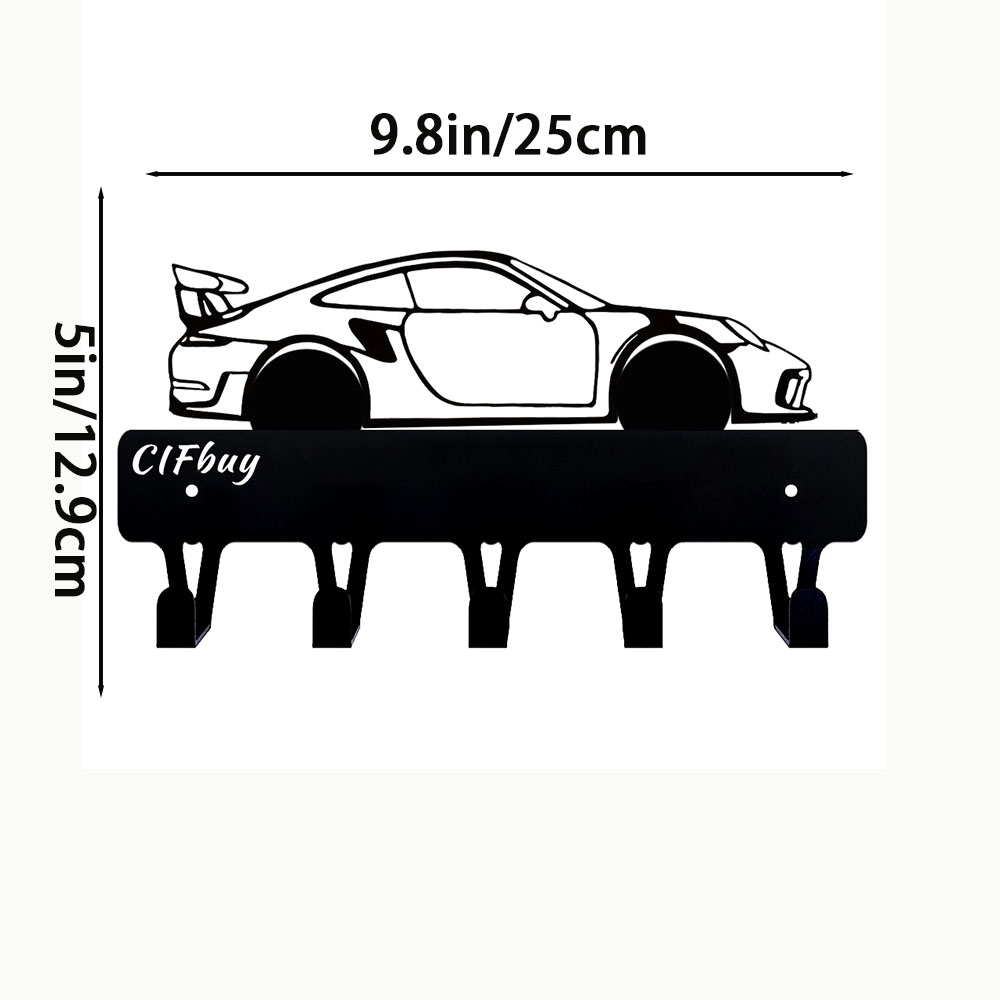

Photos from current listings. Actual item, color, and included accessories may vary.
Car Key Holder Buying Guide
A car key holder is a wall-mounted hook or rack designed to store car keys and often other small essentials at an entryway or garage. The primary trade-off is between decorative novelty and structural durability: ornamental metal shapes can look great but may use thin-gauge hooks that bend or loosen, while plain solid-brass or stainless racks prioritize holding strength. The decision rule is simple—choose a holder rated for daily key weight with reinforced mounting hardware; skip any decorative unit that relies on adhesive-only or single-screw fixing.
At a glance
- Category
- Home Storage & Organization
- Last updated
- Nov 22, 2026
Current offers
Highlights
- Hook load capacity is determined by anchor type: plastic drywall plugs fail around 5–10 lb per hook, while steel toggle bolts or into-stud screws handle 20–50 lb.
- Metal gauge matters—decorative racing-car holders often use 18–20 gauge stamped steel; solid-brass or 14-gauge steel hooks resist bending under heavy key fobs and lanyards.
- Mounting pattern: single-screw keyhole slots rotate and loosen over time; two-screw or French-cleat backing plates distribute load and stay level.
- Finish durability separates tiers: powder-coated steel resists chipping; painted or plated finishes on novelty shapes can flake at weld points after months of key jangling.
Best use cases
- Best fit: entryway or mudroom with drywall—pick a holder with two-screw keyhole slots and include self-drilling drywall anchors rated for at least 20 lb per hook.
- Best fit: garage or workshop wall with exposed studs—choose a solid-steel rack or rail system screwed directly into studs; skip decorative thin-gauge shapes that flex under heavy key rings.
- Wrong fit: rental apartment where drilling is prohibited—adhesive-only novelty holders will drop under the weight of a full key ring; a freestanding key tray or over-door hook is the correct configuration.
Buying tips
- Count your daily keys and fobs: a single car key plus fob weighs roughly 2–4 oz; a holder with 4–6 hooks covers a household, but each hook should be rated for at least 5 lb to handle lanyards and small tools.
- Match hook spacing to your key ring diameter—hooks spaced under 1 inch apart cause keys to bunch and scratch; 1.5–2 inch spacing keeps fobs separated and easy to grab.
- For masonry or brick walls, use a holder with a backplate that accepts sleeve anchors; keyhole-slot single-screw designs will crack brick or wobble loose.
- Choose stainless steel or brass hooks over zinc-alloy cast hooks for outdoor or humid garage walls—zinc-alloy corrodes and snaps at the screw boss under repeated load.
Specs
| Hook Material | Solid brass / stainless / stamped steel |
|---|---|
| Mounting Type | Keyhole slot / backplate / rail |
| Hook Count | 1–3 decorative / 4–6 household rack |
| Load Rating | 5–10 lb drywall / 20–50 lb stud-anchored |
Related searches
What to check before buying
- Measure your entryway wall area: confirm the holder's backplate width and height fit between door trim and any light switch, leaving at least 2 inches clearance for key swing.
- Identify wall substrate: drywall needs toggle bolts or rated anchors; studs or masonry need appropriate screws—never mount a loaded key rack to drywall with the included short screws alone.
- Check hook protrusion: deep hooks (over 1.5 inches) hold bulky fobs but can snag clothing; shallow hooks under 0.75 inch may not clear a thick carabiner.
- Confirm included mounting hardware: a holder that ships without anchors or screws forces a separate trip; buy one that includes drywall anchors and screws matched to its backplate.
FAQ
Data sources: eBay / Amazon listings and product attribute feeds. Updated Nov 22, 2026.
Some links on this page are affiliate links. If you buy after clicking one, we may earn a commission at no extra cost to you. This does not change which products appear here or their order. Affiliate disclosure.