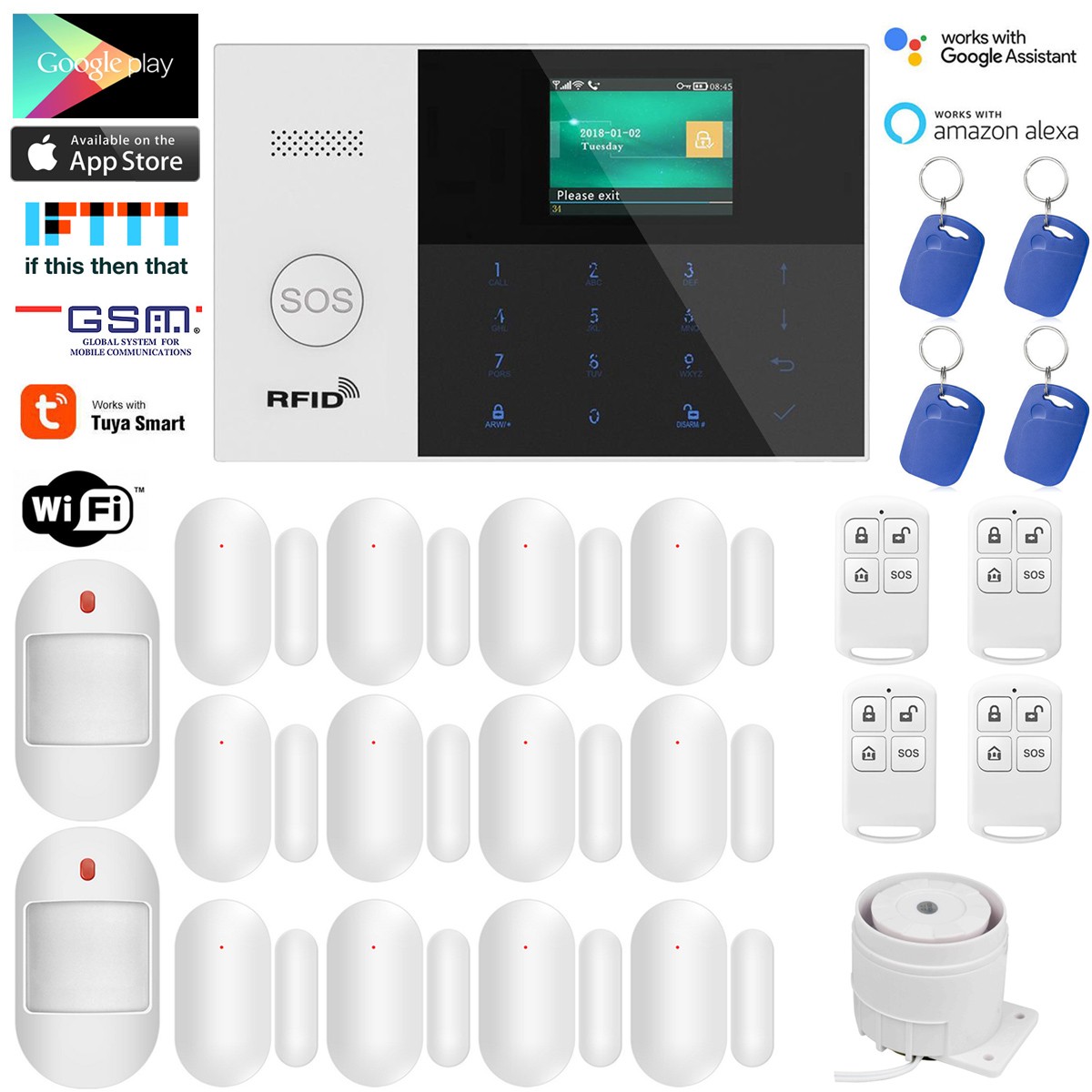

Photos from current listings. Actual item, color, and included accessories may vary.
Wireless Burglar Alarm Buying Guide
A wireless burglar alarm is a sensor network (door/window contacts, motion detectors, sirens) that communicates without wired runs to a control panel or hub. The core trade-off is between standalone local sirens that need no subscription and fully monitored cloud/GSM systems that add remote alerts but depend on power and connectivity. Choose a system with dual-path communication (Wi‑Fi plus GSM) and 433/868 MHz sensor radio for durability; skip pure cloud-only kits if you need alarms during internet outages.
At a glance
- Category
- Home Security
- Last updated
- Nov 22, 2026
Current offers
Highlights
- Sensor radio bands: 433 MHz is the most common low-cost band; 868 MHz (EU) and 915 MHz (US) offer less interference and longer range—match the hub to your region's band.
- Communication paths: Wi‑Fi-only hubs fail during internet/power outages; GSM/4G backup with battery keeps alarm and SMS alerts alive.
- Sensor power and range: door/window magnetic contacts typically use CR2032 or CR123A cells (1–3 year life) with 100–300 m open-air range; motion sensors use PIR with 110°–120° coverage and 8–12 m detection.
- Alarm output: standalone sirens are rated 90–120 dB; monitored hubs support 12 V DC wired sirens and relay outputs for external sounders.
Best use cases
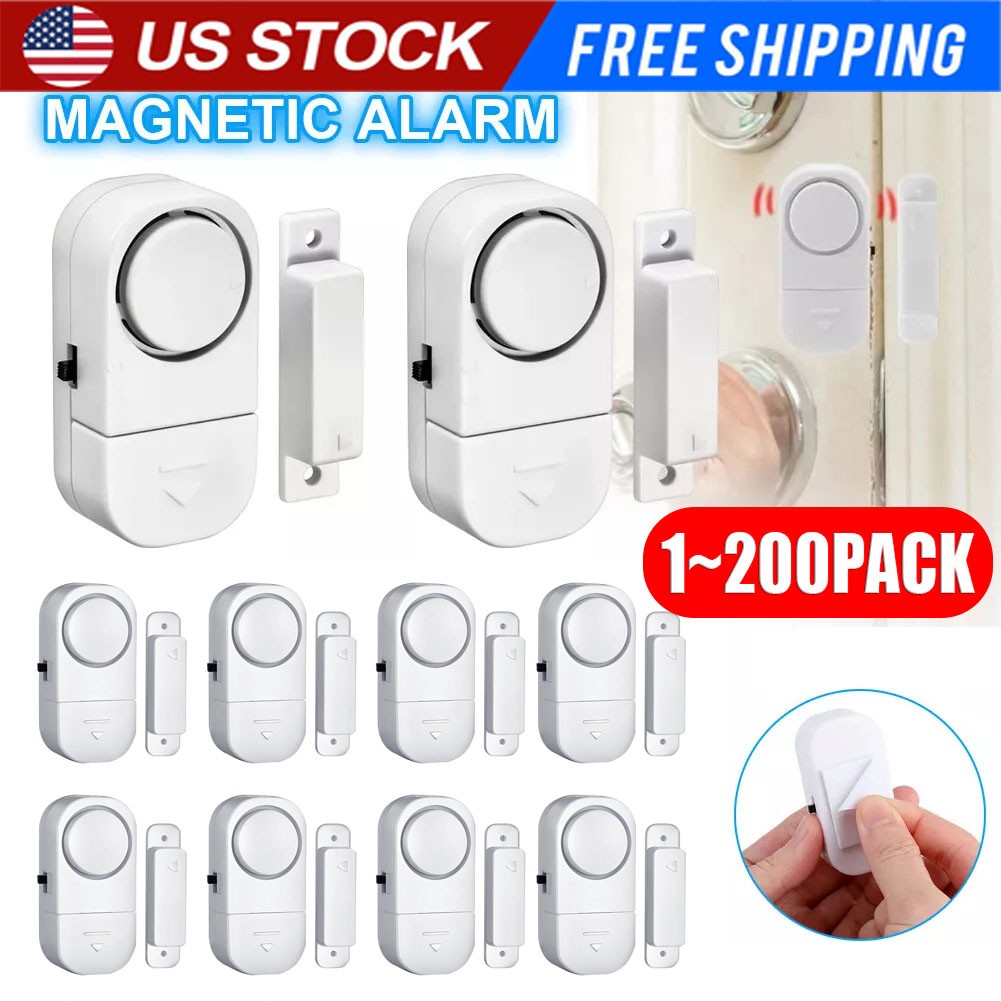
- Apartment or rental: pick a standalone magnetic door/window contact kit with a local 90–110 dB siren and no hub—skip cloud systems that require drilling and a subscription.
- Whole-home with remote alerts: choose a Wi‑Fi + GSM hub with 433 or 868 MHz sensor support and battery backup; skip Wi‑Fi-only hubs if you travel and need outage alerts.
- Garage, shed, or off-grid outbuilding: use a GSM-only hub with SIM and battery backup; skip Wi‑Fi-only kits because range and power are unreliable.
- DIY expandable system: buy a hub rated for 50–100+ sensors and stick to a single radio band; skip mixed-band kits because sensors from different bands won't pair.
Buying tips
- Match the hub radio band to your region: 433 MHz is globally common but crowded; 868 MHz for EU/UK and 915 MHz for US reduce interference.
- Count sensor coverage: one PIR covers about 8–12 m and 110°; door/window contacts cover a single opening—plan one contact per accessible door/window.
- Require battery backup on hub and siren (typically 6–24 hours) plus GSM/4G fallback if you want alerts when power or internet is down.
- Choose a hub that supports at least 50 sensors and has a wired siren relay; check app protocol (Tuya/Smart Life works with many white-label kits).
Specs
| Radio Band | 433 / 868 / 915 MHz |
|---|---|
| Comms Path | Wi-Fi / GSM / Dual-path |
| Backup Battery | 6–24 hr hub & siren |
| Siren Output | 90–120 dB local / 12V relay |
Related searches
What to check before buying
- Measure each door and window opening width and frame depth; magnetic contacts need 10–20 mm gap tolerance and slim profile for flush mounting.
- Confirm hub power: most kits use 5 V USB or 12 V DC adapters—match your country's plug and voltage (100–240 V).
- Check signal path: hub-to-sensor distance through walls should stay under 30–50 m indoors; metal doors and foil insulation cut range.
- Verify app and SIM requirements: GSM hubs need a 2G/4G SIM with SMS or data; Wi‑Fi hubs need 2.4 GHz (not 5 GHz-only) networks.
FAQ
Data sources: eBay / Amazon listings and product attribute feeds. Updated Nov 22, 2026.
Some links on this page are affiliate links. If you buy after clicking one, we may earn a commission at no extra cost to you. This does not change which products appear here or their order. Affiliate disclosure.