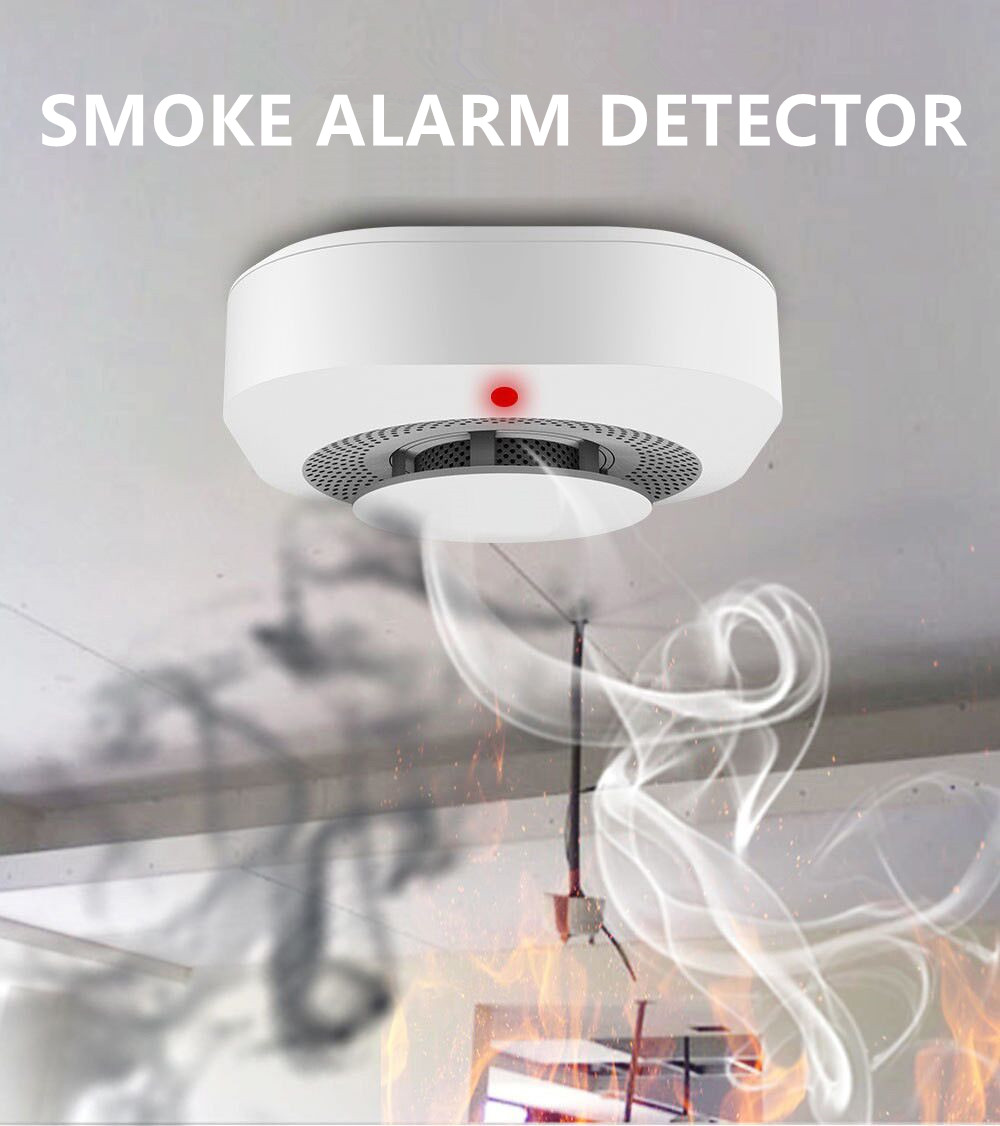

Photos from current listings. Actual item, color, and included accessories may vary.
Smart Smoke Detector Buying Guide
Smart smoke detectors combine photoelectric or ionization sensing with Wi-Fi/app alerts, voice announcements, and interconnect for whole-home coverage. The core trade-off is sensor type and interconnect standard: photoelectric sensors reduce cooking false alarms and catch smoldering fires, while dual-sensor or ionization units respond faster to flaming fires. Buy a detector with a sealed 10-year lithium battery and UL 217/8th-edition listing for durable protection; skip budget units with 9V replaceable cells and no interconnect, as they fail alarm-response standards.
At a glance
- Category
- Home Security
- Last updated
- Nov 22, 2026
Current offers
Highlights
- Photoelectric sensing detects smoldering fires with fewer cooking false alarms; dual-sensor or ionization units respond faster to open flames.
- UL 217 8th-edition listing and a sealed 10-year lithium battery are baseline durability standards; replaceable 9V cells need annual swaps.
- Interconnect via hardwired 3-wire, wireless RF, or app mesh ensures all alarms sound when one detects smoke — critical for multi-floor homes.
- Smart features split into app push alerts with voice announcements (Wi-Fi) versus local-only 85 dB sirens; Wi-Fi models need 2.4 GHz and a neutral-free mount.
Best use cases
- Best fit: multi-floor homes need interconnected detectors (hardwired or RF mesh) so an alarm in the basement wakes bedrooms upstairs — pick a model with 85 dB at 10 ft and voice location alerts.
- Best fit: kitchens and hallways near bathrooms call for photoelectric sensors with a hush button to avoid nuisance alarms from steam and cooking — skip ionization-only units in these spots.
- Wrong fit: apartments with existing hardwired 120V interconnect should use compatible hardwired replacements, not battery-only smart pucks that break the building's alarm loop.
- Wrong fit: unheated cabins and garages need detectors rated for the temperature range (typically 40–100°F); standard units false-alarm in cold or dusty environments — choose a listed unit for the space.
Buying tips
- Match the sensor: photoelectric for smoldering fires near kitchens, dual-sensor or ionization for flaming fires; dual-sensor models cost more but cut both false-alarm types.
- Confirm interconnect protocol before buying multiples: hardwired 3-wire for 120V homes, wireless RF for retrofits, or app mesh — mixing brands breaks cross-triggering.
- For rental or quick retrofit, choose a sealed 10-year lithium battery unit with a tamper-resistant mount; for permanent installs, hardwired with battery backup meets code.
- Check the alarm rating: 85 dB at 10 ft is the standard minimum; interconnected systems must trigger all units within seconds — verify listed compatibility, not just app pairing.
Specs
| Sensor Type | Photoelectric / Ionization / Dual |
|---|---|
| Battery | Sealed 10-yr lithium vs replaceable |
| Interconnect | Hardwired / RF / App mesh |
| Alarm Rating | 85 dB at 10 ft minimum |
Related searches
What to check before buying
- Measure ceiling placement: detectors must sit at least 4 inches from walls and 10 feet from cooking appliances to reduce false alarms.
- Verify your home's wiring: 120V hardwired units need a neutral wire and interconnect wire; battery-only units need no wiring but must be reachable for testing.
- Check Wi-Fi band: most smart detectors use 2.4 GHz only; confirm your router broadcasts a 2.4 GHz SSID at the install location.
- Confirm local code: many jurisdictions require interconnected alarms in bedrooms and hallways — match the existing system's voltage and interconnect standard before replacing.
FAQ
Data sources: eBay / Amazon listings and product attribute feeds. Updated Nov 22, 2026.
Some links on this page are affiliate links. If you buy after clicking one, we may earn a commission at no extra cost to you. This does not change which products appear here or their order. Affiliate disclosure.