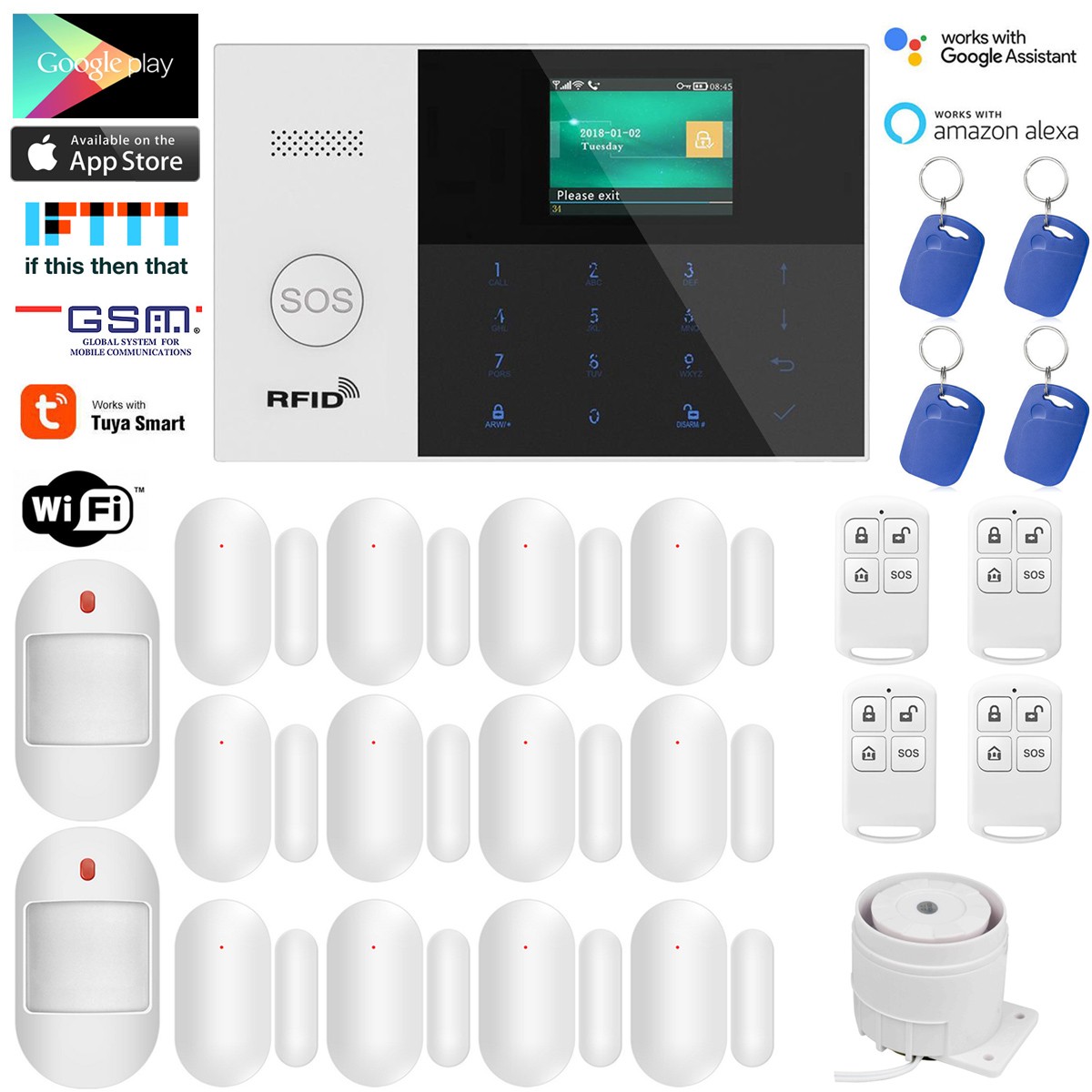

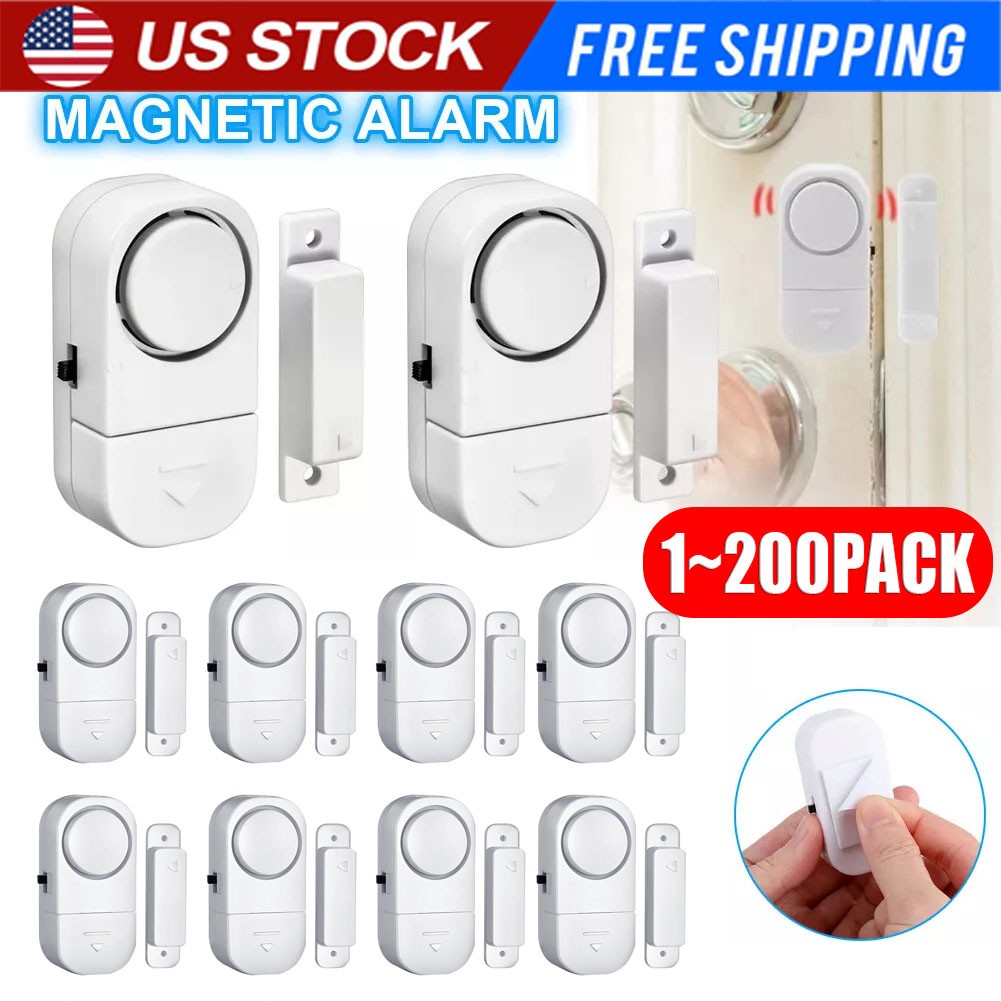
Photos from current listings. Actual item, color, and included accessories may vary.
Burglar Alarm System Buying Guide
A burglar alarm system combines sensors, a control panel, and a siren to detect intrusion and alert occupants or a monitoring service. The core trade-off is between standalone local alarms (fast, no fees, limited range) and networked or monitored systems (remote alerts, cellular backup, subscription costs). Choose a system with at least 85–100 dB siren output, dual-path communication (Wi-Fi + GSM), and sensors rated for your door/window gap—skip kits that rely solely on Wi-Fi or lack entry-delay programming.
At a glance
- Category
- Home Security
- Last updated
- Nov 22, 2026
Current offers
Highlights
- Wireless sensor RF: 433 MHz is standard but prone to interference; 868 MHz or 915 MHz offers better range and fewer false triggers.
- Siren output: entry-level kits hit 85–95 dB; 100–110 dB models provide stronger deterrence and are audible through walls.
- Communication: Wi-Fi-only systems fail during internet outages; dual GSM + Wi-Fi (Tuya, 4G) maintains alerts and app control.
- Sensor gap tolerance: magnetic contact sensors typically allow 10–20 mm gap; larger gaps require spacer blocks or roller-shutter sensors.
Best use cases
- For a rented apartment or single-room security: choose a standalone 433 MHz wireless kit with 85–95 dB siren and no monthly fee—skip GSM panels that require SIM cards and contracts.
- For a small business or multi-room home: pick a Tuya or GSM/Wi-Fi hybrid system with at least 4 zones, 100+ dB siren, and app push notifications—avoid kits limited to 2 sensors.
- For a remote cabin or garage with no broadband: select a GSM-only panel with 4G LTE backup and SMS alerts; skip Wi-Fi-only cloud cameras that go offline with the router.
Buying tips
- Match sensor count to openings: count every exterior door and ground-floor window; add 20% spare. A 4-piece kit often covers only one entry door and one window.
- Check siren dB at 1 meter: 85 dB is a doorbell; 100 dB deters; 110 dB is painful. For outdoor use, look for IP65-rated strobe sirens.
- Prefer panels with entry/exit delay (30–60 seconds) and at least 4 user codes—essential for family or staff access without disarming the whole system.
- For business use, choose a system with alarm memory, event logs, and at least 2 wired relay outputs for connecting to a dialer or existing siren.
Specs
| Communication | Wi-Fi-only vs Wi-Fi + GSM/4G |
|---|---|
| Siren Output | 85–95 dB vs 100–110 dB |
| Sensor RF Band | 433 MHz vs 868/915 MHz |
| Zone Capacity | 4–8 zones vs 20–99 zones |
Related searches
What to check before buying
- Measure door/window frame gap: if over 20 mm, order spacer blocks or recessed sensors; standard surface contacts won't close the circuit.
- Confirm the panel's power: most use 12 V DC adapters (US/UK/EU plug variants); for GSM backup, check battery type (often 3.7 V Li-ion or 4× AA) and runtime.
- Test Wi-Fi signal at the panel location: 2.4 GHz is standard; 5 GHz-only routers need a 2.4 GHz band or a GSM fallback.
- Verify sensor mounting: brick/wood needs screws; metal frames require adhesive or rivet mounts—avoid mounting directly on metal, which blocks RF.
FAQ
Data sources: eBay / Amazon listings and product attribute feeds. Updated Nov 22, 2026.
Some links on this page are affiliate links. If you buy after clicking one, we may earn a commission at no extra cost to you. This does not change which products appear here or their order. Affiliate disclosure.