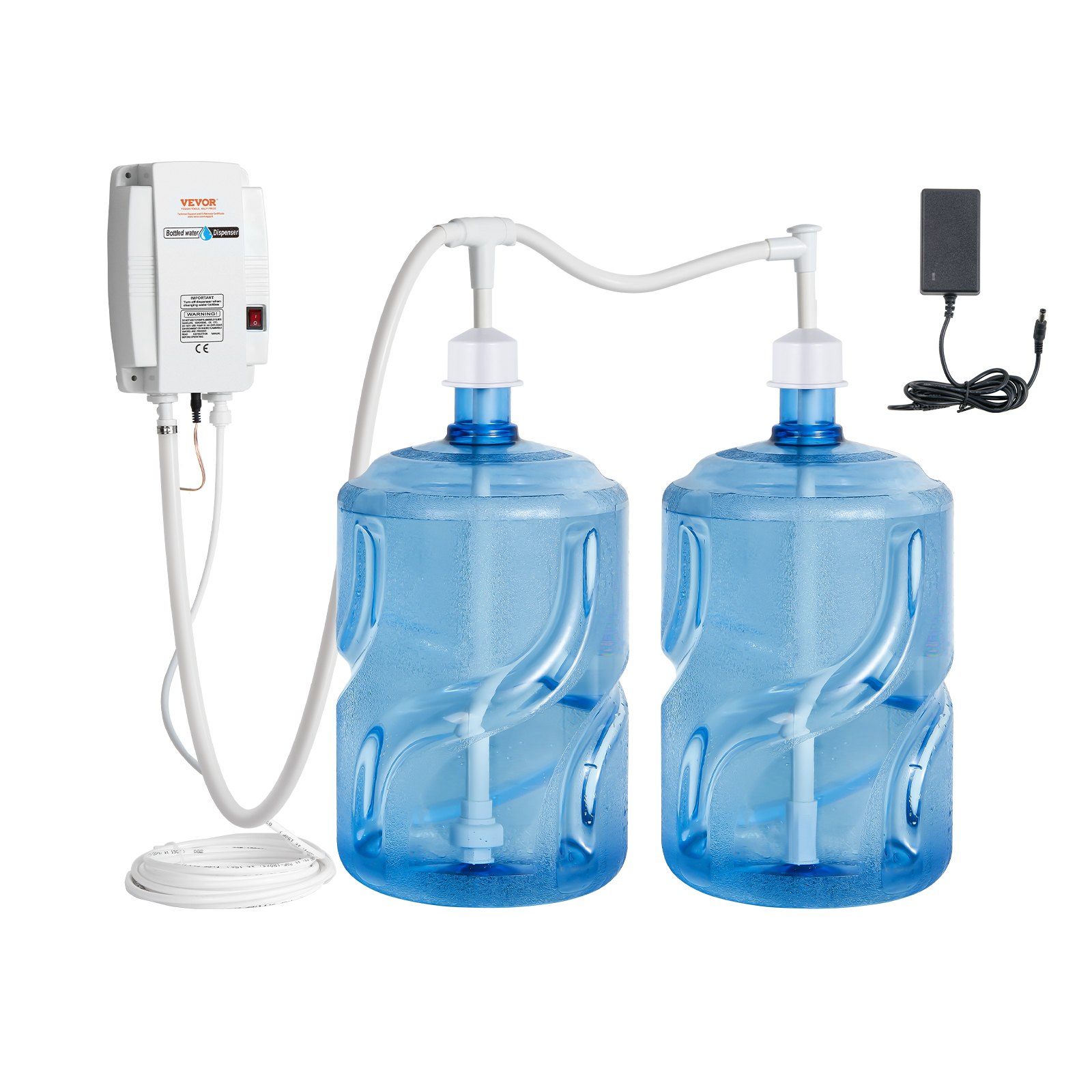

Photos from current listings. Actual item, color, and included accessories may vary.
Water Cooler Buying Guide
Water coolers split into three architectures: bottled dispensers, point-of-use (POU) units plumbed to a water line, and countertop pump systems that feed appliances. The core trade-off is convenience vs. infrastructure: bottled units need jug swaps and floor space, POU units need a supply line and filtration, and pump systems skip cooling entirely. Choose bottled for plug-and-play chilled/room-temp water, POU for unlimited filtered supply at a fixed point, and a pump only when you need to move 5-gallon water into a coffee maker or fridge.
At a glance
- Category
- Home Appliances
- Last updated
- Nov 22, 2026
Current offers
Highlights
- Bottled coolers use 5-gallon (18.9 L) jugs; gravity-fed units dispense without power, while electric units add compressor or thermoelectric chilling.
- POU coolers require a 1/4-inch or 3/8-inch water line and typically include 2-3 stage carbon/sediment filtration; output is limited by line pressure.
- Compressor cooling reaches 4-10°C and recovers faster than thermoelectric (Peltier) units, which chill to roughly 10-15°C and suit light use.
- Electric 5-gallon pump systems are single- or double-inlet transfer pumps that feed coffee makers, fridges, or ice makers; they do not chill water.
Best use cases
- Home kitchen with floor space and bottled delivery: pick a freestanding bottled cooler with compressor cooling and hot-tank option; skip POU unless you can run a water line.
- Office or high-traffic area: choose a POU cooler with multi-stage filtration and compressor chilling; skip thermoelectric units that can't keep up with back-to-back draws.
- Renting or no-plumbing setup: a countertop electric pump on a 5-gallon jug feeding a coffee maker is the right pick; skip it if you expect chilled drinking water directly.
- Small apartment or dorm: a countertop thermoelectric bottled cooler fits; skip full-size freestanding units that need 30+ cm clearance behind and beside.
Buying tips
- Measure the footprint and rear clearance: freestanding bottled coolers need roughly 30-35 cm width and 10 cm rear gap for compressor ventilation.
- Match cooling type to draw volume: compressor units handle 10+ cups/day; thermoelectric suits under 5 cups/day and quieter bedrooms.
- For POU, confirm your supply line is 1/4-inch or 3/8-inch and that feed pressure is at least 20 psi for rated flow.
- For pump systems, check the jug count (single vs. double inlet) and that the pump is rated for continuous duty if feeding an ice maker.
Specs
| Cooling Type | Compressor vs thermoelectric (Peltier) |
|---|---|
| Water Source | Bottled 5-gal vs plumbed POU |
| Dispense Modes | Cold only vs cold + hot |
| Jug Inlets | Single vs double 5-gal pump |
Related searches
What to check before buying
- Confirm door width and hallway clearance for delivery and placement of a freestanding cooler (allow ~5 cm extra).
- Check floor level and load: a full 5-gallon jug adds about 19 kg, so place on a stable, level surface.
- Verify electrical: bottled/POU coolers need a grounded 220-240V outlet (or 110-120V in North America) within cord reach.
- For POU, confirm a cold-water feed line and shut-off valve are accessible near the installation point.
FAQ
Data sources: eBay / Amazon listings and product attribute feeds. Updated Nov 22, 2026.
Some links on this page are affiliate links. If you buy after clicking one, we may earn a commission at no extra cost to you. This does not change which products appear here or their order. Affiliate disclosure.