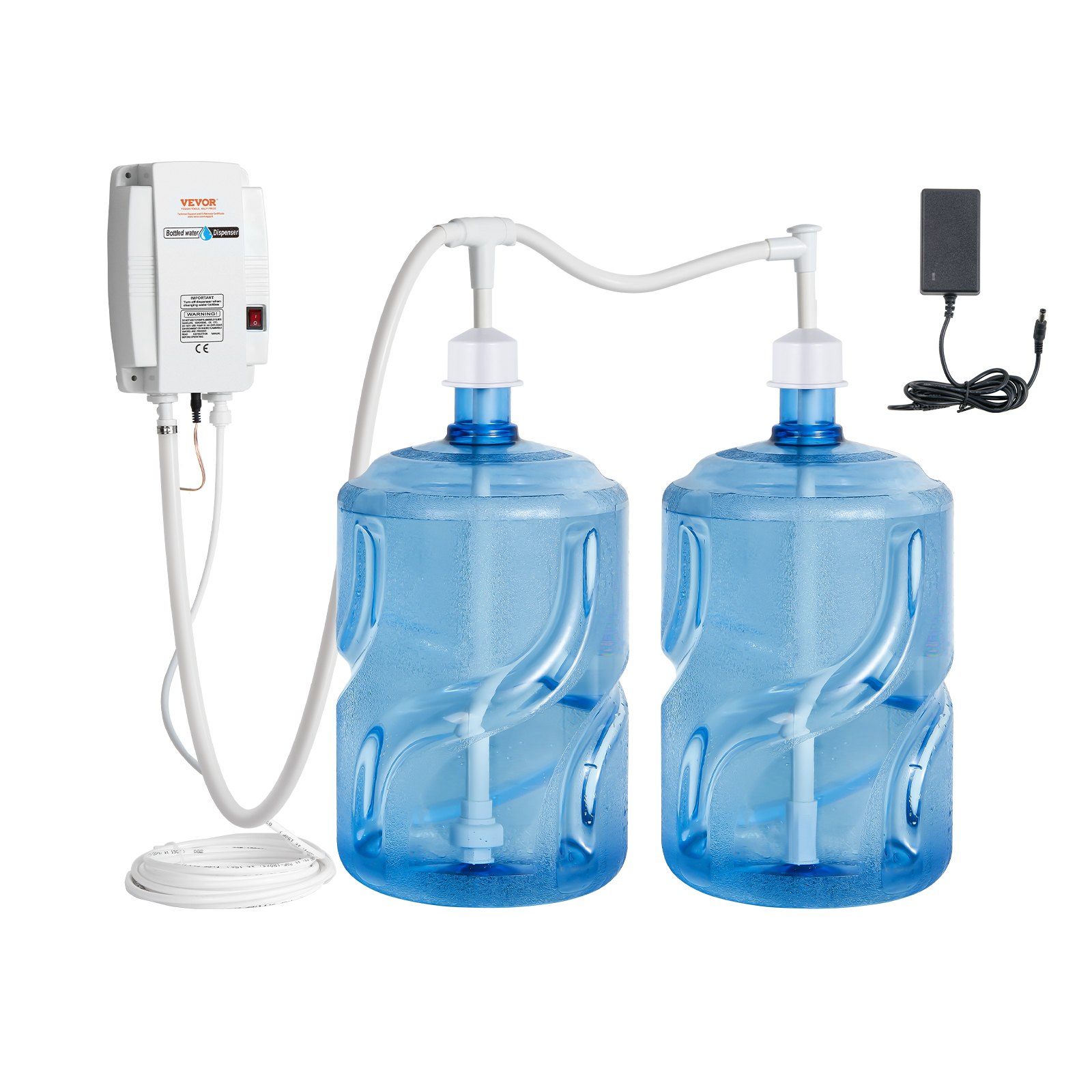

Photos from current listings. Actual item, color, and included accessories may vary.
Water Dispenser Buying Guide
A water dispenser is a point-of-use appliance that delivers hot, cold, or room-temperature water from either a gravity-fed bottled jug or a plumbed-in filtration line. The primary trade-off is between bottled convenience (manual lifting, jug swaps, countertop footprint) and plumbed-in capacity (plumbing required, filter replacement cost, unlimited flow). The clear decision rule: choose bottled if you cannot plumb a dedicated supply line or need portable placement; choose plumbed-in if you want unlimited water without lifting 40-lb jugs and will commit to filter maintenance.
At a glance
- Category
- Home Appliances
- Last updated
- Nov 22, 2026
Current offers
Highlights
- Gravity bottled dispensers need no electricity for cold/room water but often require a 3-5 gallon jug lift of 40-50 lb onto a top-loading spike; bottom-load models eliminate lifting but add a pump.
- Plumbed-in dispensers use either a reverse-osmosis (RO) membrane or carbon block filtration; RO removes 90-99% of dissolved solids but wastes 1-4 gallons per gallon produced and needs a drain line.
- Electric pump systems for bottled water deliver 0.5-1.0 GPM at 40-60 psi and must match jug neck diameter (typically 48-55 mm) and voltage (120V US vs 220-240V EU).
- Hot-water tanks on most dispensers hold 0.5-1.0 gallon at 185-195°F; child-safety locks and stainless-steel tanks (vs aluminum) determine longevity and taste neutrality.
Best use cases
- Best fit for renters or offices without plumbing: bottom-loading bottled dispenser or electric pump system—skip top-load if anyone in the household cannot lift 40 lb.
- Best fit for high-volume kitchens with a dedicated water line: under-sink RO plumbed dispenser with a dedicated faucet—skip countertop plumbed units that crowd the sink.
- Best fit for coffee/tea stations: countertop bottled pump plumbed to a coffee machine or refrigerator inlet—skip gravity dispensers that cannot feed a machine at pressure.
- Wrong fit for unheated garages or cabins with freezing risk: any plumbed-in or tank-based dispenser—choose a manual gravity jug with no electronics instead.
Buying tips
- Match jug neck size before buying a pump: standard 5-gallon jugs use 48-55 mm necks; measure the inner neck diameter and confirm the pump cap gasket range.
- For plumbed-in RO, verify feed water pressure of 40-80 psi and a drain within 10 ft; low pressure below 40 psi requires a booster pump.
- Check tank material: stainless-steel hot tanks resist corrosion and taste transfer; aluminum tanks are lighter but can pit with chlorinated water.
- Confirm electrical standard: US models are 120V/60Hz with NEMA 5-15 plugs; EU/UK models are 220-240V—never use a voltage converter for heating elements rated for the wrong mains.
Specs
| Dispenser Type | Top-load / bottom-load / countertop / plumbed |
|---|---|
| Water Source | 5-gal bottled jug vs plumbed filtered line |
| Hot Tank | 0.5-1.0 gal stainless, 185-195°F |
| Pump Flow | 0.5-1.0 GPM at 40-60 psi |
Related searches
What to check before buying
- Measure counter depth and overhead clearance: top-load bottled dispensers need 20-24 in above the unit to invert a 5-gallon jug.
- Confirm a nearby grounded 120V outlet for hot/cold electric dispensers; gravity room-temp units need none.
- For plumbed-in models, verify a cold-water supply line with a shutoff valve and, for RO, a drain connection under the sink.
- Check floor or counter load: a full 5-gallon jug weighs about 42 lb; ensure the stand or counter is rated for the combined weight.
FAQ
Data sources: eBay / Amazon listings and product attribute feeds. Updated Nov 22, 2026.
Some links on this page are affiliate links. If you buy after clicking one, we may earn a commission at no extra cost to you. This does not change which products appear here or their order. Affiliate disclosure.