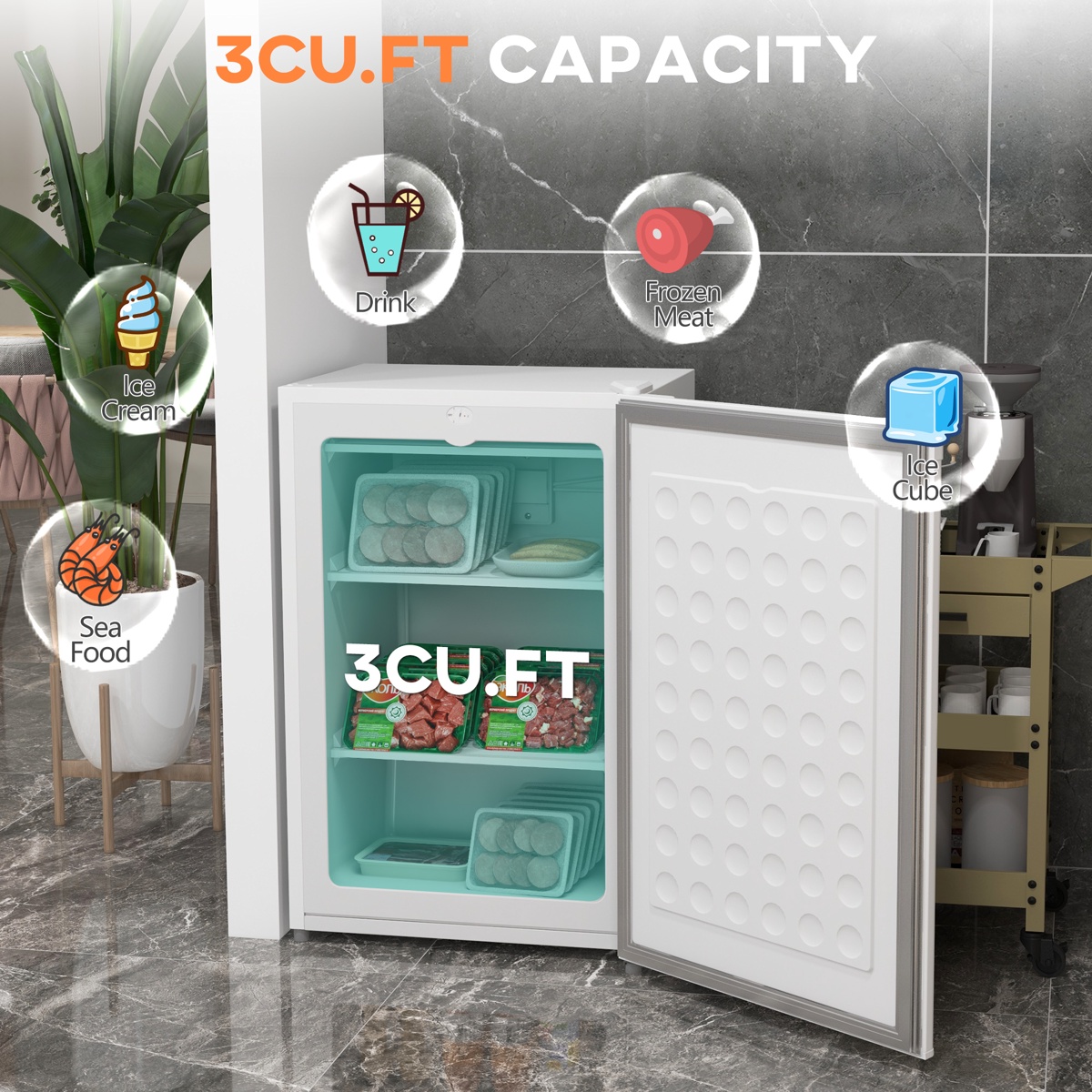

Photos from current listings. Actual item, color, and included accessories may vary.
Upright Freezer Buying Guide
Upright freezers are vertical-access appliances that trade a smaller footprint for easier organization than chest freezers. The core decision is frost management and door style: manual-defrost single-door models are budget-friendly but require periodic chipping, while frost-free multi-door units cost more and use more energy. Choose a manual-defrost unit only if you accept annual defrosting; otherwise pay for frost-free convenience and reversible-door flexibility.
At a glance
- Category
- Home Appliances
- Last updated
- Nov 22, 2026
Current offers
Highlights
- Frost management splits the segment: manual-defrost requires full unload and ice removal, frost-free models run a heater cycle but dry food and add energy draw.
- Door configuration matters: single swing doors need 90° clearance; reversible hinges let you fit tight corners; multi-door units separate frozen and fridge zones but cost more.
- Capacity scales with household: 3 cu ft suits singles or apartments; 5-7 cu ft fits couples; 10-16 cu ft serves families; 20+ cu ft suits bulk buyers or garages.
- Temperature stability depends on refrigerant and insulation: R600a hydrocarbon refrigerant cools faster and runs quieter than R134a; thicker polyurethane foam holds cold during outages.
Best use cases
- Apartment or small kitchen: pick a 3-5 cu ft reversible single-door manual-defrost unit; skip frost-free at this size because energy overhead is proportionally higher.
- Family bulk storage in a garage: choose a 14-20 cu ft frost-free upright with a garage-ready rating (ambient 0-110°F) and reversible hinges; avoid manual-defrost if you cannot fully empty it twice a year.
- Dedicated frozen-only backup: a manual-defrost 7-10 cu ft upright holds cold longer during outages; skip multi-door frost-free units that cycle heaters and dry food.
Buying tips
- Measure door swing: single-door uprights need at least 90° swing plus 2-3 inches clearance; reversible hinges let you swap to the wall side.
- Match capacity to household: allow 1.5-2 cu ft per person; add 2 cu ft for bulk meat or ice; 3 cu ft is the practical minimum for standalone use.
- Check the climate class: SN (50-90°F) for basements, ST (65-100°F) for kitchens; garage units need a rated ambient range, not just 'garage ready' marketing.
- Prefer R600a refrigerant and thick foam walls (2.5-3 inches) for quiet, efficient cooling; thin-wall budget units lose cold faster and run more.
Specs
| Defrost Type | Manual-defrost vs Frost-free |
|---|---|
| Door Style | Single swing / Reversible / Multi-door |
| Capacity Range | 3-5 / 7-10 / 14-20 cu ft |
| Climate Class | SN / ST / Garage-rated ambient |
What to check before buying
- Measure the opening width, height, and depth including door swing; add 2 inches behind for ventilation and 2 inches per side for airflow.
- Confirm floor level and load capacity: a full 16 cu ft upright can weigh 400+ lbs; reinforce soft floors and use a leveling kit on uneven concrete.
- Check electrical: standard 115V/60Hz dedicated circuit; avoid extension cords; confirm plug type matches outlet (5-15P grounded).
- Verify defrost drain access and whether the unit includes a drain hose; manual-defrost models need a floor drain or shallow pan nearby.
FAQ
Data sources: eBay / Amazon listings and product attribute feeds. Updated Nov 22, 2026.
Some links on this page are affiliate links. If you buy after clicking one, we may earn a commission at no extra cost to you. This does not change which products appear here or their order. Affiliate disclosure.