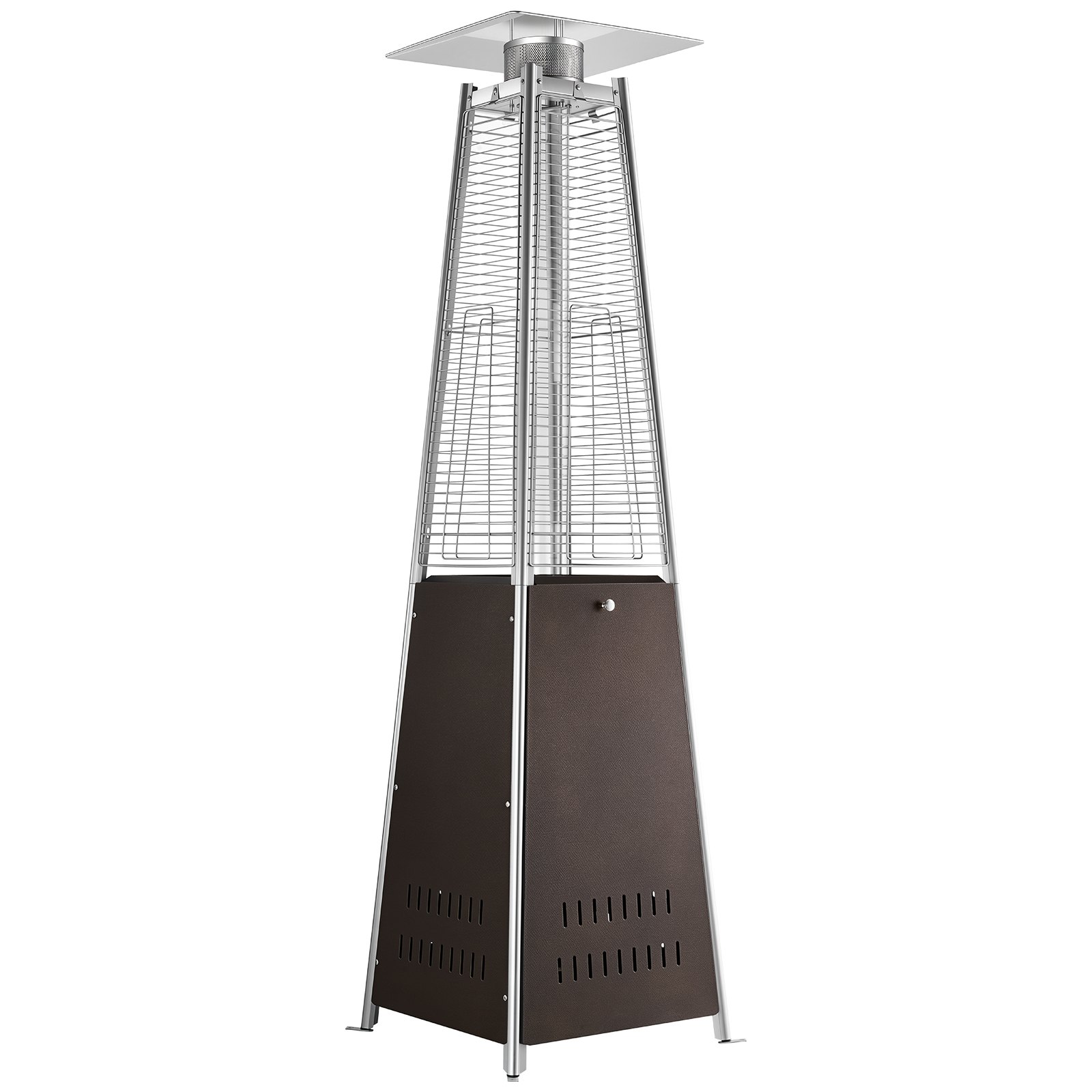

Photos from current listings. Actual item, color, and included accessories may vary.
Heater Buying Guide
Space heaters split into three architectures: radiant/infrared (instant spot heat), convection/fan-forced (fast whole-room mixing), and oil-filled radiator (slow, silent, steady). The core trade-off is wattage-to-coverage honesty versus safety and efficiency claims, so the decision rule is simple: size the heater to the room's cubic footage at 10 watts per square foot for a 2.4 m ceiling, and reject any unit lacking a tip-over switch plus overheat cutoff.
At a glance
- Category
- Home Appliances
- Last updated
- Nov 22, 2026
Current offers
Highlights
- Electric space heaters convert 100% of wattage to heat, so a 1,500 W unit is the maximum on a standard 15 A/120 V circuit (12.5 A) and no 'energy-saving' label changes that.
- Coverage claims are arithmetic: 1,500 W suits roughly 150 sq ft in a well-insulated room; 750 W low settings suit bathrooms and small offices, not open-plan living rooms.
- Infrared/radiant heaters heat objects and people, not air, so they excel in drafty garages and poorly sealed rooms where convection units lose heat to infiltration.
- Oil-filled radiators and ceramic convection units differ in delivery, not efficiency: oil-filled is silent with residual heat after shutoff, ceramic fan-forced mixes air faster but adds fan noise.
Best use cases
- Large room (over 200 sq ft) with standard ceiling: pick a 1,500 W ceramic or fan-forced convection unit with a thermostat and oscillating airflow; skip 400-750 W personal and radiant panels that cannot mix that volume.
- Bedroom or nursery where silence matters: choose an oil-filled radiator or a fanless ceramic panel with a digital thermostat; skip high-CFM fan heaters whose cycling noise disrupts sleep.
- Garage, workshop, or unheated sunroom: pick an infrared radiant heater aimed at the work zone; skip convection heaters that waste output heating infiltrating cold air.
- Bathroom: choose a wall-mountable 750-1,500 W unit rated for damp locations with a GFCI plug and IP rating; skip open-coil radiant bars and any heater not rated for wet areas.
Buying tips
- Size by math, not marketing: multiply room length × width × ceiling height in feet, then divide by 10 to get needed wattage (a 12×15 ft room with 8 ft ceiling needs ~1,440 W).
- Match the plug to the circuit: 1,500 W heaters draw 12.5 A and require a dedicated 15 A receptacle; never run one on a power strip or extension cord.
- Choose thermostat type deliberately: mechanical thermostats swing ±3-5°F, while digital/proportional thermostats hold ±1°F and cut cycling noise and energy waste.
- Prioritize safety certifications: UL 1278 or ETL listing, tip-over shutoff, overheat cutoff, and cool-touch housing are non-negotiable; ceramic PTC elements self-limit temperature better than exposed coils.
Specs
| Heater Type | Radiant / Convection / Oil-filled / Ceramic |
|---|---|
| Max Wattage | 750 W / 1,500 W (120 V) / 2,000 W+ (240 V) |
| Coverage Rule | 10 W per sq ft at 8 ft ceiling |
| Safety Listing | UL 1278 or ETL + tip-over cutoff |
Related searches
What to check before buying
- Measure the room's square footage and ceiling height, and confirm the heater's rated coverage at your actual cubic footage, not the box's best-case claim.
- Confirm the wall outlet is a dedicated 15 A circuit on the correct voltage (120 V in North America; 220-240 V elsewhere) and that the plug type matches.
- Clear 3 ft of space around the unit and check floor-loading or wall-mount requirements; radiator models are heavy when filled and need stable footing.
- For bathrooms and damp areas, verify a GFCI-protected outlet and an IP rating; for garages, confirm the cord length reaches the outlet without an extension cord.
FAQ
Data sources: eBay / Amazon listings and product attribute feeds. Updated Nov 22, 2026.
Some links on this page are affiliate links. If you buy after clicking one, we may earn a commission at no extra cost to you. This does not change which products appear here or their order. Affiliate disclosure.