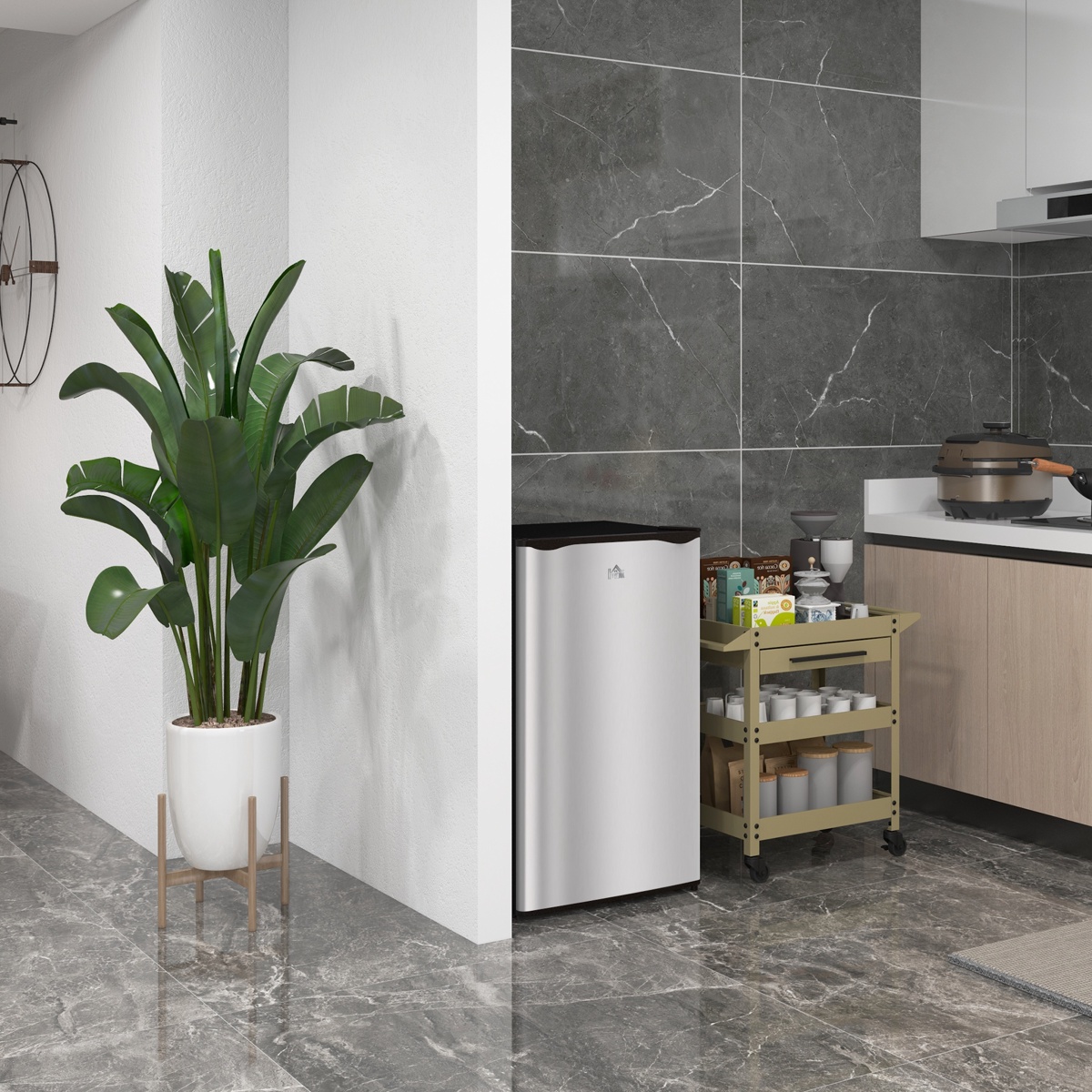

Photos from current listings. Actual item, color, and included accessories may vary.
Freezer Shelf Buying Guide
A freezer shelf is the horizontal divider (wire, glass, or plastic) inside a freezer compartment that supports frozen goods and separates temperature zones; the core trade-off is load capacity versus airflow and frost management, not brand. Durable options use tempered glass or epoxy-coated steel with reinforced edge trim and exact model-fit dimensions, while compromises are thin acrylic or universal wire grids that sag, crack at -18°C, or block cold-air circulation.
At a glance
- Category
- Home Appliances
- Last updated
- Nov 22, 2026
Current offers
Highlights
- Tempered glass shelves handle 25-40 lb static loads and resist -30°C to 60°C; standard soda-lime glass and acrylic crack under thermal shock and freezer flexing.
- Epoxy-coated steel wire shelves allow 60-70% open area for cold-air circulation, which reduces compressor cycling and frost buildup versus solid glass in frost-free freezers.
- Reinforced edge trim (stainless or PVC) on glass and steel shelves is the primary defense against chipping and rust at the cut edges; bare-cut edges are the failure point.
- Replacement fit is model-specific: shelf width and depth must match within 1/8 inch (3 mm) and the support-rail style (L-bracket, groove, or peg) must match the original cavity.
Best use cases
- Best fit: frost-free upright or top-freezer units — choose wire or tempered glass with open air gaps; skip solid acrylic inserts that block the evaporator fan's return air.
- Best fit: chest freezers or mini-fridge freezer compartments — choose a wire basket or slim wire shelf rated for the compartment depth; skip full-depth glass shelves that prevent lid clearance and cold-air sink.
- Best fit: older or manual-defrost freezers — choose epoxy-coated steel wire; skip untreated mild-steel or chrome-plated grids that rust after repeated defrost cycles.
- Wrong fit: universal cut-to-size acrylic panels in any freezer — acrylic becomes brittle below -10°C and shatters under a full load; use only freezer-rated tempered glass or coated steel.
Buying tips
- Measure the interior cavity width and depth, then subtract 1/4 inch (6 mm) total for clearance; shelf must sit flush on both side rails without bowing.
- Match the support style: L-bracket rails need a flat shelf edge, groove rails need a captured edge lip, and peg rails need slotted shelf ends — mismatched styles will tip under load.
- For glass, require tempered certification (ANSI Z97.1 or EN 12150) and a minimum 5/16 inch (8 mm) thickness for shelves wider than 20 inches.
- For wire, specify epoxy-coated or stainless steel with wire diameter of at least 3/16 inch (4.8 mm) and cross-rib spacing no wider than 2 inches to prevent small-item fall-through.
Specs
| Shelf Material | Tempered glass / epoxy-coated steel wire |
|---|---|
| Cold Rating | -30°C to 60°C (freezer-safe) |
| Glass Thickness | 5/16 in (8 mm) min; 3/8 in wider spans |
| Fit Tolerance | Within 1/8 in (3 mm) of cavity |
Related searches
What to check before buying
- Measure interior width, depth, and the distance between shelf support rails; record all three before ordering any replacement.
- Identify the freezer type (frost-free, manual-defrost, chest, or mini-fridge compartment) and confirm the shelf allows the required airflow path.
- Check the shelf's cold-rating: tempered glass or epoxy-coated steel rated to -30°C; avoid acrylic, untreated steel, and standard window glass.
- Confirm the shelf is a standalone part with no required companion clips or brackets, or order the matching bracket kit in the same transaction.
FAQ
Data sources: eBay / Amazon listings and product attribute feeds. Updated Nov 22, 2026.
Some links on this page are affiliate links. If you buy after clicking one, we may earn a commission at no extra cost to you. This does not change which products appear here or their order. Affiliate disclosure.