
Photos from current listings. Actual item, color, and included accessories may vary.
Electric Stove Buying Guide
An electric stove is a freestanding or slide-in cooking range that uses either radiant coil, smooth-top radiant, or induction heating elements powered by 240V. The core trade-off is heating technology and surface durability: coil and radiant glass-top models cost less but heat slowly and are prone to scratches, while induction delivers faster, more precise heat but requires magnetic cookware and a dedicated 240V circuit. Choose induction only if your pans are magnetic and your wiring supports 40–50A; otherwise pick a radiant smooth-top for the best balance of cleanability and price, or a coil-top for maximum durability on a budget.
At a glance
- Category
- Home Appliances
- Last updated
- Nov 22, 2026
Current offers
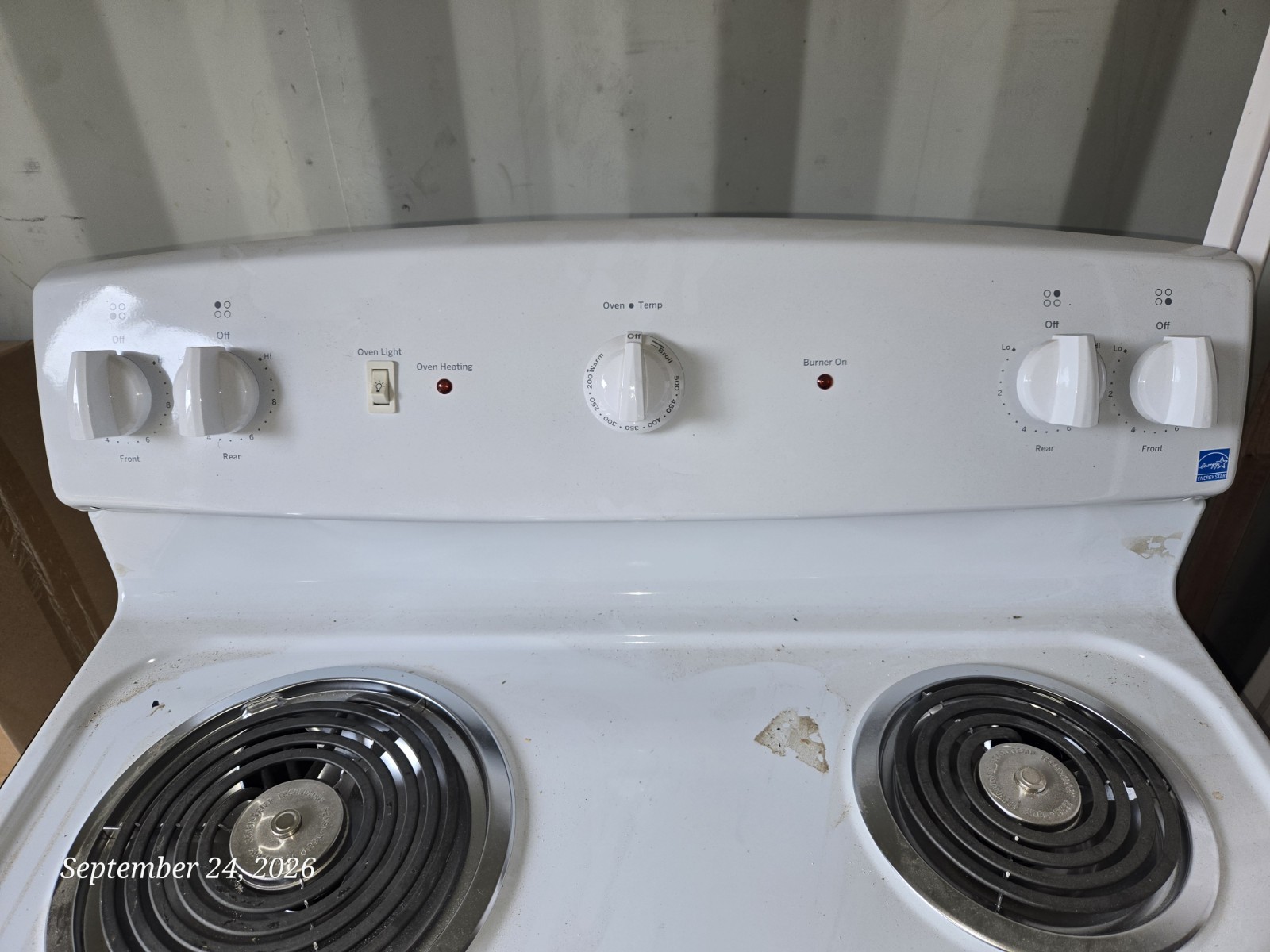 GE JBS160DMWW 30" Electric Coil Range 5.0 Cu Ft Freestanding White Stove$250.00Open box · Last checked Nov 21, 2026View on eBay
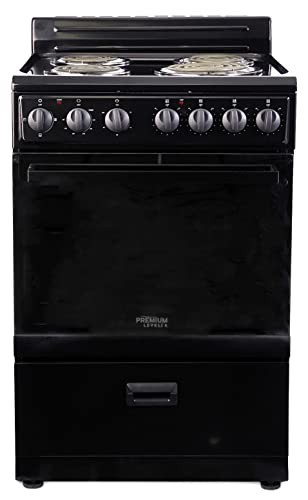 Premium Levella PRE2427GB 24" Electric Range 4 Burner 2.7 Cu Ft Black Stove$697.98New · Last checked Nov 21, 2026View on eBay
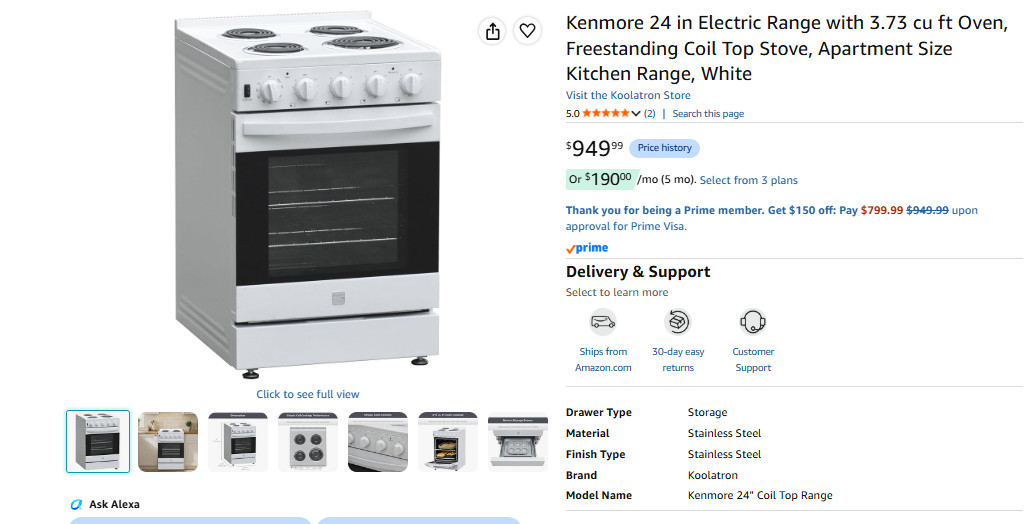 Kenmore 24 in Electric Range with 3.73 cu ft Oven, Freestanding Coil Top Stove$800.00New · Last checked Nov 21, 2026View on eBay
Highlights
- Induction ranges transfer 85–90% of energy to the pan versus 65–70% for radiant glass-top and 55–60% for coil, cutting boil times by 30–50%.
- All full-size electric ranges require a 240V dedicated circuit: 40A for most 30-inch models, 50A for larger 30-inch induction or double-oven ranges.
- Smooth-top radiant glass is tempered ceramic that scratches under cast-iron drag; coil elements use replaceable metal drip pans and are the most tolerant of heavy pots.
- Standard freestanding electric ranges are 30 inches wide and 26–29 inches deep, fitting a 30-inch cutout; slide-in models overlap countertops and need a 30-inch gap with no rear control panel.
Best use cases
- Best fit for induction: home cooks with magnetic stainless or cast-iron cookware and a 40–50A 240V circuit who want fast boils and precise simmer; skip if you own aluminum or copper pans.
- Best fit for radiant smooth-top: families wanting easy wipe-down cleaning and even baking who accept slower heat-up; choose a model with a warming zone and convection oven.
- Best fit for coil-top: rentals, budget kitchens, or heavy canning where durability matters more than aesthetics; skip glass-top if you regularly slide heavy cast-iron across the surface.
- Wrong fit for all electric: homes with only a 120V outlet or no 240V circuit—you must install a dedicated 240V line before any full-size electric range can operate.
Buying tips
- Measure your cutout width, depth, and height first: standard 30-inch freestanding ranges need a 30-inch wide opening and 25-inch minimum depth; slide-ins need a 30-inch gap with finished countertop edges.
- Confirm your circuit amperage at the breaker: 40A supports most 30-inch coil and radiant ranges; 50A is required for 30-inch induction and double-oven models. Never downgrade the breaker to fit a range.
- For induction, test your cookware with a magnet: if a magnet sticks firmly to the base, the pan works; if it barely sticks or falls off, it will not heat on induction.
- Choose a smooth-top with a ceramic-glass surface and at least one dual or bridge element if you use large griddles; coil ranges should have removable chrome drip bowls for easy cleaning and replacement.
Specs
| Cooktop Type | Coil / Radiant glass / Induction |
|---|---|
| Circuit Requirement | 240V dedicated, 40–50A |
| Standard Width | 30 in (freestanding / slide-in) |
| Cookware Compat | Induction: magnetic base only |
What to check before buying
- Measure the cutout width (30 inches standard), depth (24–25 inches cleared), and height (36 inches typical counter height) before ordering any range.
- Verify a dedicated 240V circuit at the breaker panel with the correct amperage (40A or 50A) and a matching 3-prong or 4-prong receptacle type.
- Check that the range's power cord matches your wall outlet: older homes may have 3-prong NEMA 10-50, newer homes 4-prong NEMA 14-50; a cord may need to be purchased separately.
- Confirm clearance to side walls and overhead cabinets: most manufacturers require zero clearance to sides but 30 inches above the cooktop to cabinets; check the installation manual for your specific model.
FAQ
Data sources: eBay / Amazon listings and product attribute feeds. Updated Nov 22, 2026.
Some links on this page are affiliate links. If you buy after clicking one, we may earn a commission at no extra cost to you. This does not change which products appear here or their order. Affiliate disclosure.