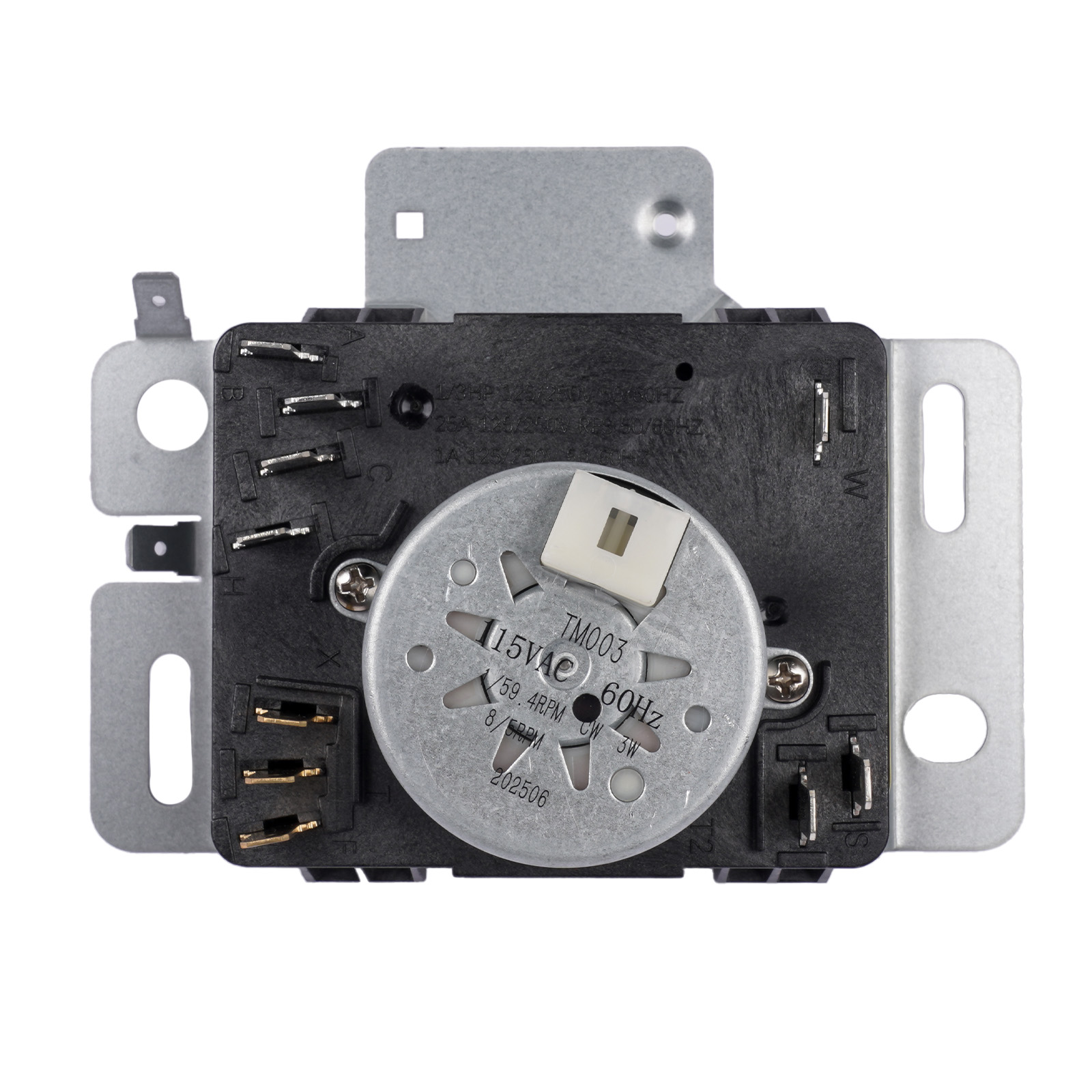

Photos from current listings. Actual item, color, and included accessories may vary.
Electric Dryer Buying Guide
An electric dryer is a major appliance that tumbles and heats laundry to evaporate moisture, and the core trade-off is between vented vs. ventless heat-pump/condenser architecture and compact portable vs. full-size build. Durable full-size vented units use 4-prong 240V circuits and rigid metal ducting, while compact 120V portables cap at 3.5 cu. ft. and require manual water-tank emptying; the decision rule is to match drum capacity and power tier to household load volume and available electrical service.
At a glance
- Category
- Home Appliances
- Last updated
- Nov 22, 2026
Current offers
Highlights
- Full-size electric dryers run on 240V/30A with a 4-prong NEMA 14-30 plug; compact 120V portables draw 12-15A on a standard NEMA 5-15 outlet.
- Vented dryers evacuate moisture through 4-inch rigid metal duct; ventless heat-pump models condense water into a tank or drain and need no exterior duct.
- Drum capacity scales with household size: 3.2-4.0 cu. ft. compact for 1-2 people, 6.5-7.5 cu. ft. full-size for families of 3-5, and 8+ cu. ft. for bulky bedding.
- Timer controls (e.g., Whirlpool/Kenmore/Maytag/Admiral-compatible W10642928 115VAC timers) are replaceable modules; modern full-size units use electronic control boards with moisture sensors.
Best use cases
- Apartment or dorm with no exterior vent and standard 120V outlets: choose a 3.2-3.5 cu. ft. ventless or compact portable dryer and skip any 240V full-size unit.
- Single-family home with an existing 240V/30A dryer circuit and exterior vent: pick a 7+ cu. ft. vented electric dryer for family laundry and skip 120V portables that require constant tank emptying.
- Replacing a failed timer on a legacy Whirlpool/Kenmore/Maytag/Admiral dryer: match the 115VAC timer part number and terminal layout, and skip buying a new appliance if the motor and heating element still test good.
- Small household (1-2 people) in a rental with no vent but a nearby drain: choose a ventless condenser or heat-pump model that can drain continuously and skip manual-tank-only units.
Buying tips
- Measure the laundry alcove width, depth, and height with door swing clearance; full-size dryers are typically 27 in. wide and 28-32 in. deep, while compact portables are 20-24 in. wide.
- Confirm the electrical circuit: a 240V/30A 4-prong NEMA 14-30 receptacle supports full-size electric dryers; a 120V/15A standard outlet limits you to compact portables.
- Check duct run length and elbow count: rigid 4-inch metal duct with no more than 25 ft. equivalent length (subtract 5 ft. per elbow) keeps airflow within vented dryer specs.
- For ventless heat-pump dryers, verify ambient temperature range (typically 41-95°F) and whether the unit drains by hose or requires emptying a condensate tank after each load.
Specs
| Power Tier | 240V/30A full-size vs 120V/15A compact |
|---|---|
| Drying Architecture | Vented vs condenser vs heat-pump |
| Drum Capacity | 3.2-4.0 compact / 6.5-8.0+ full-size cu ft |
| Duct Requirement | 4-in rigid metal, <=25 ft equivalent |
Related searches
What to check before buying
- Laundry space: width, depth, height, and door-swing clearance measured; add 1 in. rear clearance for vent or hose.
- Electrical: receptacle type and breaker size confirmed (NEMA 14-30 240V/30A vs. NEMA 5-15 120V/15A).
- Venting or drainage: exterior 4-inch duct path available for vented models, or floor drain/condensate tank plan for ventless.
- Companion parts: 4-prong power cord, semi-rigid or rigid metal duct, leveling feet, and stacking kit if pairing with a washer.
FAQ
Data sources: eBay / Amazon listings and product attribute feeds. Updated Nov 22, 2026.
Some links on this page are affiliate links. If you buy after clicking one, we may earn a commission at no extra cost to you. This does not change which products appear here or their order. Affiliate disclosure.