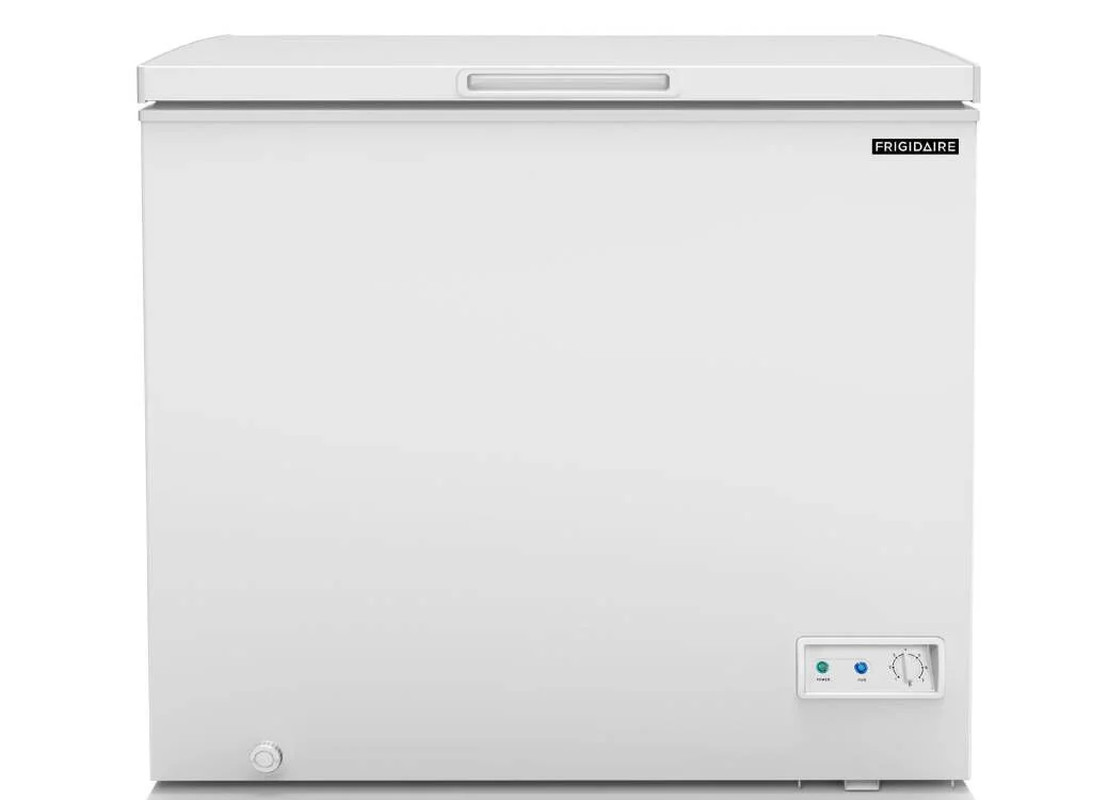

Photos from current listings. Actual item, color, and included accessories may vary.
Deep Freezer Buying Guide
A deep freezer is a dedicated low-temperature appliance—chest, upright, or convertible—that extends food storage from weeks to a year through either static cooling coils or fan-forced defrost cycles. The core trade-off is between the efficiency and long-hold cold retention of a manual-defrost chest and the organization and no-frost convenience of an upright, which costs more energy and dries food slightly faster. Buyers should treat compressor rating, insulation thickness, and defrost method as the durable/inferior dividing line—not brand badge or digital display.
At a glance
- Category
- Home Appliances
- Last updated
- Nov 22, 2026
Current offers
Highlights
- Chest freezers use static cooling with thick walls (typically 2.5–3.5 in foam) and hold cold 24–48 hours in a power outage; uprights use fan-forced air and recover in hours but lose cold faster.
- Manual-defrost models maintain a stable -10 to 0°F and avoid heater cycling; auto-defrost uprights cycle a heating element and warm food surfaces by 5–10°F during defrost.
- Garage-ready freezers are rated for ambient temperatures down to 0–10°F via a modified compressor and thermostat; standard freezers lose cooling capacity below 40–50°F ambient.
- Energy use scales with defrost type and size: a 7 cu ft manual chest draws roughly 200–280 kWh/year, while a comparable no-frost upright draws 350–450 kWh/year.
Best use cases
- Best fit for bulk meat, garden harvest, and long-term emergency storage: a 7–10 cu ft manual-defrost chest in a garage or basement; skip no-frost uprights if you want maximum hold time and lowest energy draw.
- Best fit for kitchen-adjacent, frequent-access frozen meals and portioned leftovers: a 10–14 cu ft upright with adjustable glass shelves and door bins; skip chests if bending or deep-digging is a daily annoyance.
- Best fit for tight apartments or condos: a 3–5 cu ft compact chest or convertible refrigerator/freezer; skip full-size uprights because door swing and depth exceed galley layouts.
- Wrong fit for unheated garages: any standard (non-garage-ready) freezer, which will not hold temperature when ambient drops below 40°F and may spoil food silently.
Buying tips
- Size by volume rule: allow 2.5–3 cu ft per person for bulk storage, plus 1.5 cu ft per extra bulk-buy cycle; a 7 cu ft chest suits two adults, while a family of four with a garden should start at 10–12 cu ft.
- Require a garage-ready rating (ambient 0–10°F) if the unit sits in an unheated outbuilding, garage, or porch; standard freezers are rated only to 40–50°F ambient and will under-cool in winter.
- Choose manual-defrost chests for food held over 3 months—ice buildup reduces efficiency only after roughly 0.25–0.5 in frost; choose no-frost uprights for weekly access and organization, accepting 30–50% higher energy use.
- Check door and lid seals: a magnetic gasket should hold a dollar bill with light pull; thicker walls (3 in+) and a foam-injected cabinet signal better cold retention than thin-wall budget builds.
Specs
| Freezer Form | Chest / Upright / Convertible |
|---|---|
| Defrost Method | Manual vs Frost-free |
| Garage-Ready Rating | 0–10°F ambient vs 40–50°F |
| Capacity Tier | 3–5 / 7–10 / 12–20 cu ft |
What to check before buying
- Measure the doorway, stair turn, and final floor spot: chest lids need full overhead clearance, uprights need door-swing clearance plus 2–4 in rear air gap for the condenser.
- Confirm the electrical circuit: most freezers run on a dedicated 15–20 A, 115 V grounded outlet; avoid shared circuits with high-draw appliances and use a surge protector in garage installations.
- Match the freezer to ambient conditions: unheated garages need a garage-ready thermostat; humid basements benefit from a manual-defrost chest to avoid frost-wicking and mold on gaskets.
- Plan companion parts: a chest requires optional wire baskets for organization and a thermometer; an upright may need shelf liners and a door alarm if children or power outages are a concern.
FAQ
Data sources: eBay / Amazon listings and product attribute feeds. Updated Nov 22, 2026.
Some links on this page are affiliate links. If you buy after clicking one, we may earn a commission at no extra cost to you. This does not change which products appear here or their order. Affiliate disclosure.