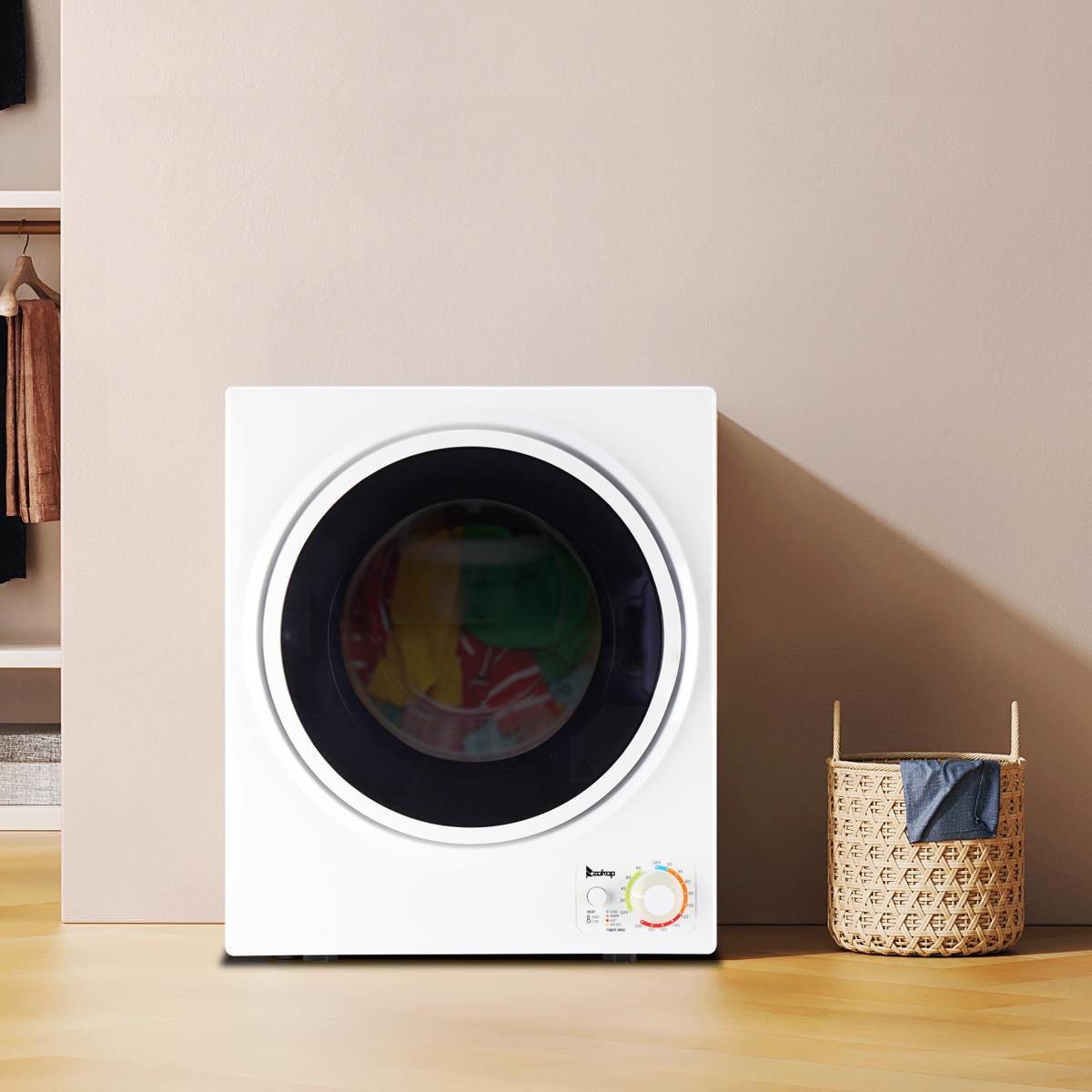

Photos from current listings. Actual item, color, and included accessories may vary.
Clothe Dryer Buying Guide
Clothes dryers split into vented, ventless condenser, and heat-pump architectures, each dictating installation flexibility, energy use, and fabric care. The core trade-off is drum capacity and heat source versus venting requirements and electrical circuit limits. Choose a vented or condenser unit only if you can meet its exhaust or drain/voltage requirements; otherwise step up to heat-pump technology for lower-temperature drying without ducting.
At a glance
- Category
- Home Appliances
- Last updated
- Nov 22, 2026
Current offers
Highlights
- Heat-pump dryers use a closed refrigerant loop at 120–140°F, cutting energy use 40–50% versus resistance-heat vented models and eliminating ductwork.
- Vented dryers need a rigid 4-inch metal duct run under 25 feet with minimal elbows; vinyl flex duct is a fire-code violation and voids most warranties.
- Compact 120V portable units top out around 1.6–2.6 cu ft and dry 8–12 lb loads, while full-size 240V dryers run 7–9 cu ft and handle 18–22 lb.
- Stainless-steel drums resist chipping and heat warping; powder-coated or galvanized drums are the first failure point on budget vented models.
Best use cases
- Pick a 120V compact vented or condenser dryer for apartments, RVs, or laundry closets without a 240V circuit or exterior vent; skip full-size 240V units there.
- Choose a heat-pump condenser dryer for airtight modern homes, basements, or closet installs where ducting is impossible and low-temperature fabric care matters.
- Install a standard 240V vented dryer in a dedicated laundry room with a short exterior duct run; skip it in condos where the HOA forbids exterior penetrations.
- Select a gas vented dryer only where a licensed gas line and 120V ignition circuit exist; skip it for rentals or any space without a plumber-verified gas stub.
Buying tips
- Match dryer capacity to washer drum: a 4.5 cu ft washer pairs with 7–8 cu ft dryer; undersizing causes longer cycles and wrinkled, damp loads.
- Verify the electrical circuit: full-size electric dryers require a dedicated 30A 240V NEMA 14-30R outlet; compact 120V models run on a standard 15A NEMA 5-15R.
- Measure the door swing and clearance: allow 1 inch on sides and rear for vented models; condenser and heat-pump units need 2–4 inches of airflow clearance.
- For vented installs, count total duct run including elbows (each 90° elbow equals 5 feet); exceeding 25 equivalent feet traps lint and overheats the heater.
Specs
| Dryer Architecture | Vented / Condenser / Heat-pump |
|---|---|
| Power Requirement | 120V 15A compact vs 240V 30A full-size |
| Drum Capacity | 1.6–2.6 cu ft compact; 7–9 cu ft full-size |
| Drum Material | Stainless steel vs powder-coated steel |
Related searches
What to check before buying
- Confirm the outlet: NEMA 14-30R 240V for full-size electric, NEMA 5-15R 120V for compact, or a verified gas stub plus 120V for gas models.
- Measure the installation cavity width, depth, and height including door swing and hoses; add 1 inch side and 6 inches rear clearance for venting.
- Check the floor and structure: dryers weigh 120–200 lb; a sturdy level floor prevents drum bearing wear and vibration.
- Verify vent path or drain: vented needs a rigid metal duct to exterior; condenser needs a drain hose or water tank access; heat-pump needs neither.
FAQ
Data sources: eBay / Amazon listings and product attribute feeds. Updated Nov 22, 2026.
Some links on this page are affiliate links. If you buy after clicking one, we may earn a commission at no extra cost to you. This does not change which products appear here or their order. Affiliate disclosure.