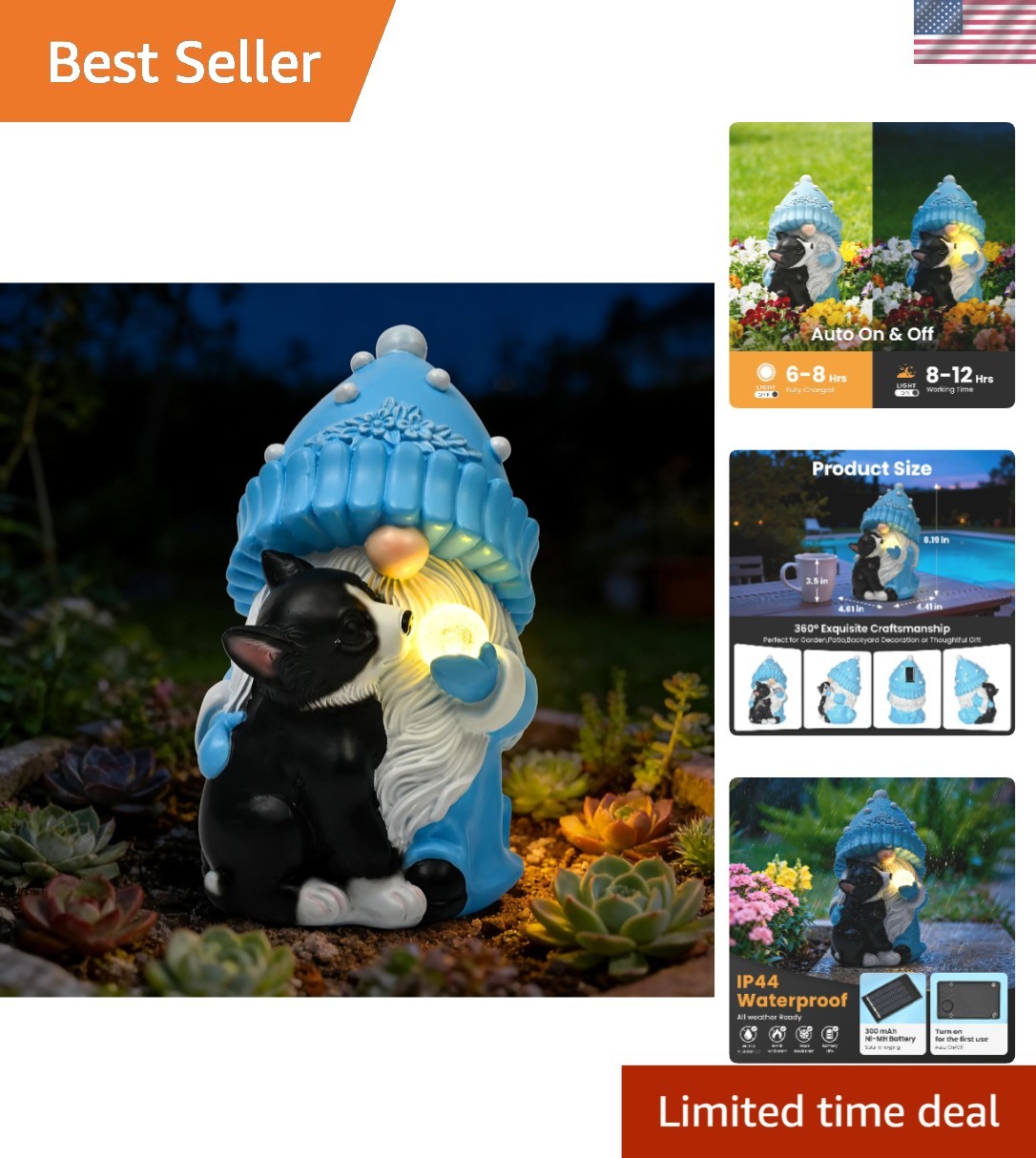

Photos from current listings. Actual item, color, and included accessories may vary.
Solar Garden Ornament Buying Guide
Solar garden ornaments combine a decorative figurine with a small photovoltaic panel and rechargeable cell to power integrated LEDs at night, eliminating wiring and outdoor outlets. The core trade-off is between resin/polyresin construction with an amorphous or monocrystalline panel and weather-sealed Ni-MH or Li-ion storage: premium units use sealed IP65+ housings, monocrystalline cells with higher low-light output, and replaceable AA cells, while budget units use thin polyresin, amorphous panels, and soldered non-replaceable batteries that fail within a season or two. The decision rule: buy only ornaments rated IP65 or higher with a user-replaceable standard cell and a monocrystalline panel; skip sealed, single-season units regardless of sculpt quality.
At a glance
- Category
- Figurines, Statues & Ornaments
- Last updated
- Nov 22, 2026
Current offers
Highlights
- Polyresin and resin are the dominant body materials; UV-stabilized resin resists fading and cracking, while thin painted polyresin chalks and peels after one or two winters.
- Monocrystalline solar panels deliver roughly 15-20% conversion efficiency versus 6-8% for amorphous cells, meaning faster charging and reliable dusk-to-dawn light in cloudy climates.
- IP65 protects against dust and water jets; IP44 only resists splashes, so exposed lawn placement should be IP65 with sealed battery compartments.
- Ni-MH AA cells are the standard replaceable storage; Li-ion packs offer higher capacity but are often soldered, making the whole ornament disposable when the cell degrades.
Best use cases
- Best fit: an IP65 monocrystalline resin ornament with a replaceable AA Ni-MH cell for year-round lawn or pathway placement in mixed climates.
- Best fit: small accent ornaments along a garden border or flowerbed where full sun exposure of at least 6-8 hours is available and no wiring is practical.
- Wrong fit to skip: sealed amorphous-panel ornaments with integrated non-replaceable cells for north-facing or heavily shaded beds — they will not fully charge and will fail early.
- Wrong fit to skip: oversize polyresin statues marketed for all-weather use without an IP rating for coastal or freeze-thaw regions, where moisture ingress and frost cracking are common.
Buying tips
- Match panel type to sun exposure: monocrystalline for partial sun or northern latitudes, amorphous only for full-day direct sun.
- Confirm the battery is a standard replaceable AA or AAA Ni-MH cell; a soldered Li-ion pack turns a durable ornament into a disposable one.
- Size the ornament to its light output: small 1-2 LED accents suit borders, while multi-LED feature statues need a larger panel (roughly 2x2 in or more) to sustain dusk-to-dawn runtime.
- Check the IP rating on the battery door and switch, not just the body; the compartment seal is the first failure point in rain and sprinkler exposure.
Specs
| Panel Type | Monocrystalline vs Amorphous |
|---|---|
| Body Material | UV-stabilized Resin / Polyresin |
| Weather Rating | IP65+ (IP44 sheltered only) |
| Battery | Replaceable AA/AAA Ni-MH vs Sealed Li-ion |
Related searches
What to check before buying
- Measure the intended spot's daily direct-sun hours (6-8 hours minimum) and confirm no tree or eave shading during midday.
- Verify the ornament's base footprint and weight against wind exposure; tall lightweight statues need a wide base or ground stake.
- Confirm the panel faces the sun's arc (south in the northern hemisphere) and that the ornament's orientation allows it.
- Check the battery type and compartment access so cells can be swapped seasonally without disassembling the ornament.
FAQ
Data sources: eBay / Amazon listings and product attribute feeds. Updated Nov 22, 2026.
Some links on this page are affiliate links. If you buy after clicking one, we may earn a commission at no extra cost to you. This does not change which products appear here or their order. Affiliate disclosure.