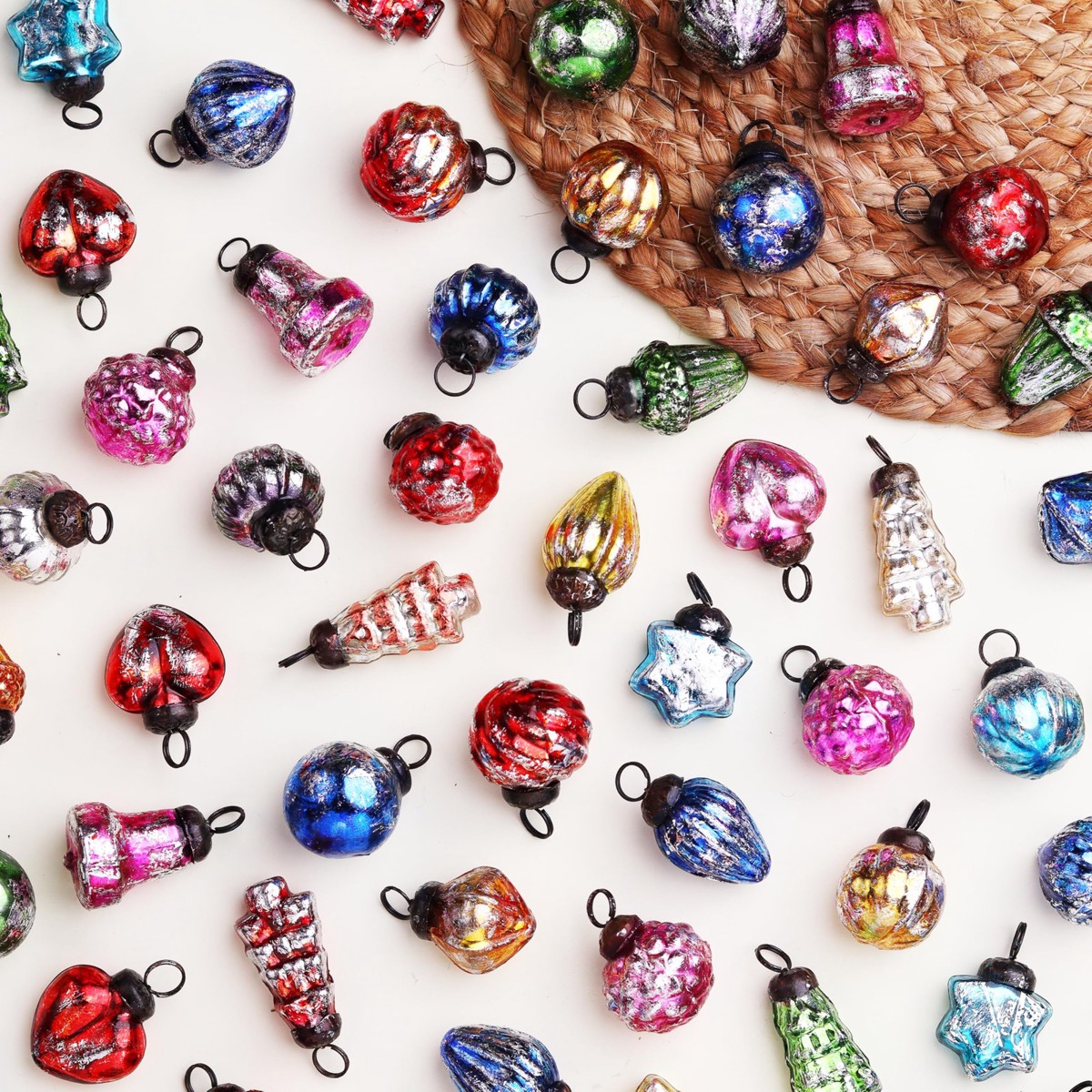

Photos from current listings. Actual item, color, and included accessories may vary.
Vintage Glass Ornament Buying Guide
Vintage glass ornaments are mouth-blown or mold-blown Christmas tree decorations prized for their reflective silvered interiors, hand-painted detail, and heirloom durability. The primary trade-off is between thin, fragile modern reproductions and heavier, properly silvered glass from mid-century European or American workshops. Choose mercury-silvered glass with a reinforced metal cap and thick loop if you want a lasting collectible; skip paper-thin imports with glued-on plastic caps.
At a glance
- Category
- Figurines, Statues & Ornaments
- Last updated
- Nov 22, 2026
Current offers
Highlights
- Mercury silvering (silver nitrate reduced inside the glass) creates the mirror finish; modern lacquer-and-paint interiors flake and dull within years.
- Cap construction matters: crimped brass or steel caps with a wire loop hold far better than glued zinc caps that pull out under ornament weight.
- Hand-blown glass varies in wall thickness; 0.8-1.2 mm walls survive handling, while sub-0.5 mm walls crack from cap pressure alone.
- European sizes cluster around 6-8 cm (2.5-3 in) for tree sets and 10-15 cm (4-6 in) for statement pieces; larger hollow glass dents easily.
Best use cases
- Best fit: full-size tree with mixed ornaments — choose 6-8 cm silvered glass sets with crimped caps for even visual weight and safe hanging.
- Best fit: collector display or wreath — pick 10-15 cm hand-painted statement pieces with original boxes and reinforced loops for provenance and stability.
- Wrong fit: high-traffic homes with toddlers or pets — thin glass ornaments under 0.5 mm walls and glued caps are a breakage hazard; skip them for shatterproof alternatives.
- Wrong fit: outdoor or porch trees — glass silvering degrades with UV and moisture; skip vintage glass entirely and use metal or shatterproof ornaments.
Buying tips
- Check cap type first: crimped metal caps with a visible wire loop indicate durable construction; glued caps are a skip signal regardless of ornament beauty.
- Verify silvering by looking through the mouth: a true mercury-silvered interior shows a bright, continuous mirror; patchy or painted interiors are modern lacquer replicas.
- Match ornament size to tree scale: 6-8 cm ornaments suit 1.5-1.8 m trees; 10-15 cm pieces work on 2 m+ trees or as standalone display.
- Inspect loop wire gauge: loops thinner than 0.8 mm bend open under load; look for twisted or soldered loops on heavier ornaments.
Specs
| Interior Finish | Mercury silvered vs lacquer/paint |
|---|---|
| Cap Type | Crimped metal vs glued zinc |
| Glass Wall | 0.8-1.2 mm durable / <0.5 mm fragile |
| Ornament Size | 6-8 cm tree / 10-15 cm statement |
Related searches
What to check before buying
- Measure your tree height and branch spacing; 6-8 cm ornaments need at least 15 cm between hanging points for visual balance.
- Confirm your storage: vintage glass needs divided ornament boxes with individual compartments; loose storage causes cap and paint damage.
- Check hanging hardware: ornament hooks must match loop diameter; thin wire hooks on heavy glass ornaments can straighten under weight.
- Assess room humidity and sunlight: sustained UV and moisture accelerate silvering degradation and paint flaking on vintage glass.
FAQ
Data sources: eBay / Amazon listings and product attribute feeds. Updated Nov 22, 2026.
Some links on this page are affiliate links. If you buy after clicking one, we may earn a commission at no extra cost to you. This does not change which products appear here or their order. Affiliate disclosure.