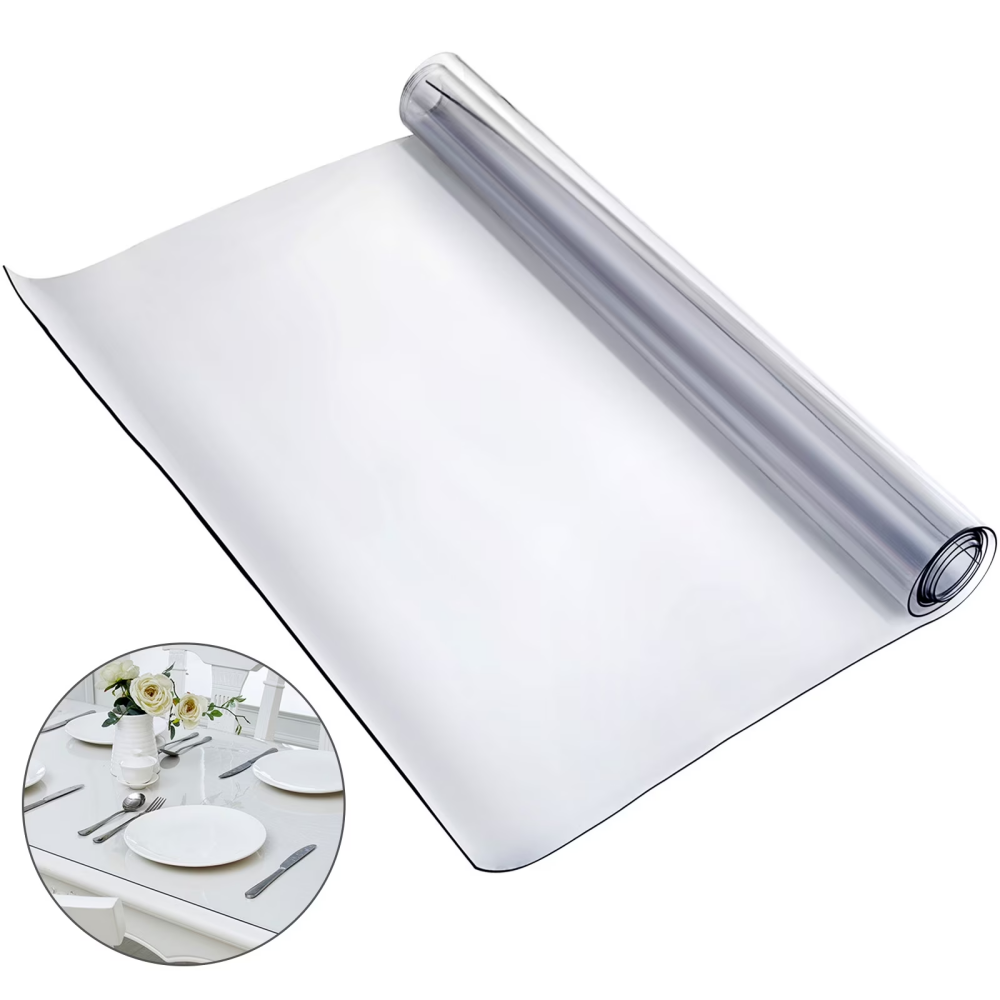

Photos from current listings. Actual item, color, and included accessories may vary.
Table Protector Buying Guide
A table protector is a clear or opaque sheet placed over a dining or desk surface to shield it from heat, spills, scratches, and daily wear. The primary trade-off is thickness and material grade versus optical clarity—thicker vinyl resists dents and heat but can look cloudy, while thin films stay invisible but fail fast. The clear decision rule: buy PVC or TPU at 1.5mm or thicker for dining tables, and only use sub-1mm films on low-traffic accent tables.
At a glance
- Category
- Bedding, Linens & Home Textiles
- Last updated
- Nov 22, 2026
Current offers
Highlights
- PVC vinyl is the dominant material: 1.5-2mm clear PVC delivers the best balance of heat resistance, scratch recovery, and cost for dining use.
- TPU (thermoplastic polyurethane) is the premium alternative: flexible, plasticizer-free, and non-yellowing, but typically costs more at the same thickness.
- Thickness directly governs durability: 2mm protects against hot plates and heavy dishware, 1mm suits desks and light use, and 0.5mm films wrinkle and tear quickly.
- Standard sizing math: order 2-4 inches wider and longer than the tabletop so the protector drapes over edges and stays put without tape.
Best use cases
- Dining tables in daily use: pick a 2mm clear PVC protector cut 2 inches oversized on each side to absorb heat and spills—skip thin 0.5mm films that ripple and slide.
- Home office desks: choose a 1-1.5mm clear mat sized to the desk footprint; a 2mm sheet on a desk adds unnecessary bulk and can trap heat under laptops.
- Glass or polished stone tabletops: use a plasticizer-free TPU protector to prevent chemical hazing and yellowing that low-grade PVC can cause on sensitive finishes.
- Accent, side, or temporary tables: a 0.5-1mm film is adequate and cheaper, but never place it under hot serving dishes or direct sunlight.
Buying tips
- Match thickness to heat exposure: 2mm for dining tables receiving hot plates, 1-1.5mm for desks and crafts, 0.5mm only for light decorative coverage.
- Choose TPU over PVC when the table finish is lacquered, painted, or stone—PVC plasticizers can react with these surfaces over months.
- Measure the tabletop and add 2-4 inches per side; an 80x42 inch protector fits a 76x38 inch table with a 2-inch overhang all around.
- Prefer protectors with rounded corners and a slight texture on the underside to reduce sliding and edge curl on smooth tables.
Specs
| Material | PVC vinyl vs TPU polyurethane |
|---|---|
| Thickness | 0.5mm film / 1-1.5mm desk / 2mm dining |
| Shape & Fit | Rectangular, round, oval; 2-4 in overhang |
| Surface Finish | Clear glossy vs frosted/textured non-slip |
Related searches
What to check before buying
- Measure tabletop length and width, then add 2-4 inches per side for overhang and secure placement.
- Confirm table surface material: lacquered wood, painted finishes, and natural stone need plasticizer-free TPU, not standard PVC.
- Check table shape and edge profile—rectangular, round, or oval—so a rectangular sheet does not overhang awkwardly on curved edges.
- Verify the protector's heat rating if the table receives hot cookware; 2mm PVC or TPU handles warm plates, but direct-from-oven pans require trivets.
FAQ
Data sources: eBay / Amazon listings and product attribute feeds. Updated Nov 22, 2026.
Some links on this page are affiliate links. If you buy after clicking one, we may earn a commission at no extra cost to you. This does not change which products appear here or their order. Affiliate disclosure.