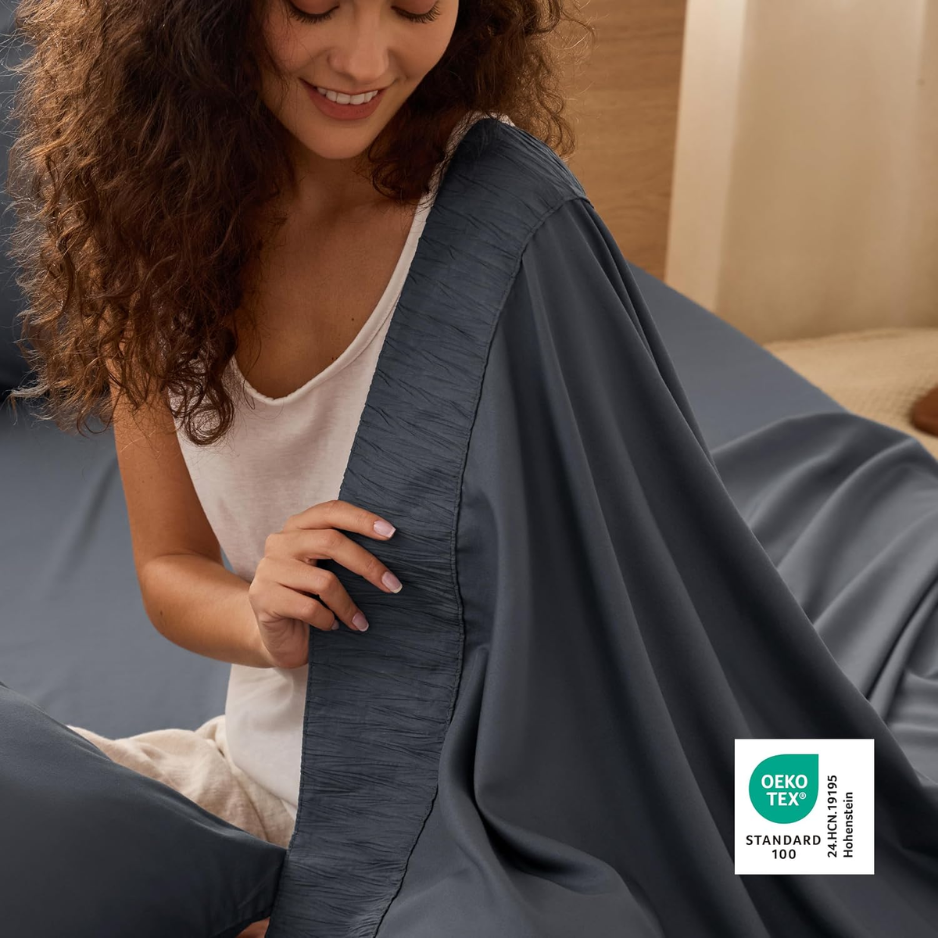

Photos from current listings. Actual item, color, and included accessories may vary.
Cooling Sheet Buying Guide
Cooling sheets are bedding engineered to move heat away from the body faster than standard cotton or microfiber, using either conductive fibers (nylon, bamboo viscose) or open-weave breathable structures. The core trade-off is between instant cool-to-the-touch performance and long-term breathability/durability, with cheap 'cooling' claims often relying on a surface finish that washes out. The decision rule: choose fiber-based moisture-wicking (bamboo/viscose, Tencel, nylon blends) for hot sleepers, and skip any set that does not state fiber content and weave/GSM.
At a glance
- Category
- Bedding, Linens & Home Textiles
- Last updated
- Nov 22, 2026
Current offers
Highlights
- Cool-to-touch performance comes from nylon or polyethylene fibers with high thermal conductivity; these feel cold instantly but rely on the fabric staying dry and are less breathable than open weaves.
- Bamboo viscose and Tencel (lyocell) manage moisture by wicking and drying fast; they are breathable and durable but lack the instant cold snap of nylon.
- Weave matters: percale (200-300 thread count) and open basket weaves breathe better than sateen, whose tight weave traps heat despite a smooth feel.
- Fiber content and GSM must be disclosed; generic 'cooling' marketing without fiber or weight specs usually means a temporary finish or low-GSM microfiber that pills.
Best use cases
- Best for hot sleepers with night sweats: pick bamboo viscose or Tencel percale, 200-300 thread count, because moisture wicking and breathability beat instant cold-touch.
- Best for hot-climate bedrooms without strong AC: choose open-weave cotton percale or linen blends; skip sateen and high-thread-count cotton, which trap heat.
- Best for buyers wanting an instant cool-to-touch feel: choose nylon-blend cooling sheets, but only if the bedroom is air-conditioned and humidity is controlled.
- Wrong fit: microfiber or 'brushed' sheets marketed as cooling, and any set without stated fiber content or weave; these insulate rather than cool.
Buying tips
- Match pocket depth to mattress height: standard sheets fit up to 14-15 inches; deep-pocket sets are needed for 16-18 inch mattresses with toppers, or corners pop off.
- Choose fiber first: bamboo viscose or lyocell for breathable wicking, nylon blends for cool-touch, percale cotton for crisp breathability; avoid microfiber and sateen for hot sleep.
- Check weave and thread count: percale at 200-300 thread count breathes better than sateen at 400+; very high counts often use finer plies that reduce airflow.
- Prefer sets that state GSM or fabric weight; lightweight weaves (under ~120 GSM) breathe better, while heavy GSM traps heat regardless of 'cooling' labels.
Specs
| Fiber Type | Bamboo viscose / Lyocell / Nylon / Percale cotton |
|---|---|
| Weave / Thread Count | Percale 200-300 TC; sateen 300+ |
| Pocket Depth | Standard 14-15 in; Deep 16-18 in |
| Cooling Mechanism | Moisture-wicking vs cool-to-touch |
Related searches
What to check before buying
- Measure mattress height including any topper; confirm the fitted sheet pocket depth is at least 1-2 inches deeper than the mattress.
- Confirm bed size against the set: Queen (60x80 in), King (76x80 in), Full (54x75 in); a 'Queen 4-piece' typically includes flat, fitted, and two pillowcases.
- Check fiber and weave on the label: bamboo viscose/lyocell, percale cotton, or nylon blend; skip sets listing only 'microfiber' or 'cooling fabric'.
- Verify care requirements: viscose and lyocell need cold wash and low tumble; high heat degrades cooling fibers and shrinks fitted sheets.
FAQ
Data sources: eBay / Amazon listings and product attribute feeds. Updated Nov 22, 2026.
Some links on this page are affiliate links. If you buy after clicking one, we may earn a commission at no extra cost to you. This does not change which products appear here or their order. Affiliate disclosure.