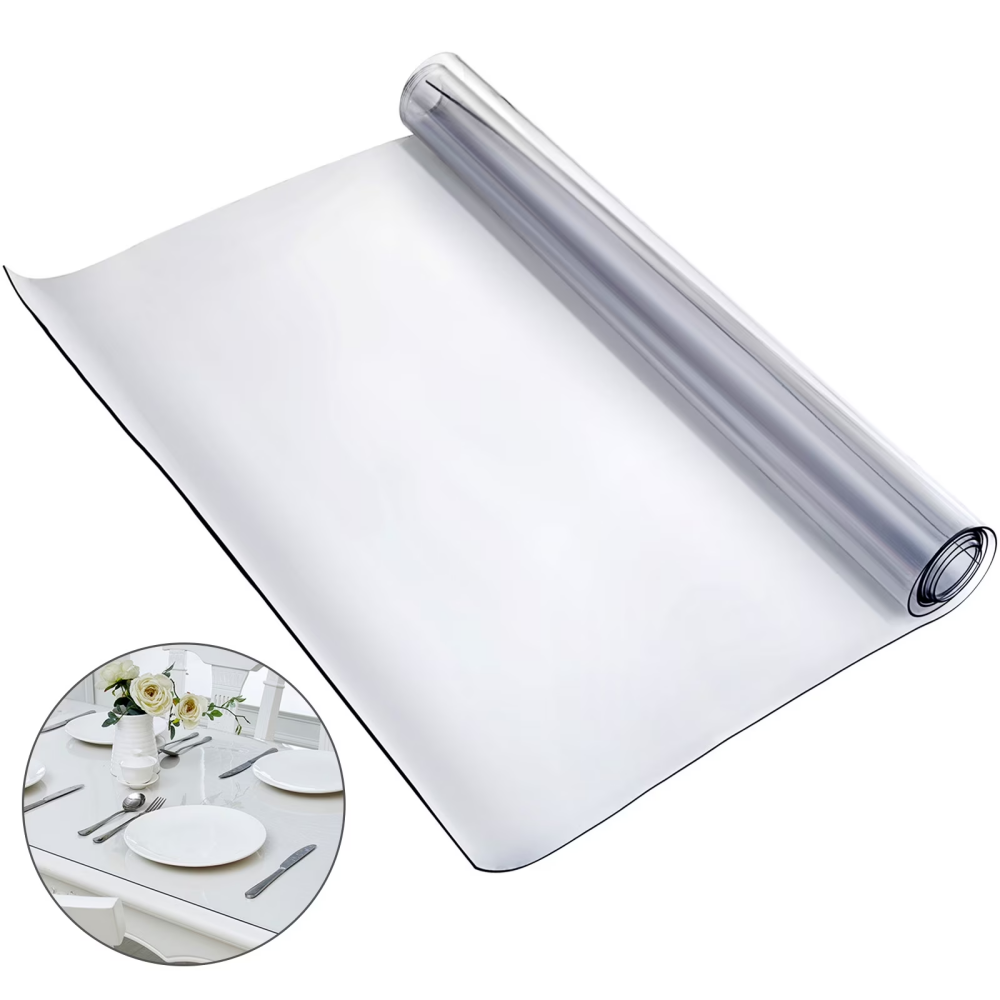

Photos from current listings. Actual item, color, and included accessories may vary.
Plastic Table Cover Buying Guide
Plastic table covers split into two distinct product families: thin disposable party tablecloths and thick reusable protective pads. The critical trade-off is thickness versus disposability—thin films (0.01–0.05 mm) are single-use, while rigid PVC or PEVA pads (1.5–3 mm) protect surfaces for years. Decide by use case: events and crafts need cheap, wide-coverage disposables; dining and desk protection need a 1.5 mm+ rigid pad with a non-slip backing.
At a glance
- Category
- Bedding, Linens & Home Textiles
- Last updated
- Nov 22, 2026
Current offers
Highlights
- Thickness tiers define durability: disposable films run 0.01–0.05 mm, semi-reusable PEVA cloths 0.1–0.2 mm, and rigid protective pads 1.5–3 mm.
- Material matters: PVC pads are rigid, clear, and heat-resistant to ~60°C; PEVA is chlorine-free and softer; PE film is cheapest but creases and tears.
- Sizing rule: pad length and width must clear the tabletop by at least the overhang you want—2–4 inches for desks, 6–8 inches for dining tables.
- Rigid pads ship rolled; expect a break-in period of 24–48 hours under weight before the PVC lies fully flat on the tabletop.
Best use cases
- Dining table protection with kids or crafts: pick a 1.5–2 mm clear PVC pad sized to the tabletop plus 2–4 inches overhang; skip thin PEVA cloths that slide and stain.
- One-off parties, picnics, or painting: choose 0.01–0.05 mm disposable PE tablecloths in a 54×108 inch or 84-inch round; do not buy rigid pads for single-use events.
- Desk or office surface protection: use a 2 mm clear PVC desk pad cut to the desktop footprint—no overhang—rather than a tablecloth-style cover that drapes and interferes with chairs.
- Outdoor or heat-exposed tables: skip PVC pads near hot pans or direct summer sun above 60°C; choose PEVA or a fabric-backed pad rated for higher temperatures.
Buying tips
- Match thickness to lifespan: under 0.05 mm is single-use, 0.1–0.2 mm lasts a season, and 1.5 mm+ PVC pads last years—do not expect a disposable film to survive more than one event.
- Measure the tabletop first, then add overhang: a 42×80 inch pad fits a 36×72 inch table with 4 inches of drop on each side; order the pad, not the table, dimension.
- For round tables, buy a round pad equal to table diameter plus 2× desired overhang—an 84-inch round cloth covers a 60-inch table with a 12-inch drop.
- Check edge finish: rigid PVC pads should have polished or beveled edges; sharp die-cut edges crack and curl within months of use.
Specs
| Thickness Tier | 0.01–0.05 mm film / 1.5–3 mm rigid pad |
|---|---|
| Material Type | PE film / PEVA cloth / PVC rigid |
| Table Shape Fit | Rectangular, round, oval |
| Reusability | Single-use vs multi-year rigid pad |
Related searches
What to check before buying
- Measure tabletop length, width, and shape (rectangular, round, oval) before choosing a pad size—overhang is added to the tabletop, not subtracted.
- Confirm table surface material: PVC pads can trap moisture and discolor unfinished wood; use a breathable felt-backed pad or PEVA on bare timber.
- Check clearance for chairs and legs: a draped tablecloth needs 6–8 inches of drop; a rigid pad should stop 2–4 inches from the edge so chairs tuck in.
- Verify heat exposure: keep PVC pads away from stovetops, hot serving dishes above 60°C, and prolonged direct sunlight, which warps and yellows clear PVC.
FAQ
Data sources: eBay / Amazon listings and product attribute feeds. Updated Nov 22, 2026.
Some links on this page are affiliate links. If you buy after clicking one, we may earn a commission at no extra cost to you. This does not change which products appear here or their order. Affiliate disclosure.