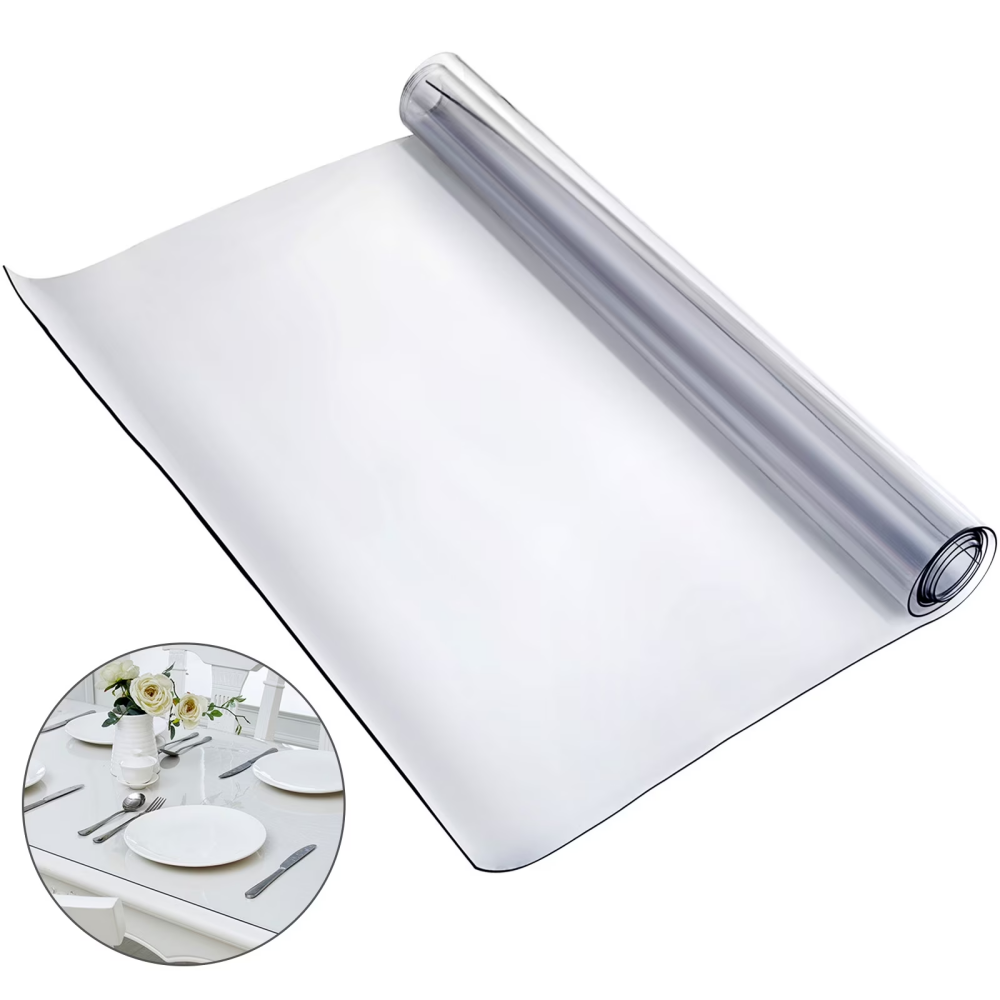

Photos from current listings. Actual item, color, and included accessories may vary.
Plastic Cover Buying Guide
A plastic cover is a rigid or semi-rigid protective sheet—typically PVC, PEVA, or vinyl—used to shield tables and surfaces from spills, scratches, and heat. The core trade-off is thickness and material clarity versus flexibility and cost: heavier gauges resist curling and impact, while thinner films conform to odd shapes but yellow and crack sooner. The decision rule is simple: buy by measured thickness (mil or mm) and plasticizer type—rigid PVC at 1.5–2mm for permanent table protection, or 6–8 mil PEVA for temporary, food-safe coverage.
At a glance
- Category
- Bedding, Linens & Home Textiles
- Last updated
- Nov 22, 2026
Current offers
Highlights
- Thickness is the primary durability metric: 1.5–2mm rigid PVC is self-supporting and resists dents; 6–8 mil PEVA/vinyl films are flexible but crease and yellow under UV within a season.
- Material grade matters: clear rigid PVC uses phthalate-free or low-migration plasticizers for clarity; PEVA is chlorine-free and food-safe; ordinary vinyl can leach plasticizer and bond to finished wood.
- Edge finishing determines longevity: heat-sealed or polished edges resist delamination and curling; raw die-cut edges catch on tableware and peel.
- Surface finish affects usability: textured or matte embossed tops hide scratches and prevent glassware suction, while high-gloss clear shows every smudge and scratch.
Best use cases
- Pick a 2mm rigid PVC clear protector for a dining table that sees daily meals, kids' crafts, or hot dishes—it stays flat without adhesive and wipes clean.
- Choose a 6–8 mil PEVA tablecloth-style cover for temporary party or holiday protection where you want draping over edges and easy fold-away storage.
- Skip thick rigid PVC for upholstered furniture or irregular surfaces—use a thin vinyl film or fitted plastic cover instead; rigid sheet only suits flat, hard tops.
- For outdoor patio tables, select UV-stabilized PVC or PEVA; standard indoor vinyl will yellow and embrittle after one summer of direct sun.
Buying tips
- Measure the tabletop exactly and add 0–1 inch per side for rigid covers; a 2mm PVC sheet overhanging by 2 inches or more will chip at the corners when bumped.
- Convert thickness correctly: 1 mil = 0.0254mm; 2mm equals roughly 80 mil, which is 10x thicker than common 8-mil vinyl—match the number to the intended use, not the marketing word 'heavy duty'.
- Check plasticizer claims on the label: phthalate-free PVC and PEVA are the safer choices for surfaces that contact food; avoid unidentified 'vinyl' for dining tables.
- For finished wood tables, place a felt or cork pad under rigid PVC to prevent trapped moisture and finish clouding; never use adhesive-backed film on veneer.
Specs
| Material | Rigid PVC / PEVA / Vinyl film |
|---|---|
| Thickness | 1.5–2mm rigid; 6–8 mil film |
| Edge Finish | Heat-sealed vs raw die-cut |
| Surface Finish | Clear gloss vs matte/textured |
Related searches
What to check before buying
- Measure tabletop length, width, and edge profile—rigid covers need a flat perimeter to sit without rocking; note any leaf seams or rounded corners.
- Confirm surface material: sealed wood, laminate, glass, and stone tolerate PVC; unfinished or oiled wood needs a breathable pad underneath.
- Check indoor vs outdoor placement: direct sun and heat require UV-stabilized plastic or the cover will discolor and crack.
- Verify the cover arrives flat or rolled—creased rigid PVC may not flatten fully; plan for a day of weighted flattening before use.
FAQ
Data sources: eBay / Amazon listings and product attribute feeds. Updated Nov 22, 2026.
Some links on this page are affiliate links. If you buy after clicking one, we may earn a commission at no extra cost to you. This does not change which products appear here or their order. Affiliate disclosure.