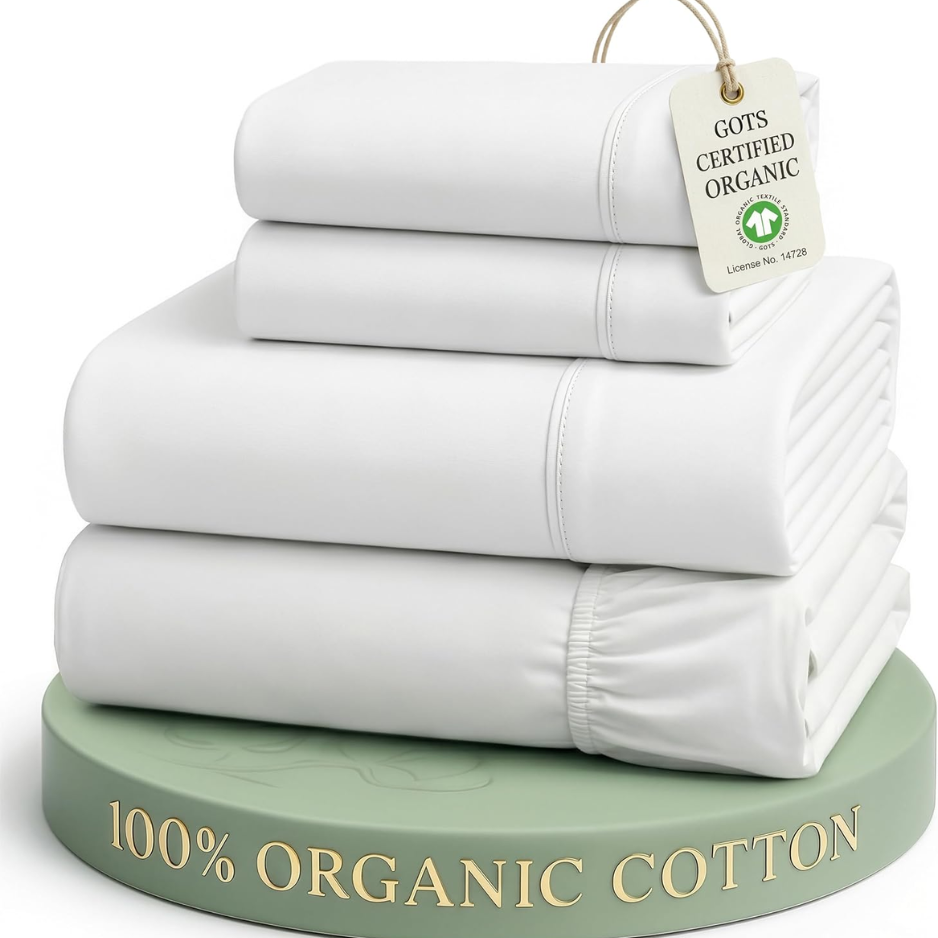

Photos from current listings. Actual item, color, and included accessories may vary.
Percale Sheet Buying Guide
Percale sheets are a plain-weave bedding construction defined by a crisp, matte hand and breathable durability, with the primary trade-off being thread count versus long-staple fiber quality. The clear decision rule: prioritize single-ply long-staple cotton (or linen blends) at 200–400 thread count over inflated multi-ply counts, which signal coated, pill-prone compromises.
At a glance
- Category
- Bedding, Linens & Home Textiles
- Last updated
- Nov 22, 2026
Current offers
Highlights
- Plain-weave percale uses a one-over-one-under yarn structure, yielding a cooler, more abrasion-resistant fabric than sateen's four-over-one float.
- True quality percale is single-ply long-staple cotton (Pima, Supima, Egyptian) at 200–400 TC; multi-ply yarns above 400 TC are often compacted and pill faster.
- Organic cotton percale must carry GOTS certification, which verifies fiber origin, dye chemistry, and social criteria—not just the word 'organic' on the label.
- Stonewashed or garment-washed percale arrives softer but loses some initial crispness; unwashed percale softens over the first 5–10 washes without pilling if fiber staple length is long.
Best use cases
- Hot sleepers and humid climates: choose 100% cotton percale at 200–300 TC for maximum breathability; skip sateen or microfiber blends that trap heat.
- Year-round crispness seekers: pick unwashed long-staple percale and expect a 5–10 wash break-in; skip stonewashed versions if you want that hotel-style snap.
- Guest rooms and everyday durability: select GOTS-certified organic percale in white or light solids for bleach-friendly maintenance; skip dark reactive dyes if frequent hot washing is planned.
- Linen-blend percale: choose only if you want a textured, slubby hand; skip it for formal settings where uniform matte crispness is required.
Buying tips
- Read the fiber label: '100% cotton' plus 'single-ply' and a named long-staple grade (Supima, Pima, Egyptian) matters more than any thread count number.
- Treat thread count 200–400 as the quality window for percale; counts above 400 usually indicate multi-ply yarns that reduce breathability and increase pilling.
- Check the weave declaration: percale is plain weave; if the listing says sateen or does not state the weave, the hand will be silkier and warmer, not crisp.
- For GOTS organic claims, require a certificate number or label reference; uncertified 'organic' cotton cannot be verified for fiber or dye standards.
Specs
| Weave | Plain weave (percale) vs sateen |
|---|---|
| Fiber Grade | Long-staple cotton / linen blend |
| Thread Count | 200–400 TC single-ply |
| Certification | GOTS organic / OEKO-TEX |
Related searches
What to check before buying
- Measure mattress depth including any topper: standard percale fitted sheets typically fit 12–15 in (30–38 cm); deep-pocket versions are needed above 15 in.
- Confirm pillowcase style: standard/queen (20×30 in) versus king (20×40 in) versus Euro sham (26×26 in); percale sets often default to standard/queen.
- Match washer capacity to sheet size: queen and king percale sets need a front-load or large top-load drum to avoid twisting and uneven wear.
- Verify plug/voltage only for heated or smart bedding; plain percale sheets have no electrical requirement, but check dryer heat settings—high heat accelerates cotton fiber degradation.
FAQ
Data sources: eBay / Amazon listings and product attribute feeds. Updated Nov 22, 2026.
Some links on this page are affiliate links. If you buy after clicking one, we may earn a commission at no extra cost to you. This does not change which products appear here or their order. Affiliate disclosure.