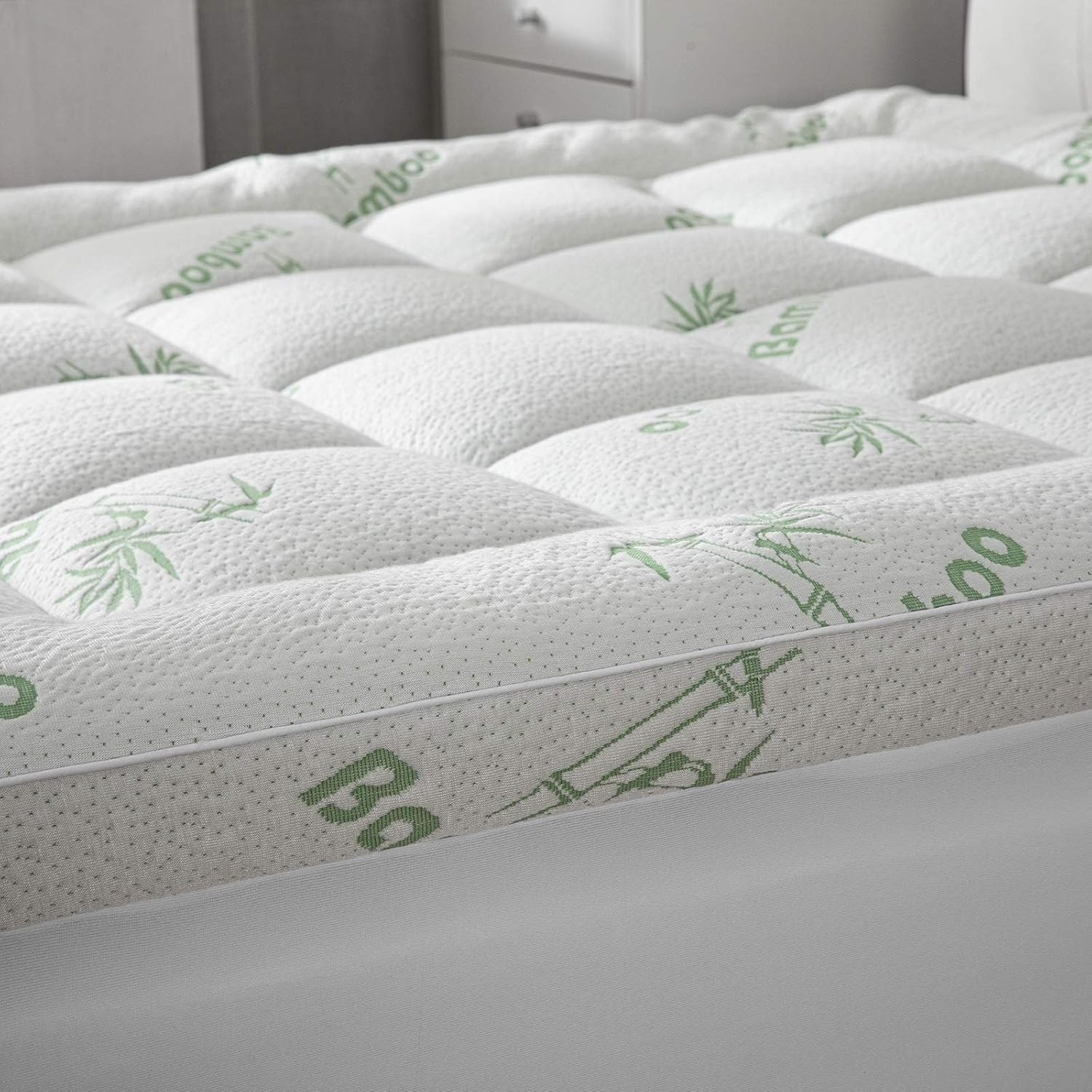

Photos from current listings. Actual item, color, and included accessories may vary.
Cooling Mattress Topper Buying Guide
A cooling mattress topper is a removable layer that adds pressure relief and heat dissipation through conductive fibers, phase-change materials, or open-cell foam—not a replacement for a mattress. The trade-off is between passive breathability (bamboo/viscose, gel-infused foam) and active temperature regulation (phase-change material, graphite), with durability hinging on fill weight, cover GSM, and foam density. Choose a topper with a breathable cover and a density rating above 3 lb/ft³ for foam, or a continuous-filament bamboo blend above 300 GSM for fiber—skip low-density memory foam or unbacked gel pads that trap heat after a few hours.
At a glance
- Category
- Bedding, Linens & Home Textiles
- Last updated
- Nov 22, 2026
Current offers
Highlights
- Foam toppers range from 2–4 lb/ft³ density; below 3 lb/ft³ they collapse and trap heat within months, while 4 lb/ft³ and above resist sagging.
- Bamboo viscose covers at 300–400 GSM wick moisture and breathe; below 250 GSM they pill and lose cooling performance after repeated washes.
- Gel-infused memory foam uses micro-encapsulated gel beads or graphite; graphite conducts heat faster than gel beads, which only delay heat buildup.
- Phase-change material (PCM) toppers absorb and release heat at a set temperature range, but their effect fades after 2–3 hours unless paired with airflow.
Best use cases
- Hot sleepers with a firm mattress: choose a 2–3 inch gel-infused or graphite foam topper with a 300+ GSM bamboo cover; skip down or wool toppers that insulate.
- Back or joint pain on a too-firm bed: pick a 3–4 lb/ft³ memory foam topper at 3 inches thick for pressure relief; skip fiberfill toppers that flatten under body weight.
- Adjustable beds or deep mattresses (14–20 inches): select a topper with a deep-pocket skirt (8–20 inch range) and corner straps; skip fitted-sheet-style toppers that pop off.
- Humid climates or night sweats: prioritize an open-cell foam or PCM topper with a breathable knit cover; skip vinyl-backed or quilted polyester toppers that seal in moisture.
Buying tips
- Match topper thickness to body weight: side sleepers under 150 lb need 2 inches; back and stomach sleepers over 180 lb need 3–4 inches to prevent bottoming out.
- Check foam density before buying: 3 lb/ft³ is the minimum for durability; 4 lb/ft³ or higher resists softening for 3–5 years under daily use.
- Measure mattress depth including any existing topper: deep-pocket skirts cover 8–20 inches; below 8 inches use a standard 15-inch pocket or straps.
- For cooling, look for open-cell or perforated foam and breathable covers (bamboo, Tencel, or phase-change fabric)—not gel beads alone, which only delay heat.
Specs
| Fill Material | Memory foam / bamboo fiber / PCM gel |
|---|---|
| Foam Density | 3–4 lb/ft³ (durable minimum 3) |
| Cover GSM | 300–400 GSM bamboo viscose |
| Pocket Depth | 8–20 in deep pocket or straps |
Related searches
What to check before buying
- Measure mattress length, width, and depth (including any mattress protector) to confirm the topper size and pocket depth fit without bunching.
- Confirm the topper cover is removable and machine-washable; spot-clean-only covers trap dust and allergens over time.
- Check that the topper has corner straps or a fitted skirt—flat pads slide on smooth mattress surfaces and disrupt sleep.
- Verify foam certifications (CertiPUR-US or GREENGUARD Gold) for low VOC emissions, especially in small or poorly ventilated bedrooms.
FAQ
Data sources: eBay / Amazon listings and product attribute feeds. Updated Nov 22, 2026.
Some links on this page are affiliate links. If you buy after clicking one, we may earn a commission at no extra cost to you. This does not change which products appear here or their order. Affiliate disclosure.