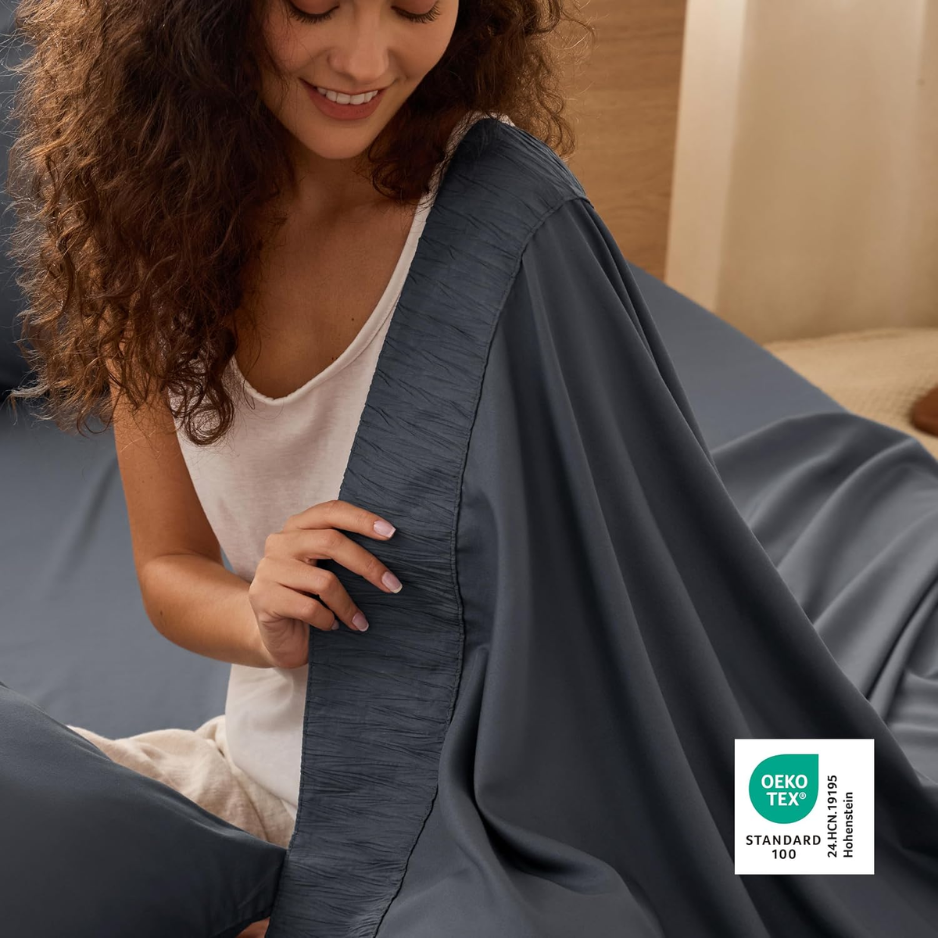

Photos from current listings. Actual item, color, and included accessories may vary.
Cooling Bed Sheet Buying Guide
Cooling bed sheets are bedding engineered to move heat and moisture away from the body faster than standard cotton or microfiber, using either conductive fibers (nylon, bamboo viscose), open-weave breathability, or moisture-wicking finishes. The core trade-off is between instant cool-to-the-touch feel (synthetic blends, often slippery and less durable) and breathable, long-lasting natural fibers (percale cotton, linen) that ventilate rather than actively chill. The decision rule: choose a measured air-permeability and moisture-wicking construction over marketing claims like 'cooling' alone—if the care label lists high polyester content or a tight sateen weave, it will trap heat regardless of the name.
At a glance
- Category
- Bedding, Linens & Home Textiles
- Last updated
- Nov 22, 2026
Current offers
Highlights
- Cool-to-touch sheets rely on nylon or bamboo-viscose blends with high thermal conductivity; they feel cold instantly but lose that effect after the first wash cycle.
- Breathable cotton percale (200-300 thread count, plain weave) and linen move air and moisture without chemical finishes and get softer with every wash.
- Thread count is a poor cooling metric above 400—dense sateen weaves block airflow; look for plain-weave or open-knit construction instead.
- Moisture-wicking finishes (hydrophilic treatments) help humid sleepers but degrade after roughly 50-100 washes unless the fiber itself is hydrophilic (viscose, lyocell).
Best use cases
- Best fit: hot sleepers in humid climates—pick bamboo viscose or lyocell with a plain weave and a moisture-wicking finish; skip high-thread-count sateen cotton.
- Best fit: year-round temperature swingers—choose linen or cotton percale; skip polyester 'cooling' blends that trap heat in winter and feel clammy in summer.
- Best fit: budget-focused buyers wanting instant cool-to-touch—select a nylon-blend sheet set as a secondary summer set; skip it as your only set because durability is lower.
- Wrong fit: sleepers with sensitive skin or chemical sensitivity—avoid sheets marketed with 'cooling treatments' or 'microcapsule finishes' and choose uncoated natural fibers.
Buying tips
- For breathability, target air permeability above 30 CFM (plain weave) and avoid sateen weaves under 300 thread count—they seal the surface.
- Match fiber to humidity: in dry heat, cotton or linen wicks fine; in humid heat, choose viscose or lyocell with a measured moisture regain above 10%.
- Check the care label for polyester content: anything above 50% polyester will insulate rather than cool, regardless of 'cooling' branding.
- For a cooling effect that survives washing, pick mechanically crimped or open-structure yarns rather than topical cool-to-touch coatings.
Specs
| Fiber Type | Viscose / Lyocell / Cotton / Linen / Nylon |
|---|---|
| Weave | Percale (plain) vs Sateen (dense) |
| Thread Count | 200-300 (cooling) / 400+ (less breathable) |
| Moisture Wicking | Fiber-based vs topical finish |
Related searches
What to check before buying
- Measure mattress depth including any topper—deep-pocket sheets need 15-18 inch pocket depth; standard 12-inch pockets will pop off.
- Confirm your sleep environment humidity: below 40% RH favors cotton/linen; above 60% RH favors viscose/lyocell blends.
- Check washing machine capacity—queen and king sheet sets need a front-loader or large top-loader; oversized sets won't agitate clean in compact machines.
- Verify pillowcase closure style matches your pillow—envelope closures fit standard pillows; zippered closures suit adjustable or shredded foam pillows.
FAQ
Data sources: eBay / Amazon listings and product attribute feeds. Updated Nov 22, 2026.
Some links on this page are affiliate links. If you buy after clicking one, we may earn a commission at no extra cost to you. This does not change which products appear here or their order. Affiliate disclosure.