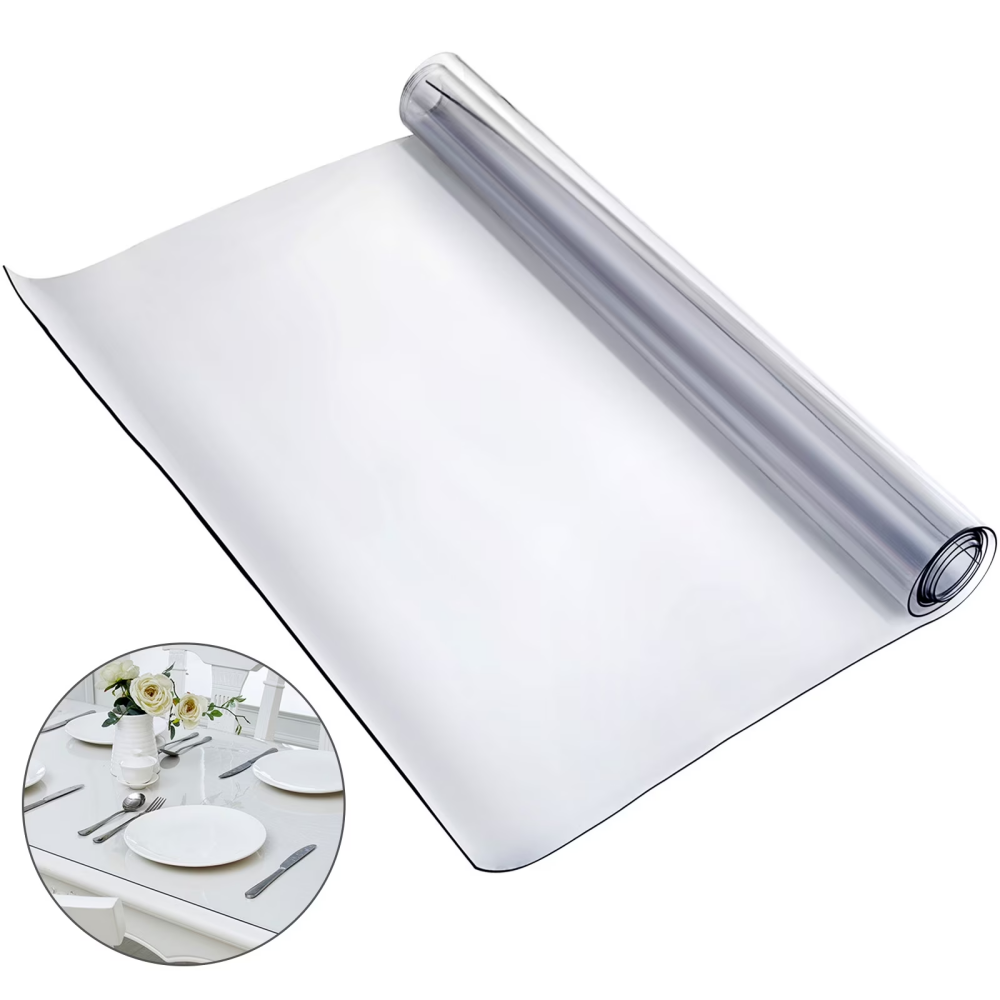

Photos from current listings. Actual item, color, and included accessories may vary.
Clear Plastic Cover Buying Guide
A clear plastic cover is a protective sheet—typically PVC or PEVA—laid over a table, desk, or furniture surface to shield it from spills, scratches, and heat while keeping the underlying finish visible. The core trade-off is thickness and material grade: thin 1.0–1.5 mm vinyl wrinkles and clouds quickly, while 2.0 mm+ PVC stays flat and clear but costs more and needs exact sizing. The decision rule is simple: match thickness to use intensity and confirm the sheet is at least 2–4 inches larger than the surface so it can be trimmed or draped.
At a glance
- Category
- Bedding, Linens & Home Textiles
- Last updated
- Nov 22, 2026
Current offers
Highlights
- Thickness tiers: 1.0–1.5 mm is light-use desk protection; 2.0 mm is the standard for dining tables and high-traffic surfaces.
- PVC vs PEVA: PVC offers superior clarity and scratch resistance; PEVA is chlorine-free and more flexible but tends to haze over time.
- Edge finish determines durability: heat-sealed or bound edges resist peeling and cracking far better than raw cut edges.
- Surface texture matters: embossed or frosted finishes hide scratches and reduce glare; smooth high-gloss shows every mark.
Best use cases
- Dining table protection: pick 2.0 mm PVC sized 2–4 inches larger than the tabletop; skip 1.0 mm vinyl, which creases under hot plates and daily wiping.
- Desk or craft surface: a 1.5 mm clear sheet with a frosted or embossed finish resists pen marks and glare; skip high-gloss 1.0 mm film that scratches within weeks.
- Temporary event or rental protection: choose PEVA for flexibility and easy roll-up storage; skip heavy 2.0 mm PVC if the cover must be moved frequently.
Buying tips
- Measure the tabletop length and width, then add 2–4 inches per side if you want a drape or trim allowance; a cover smaller than the surface will slide and curl.
- For daily dining use, specify 2.0 mm PVC with heat-sealed edges; 1.0 mm vinyl is only appropriate for low-contact desk or shelf protection.
- Confirm the material is food-safe and phthalate-free if the cover will contact plates or hands directly; standard industrial PVC may contain plasticizers.
- Check that the cover lies flat without adhesive: thicker PVC (2.0 mm+) stays put by weight, while thin films need clips or a non-slip backing.
Specs
| Material | PVC (clear, rigid) vs PEVA (flexible) |
|---|---|
| Thickness | 1.0–2.0 mm (2.0 mm for dining) |
| Edge Finish | Heat-sealed/bound vs raw cut |
| Surface Finish | High-gloss vs embossed/frosted |
Related searches
What to check before buying
- Measure tabletop length, width, and any overhang; order a sheet at least 2 inches larger per side for trimming or draping.
- Confirm surface heat exposure: PVC softens near 60°C, so use trivets under hot dishes even on 2.0 mm covers.
- Verify the cover is phthalate-free and food-safe if it will be used on a dining table where food is served directly.
- Check storage: rolled PVC retains curl, so plan to lay it flat for 24 hours after unrolling before use.
FAQ
Data sources: eBay / Amazon listings and product attribute feeds. Updated Nov 22, 2026.
Some links on this page are affiliate links. If you buy after clicking one, we may earn a commission at no extra cost to you. This does not change which products appear here or their order. Affiliate disclosure.